Suits adult readers interested in contemporary debates about feminism, faith and culture.
256 pages, about 4 to 6 hours.
A polemic arguing feminism erased the very category of woman. 40% taste match
What it covers
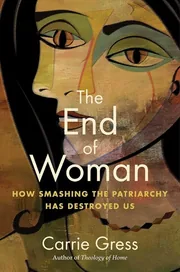
End of Woman is a 2024 work of philosophy and religion by Carrie Gress, a wife, mother, and philosopher. It takes up feminism as an ideology and argues that, rather than empowering women, it has erased the very category of "woman." The book examines what its author sees as the consequences of fifty years of radical feminism, including debates over who counts as a woman, women's athletics, abortion, and the portrayal of women in popular entertainment. Subjects such as the occult and free love also figure in its discussion.
Gress approaches her argument through a historical sweep that runs from the serpent's temptation of Eve to Mary Shelley's Frankenstein, then on to Kate Millett and Meghan Markle. Alongside this account, she offers what she presents as answers for women today. The book runs to about 256 pages and has appeared in two editions. It will suit readers interested in contemporary debates about feminism, womanhood, and the intersection of culture, philosophy, and faith.
Themes
Feminismoccultfree love
By the numbers
- The median edition runs 256 pages. Counting about 275 words a page and an adult reading pace of 250 words a minute, that is about 4.7 hours of reading.
- Open Library tracks 2 editions.
- On reader demand it ranks in the top 45% of the recent releases books in our catalog (1,627 of them).
 BookWard’s take
A polemic arguing feminism erased the very category of woman
Carrie Gress writes as a wife, mother and philosopher, and she wants you to know it from the first page. End of Woman is an argument, not a survey: it holds that fifty years of radical feminism left women worse off and unable to define themselves. The case rests on cultural examples, a sweeping history and a strong thesis rather than measured evidence, so it never feels carefully tested. The author's voice is its real strength, blunt and unmistakable from start to finish. Politics is front and center throughout, and the narration is openly opinionated, so the book never pretends to neutrality. Readers who want the claims scrutinized will find a polemic instead. It suits those who want to understand this position in its own words.
At about 256 pages it is a compact argument, closer to short than sprawling, which suits BookWard.
The historical sweep from Eve to Markle keeps moving, though it moves by assertion more than by building evidence.
The thesis is a well-known one in this camp, though the occult and Frankenstein threads give it some individual color.
The language is direct and punchy rather than ornate, built to persuade.
Despite its grim diagnosis, it ends on an offer of peace and return, so it lands on the hopeful side.
The tone is earnest and combative, with little room for lightness.
It dwells on abortion, exploitation and cultural decline, making for a heavy subject.
The tone is charged and urgent, carrying real intensity.
See all 50 dialsEvery position, side by side with this book
Where it lines up
- EndingBookWard 8 · book 8
- Authorial voiceBookWard 9 · book 8
- LengthBookWard 1 · book 3
Where it pulls apart
- Familiar tropesBookWard 10 · book 3
- Internal logicBookWard 10 · book 4
- ExpositionBookWard 2 · book 9
At about 256 pages it is a compact argument, closer to short than sprawling, which suits BookWard.
The premise that feminism abolished women is stated boldly and early, so the book announces its stance at once.
Its claims follow a familiar culture-war script, which sits poorly with BookWard's wish to avoid well-worn positions.
The argument links disparate figures and events into one causal story, though the connections are asserted more than demonstrated.
The historical sweep from Eve to Markle keeps moving, though it moves by assertion more than by building evidence.
The thesis is a well-known one in this camp, though the occult and Frankenstein threads give it some individual color.
Figures such as Shelley, Millett and Markle appear as illustrations of a thesis rather than rounded portraits.
It closes with a clear prescription and an invitation to return home, resolving its argument rather than leaving it open.
The closing appeal to come home carries real emotional warmth, which is more sentimental than BookWard prefers.
The framing leans on vivid, provocative examples to make its case, which BookWard prefers to see earned more carefully.
Gress writes in a blunt, confident and unmistakable register that no one would mistake for another author.
This is a book of argument first, with history serving as support for a single thesis.
Gress states her conclusions outright rather than letting examples speak for themselves.
The language is direct and punchy rather than ornate, built to persuade.
Despite its grim diagnosis, it ends on an offer of peace and return, so it lands on the hopeful side.
The tone is earnest and combative, with little room for lightness.
The language is accessible, though the ideological stakes ask the reader to engage critically.
One author's perspective governs every chapter, with opposing views present mainly as targets.
It moves across centuries, from Eve to the present, rather than following one straight line.
The book is grounded in culture and history, though it does treat the occult as a real subject.
A broad parade of historical and cultural figures passes through, each briefly.
It claims civilizational stakes, arguing that society sits at the brink.
It balances cultural events with the author's reflections on what they mean for women's inner lives.
As an argumentative work it relies on exposition rather than conversation.
Relations between men and women are a theme, but romance is not the subject.
The setting is the contemporary Western culture most readers already know.
It addresses current controversies in sport, entertainment and public life.
Tied closely to present-day debates, it may date as those debates shift.
The author speaks plainly in her own voice with no pretense of detachment.
The book sees right and wrong with certainty and leaves little ambiguity.
Description is functional, serving the argument rather than setting scenes.
It mixes storytelling about historical figures with analysis, leaning slightly toward narrative.
The author frames herself as a wife and mother, so the stance is personal rather than detached.
It stands alone as a single argument.
As an argument it moves forward predictably, with few surprises.
It confronts readers with contested claims and expects pushback from many.
It dwells on abortion, exploitation and cultural decline, making for a heavy subject.
The tone is charged and urgent, carrying real intensity.
Violence is discussed, including in Millett's account, but not dwelt on at length.
Free love and exploitation come up as topics, treated critically rather than explicitly.
Culture-war politics is the heart of the book, not a side note.
The prose is plain and readable throughout.
Opinionated from first page to last, with the author's stance never hidden.
It looks backward, urging a return to what it calls true womanhood.
It offers an idealized vision of womanhood and home as the cure.
Review written by BookWard, dial version 1, November 2026.
Who is End of Woman right for?
Suits adult readers interested in contemporary debates about feminism, faith and culture. It discusses abortion, sexual exploitation and contested political topics, and takes a strong partisan stance.
The language is accessible, though the ideological stakes ask the reader to engage critically.
It dwells on abortion, exploitation and cultural decline, making for a heavy subject.
The tone is charged and urgent, carrying real intensity.
Violence is discussed, including in Millett's account, but not dwelt on at length.
Book CompanionEnd of Woman: ideas, characters, themes
Gress argues that radical feminism, rather than liberating women, has erased the meaning of womanhood and left women unhappy, and that a return to motherhood and faith is the remedy.
- Feminism as erasure. The book claims feminism made male lives the norm and left society unable to define a woman.
- A long historical arc. Gress traces her story from the serpent and Eve through Frankenstein to Kate Millett and Meghan Markle.
- Cultural examples. She points to women's athletics, abortion and drag performance as signs of the damage she sees.
- Occult and free love. These subjects feature in her account of how modern feminism took shape.
- A proposed remedy. She calls for peace with men, children, God and oneself, centered on rediscovering womanhood and motherhood.
Characters
Carrie Gress
Author and guide
A wife, mother and philosopher who presents herself as speaking for women the movement has failed.
Kate Millett
Feminist figure examined
Discussed in connection with lust, violence and insanity.
Mary Shelley
Historical figure
Her Frankenstein is part of the historical sweep.
Meghan Markle
Contemporary figure
Her rise to royalty is treated as an example of the havoc Gress describes.
Themes
What it means to be a woman and whether the category can still be defined.
Presented as central to women's happiness and to society's recovery.
How a movement's stated aims can diverge from its results.
Religion offered as the place where answers are found.
The call to end the war between the sexes.
Discussion questions
- Does the book's definition of womanhood hold up, and who might it leave out?
- How convincing is the link between feminism and the harms Gress lists?
- What would stronger evidence for or against her claims look like?
- Why does she use figures like Shelley and Markle as illustrations?
- Do her proposed remedies follow from her diagnosis?
Personalize your Book Companion
This is the general edition. In BookWard, the Companion is written for you: your reading profile, your notes, and spoiler-safe to the page you are on.
Buy, listen or borrow End of Woman
Each link opens a search for this book on that store, in a new tab.
Read on a device
Borrow
Reviews and community
If you liked End of Woman
A first-person insider tale about loans as a tool of empire
The Anxious GenerationJonathan HaidtA data-driven case against smartphone childhood, and what to do
The Beauty MythNaomi WolfA landmark argument that beauty standards police women as they gain power
Everything Is F*ckedMark MansonManson's sweary, sprawling follow-up on hope, values and why everything feels broken
Sources: Open Library.
Track End of Woman and find your next favorite
Add it to your shelf, rate what you have read, and BookWard will recommend what fits you.
Free to start. No credit card needed.