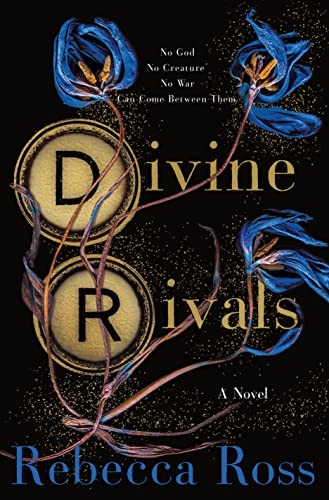
Divine Rivals
by Rebecca Ross
★ Top 25 book of 2023 · #15 on Best Books of 2023
Eighteen-year-old Iris lands a coveted newspaper job during a war between gods while her brother is missing at the front. Her unsent letters reach her rival Roman Kitt, who anonymously writes back, creating an unexpected bond.
Best for: Fantasy fans who love rivals-to-lovers romance and stories told through letters
Divine Rivals is #15 on BookWard's Best Books of 2023, out of 34 2023 books that cleared our data bar.
What Divine Rivals is about
Iris is eighteen and believes her writing can make a difference. A war between the gods is raging, her brother is missing on the frontline, and her mother is lost in a haze of addiction. She has just landed a prestigious job at the Oath Gazette, a chance to turn her words into something real.
Each night she writes letters to her brother, never expecting an answer. Somehow they reach Roman Kitt instead, her cold, unforgiving rival at the paper and the person she trusts least. He writes back without giving his name, and the two build a magical connection through their letters. A romantic, atmospheric and emotional story about rivalry, love, war and the power of putting words on paper.
Divine Rivals on the Best Books of 2023
Divine Rivals came out in 2023. Of the 34 books first published in 2023 that met BookWard's data bar, it ranks #15 on our Best Books of 2023 list.
Why it made the list: 244 readers have shelved it on Open Library; readers rate it 4.2 out of 5 (12 ratings). The list ranks each year’s books on how many readers have picked them up, how highly readers rate them, and how many are reading them right now.
Nearby on the 2023 list
- Things We Left Behind Lucy Score, #13
- One of Us Is Back Karen M. McManus, #14
- Happy Place Emily Henry, #16
- Yellowface R. F. Kuang, #17
See all Best Books of 2023 Best books by year
More years: Best Books of 2022 Best Books of 2024.
The numbers behind it
- Readers: 214 want to read it, 10 are reading it now and 20 have read it, according to Open Library.
- Ratings: 4.2 out of 5 from 12 Open Library ratings.
| Signal | This book (0 to 100) | Weight |
|---|---|---|
| Reach | 47 | 55% |
| Reader love | 68 | 25% |
| Being read right now | 41 | 20% |
Questions about Divine Rivals
When was Divine Rivals published?
Divine Rivals by Rebecca Ross was first published in 2023.
Was Divine Rivals one of the best books of 2023?
Divine Rivals is #15 on BookWard's Best Books of 2023, out of 34 2023 books that cleared our data bar. 244 readers have shelved it on Open Library; readers rate it 4.2 out of 5 (12 ratings).
Why is Divine Rivals on the Best Books of 2023 list?
244 readers have shelved it on Open Library; readers rate it 4.2 out of 5 (12 ratings).
More of the best books of 2023
- Fourth Wing Rebecca Yarros, #1
- King of Pride Ana Huang, #2
- Iron Flame Rebecca Yarros, #3
- Powerless Lauren Roberts, #4
- The Chalice of the Gods Rick Riordan, #5
- King of Greed Ana Huang, #6
See the full Best Books of 2023, the Top 100, or new books on Rising.
How we know
This page uses public data: Open Library reader counts and ratings, and Wikipedia page views for recent years. The description is paraphrased from real source text. Rankings reflect reading interest, not quality or sales, and can be affected by data gaps. Lists update monthly.
Suits older teens and adults who enjoy fantasy romance.
Depends on the edition you pick.
Rival journalists, a war of gods, and letters that cross enemy lines. 52% taste match
 BookWard’s take
Rival journalists, a war of gods, and letters that cross enemy lines
Divine Rivals opens with Iris Winnow juggling a prestigious newspaper job, a missing brother and a mother lost to addiction, and it hooks at once on that pressure. The letters-to-a-brother device is the engine, a strong hook, and the book moves along quickly. Where it fits me least is in its familiar tropes. The rivals-to-lovers setup is a well-worn shape, so it feels less original than I'd like. Romance is central, and the sentiment runs warm rather than restrained. It does better with character and pacing. Iris's home life gives her real weight, and the story stays brisk throughout. A fantasy war with a newsroom at its center is a pleasing blend, and the outlook leans hopeful even when the world is grim.
The book keeps moving, close to the brisk pace BookWard prefers.
A newsroom inside a war between gods is a fresh setting, even if the central romance is familiar.
The writing is polished and a little lyrical without becoming ornate.
Iris's inner life and relationships drive the story as much as the war does.
Even with war and loss, the book leans toward connection and hope, matching BookWard's lean.
The structure is conventional, built around letters and a standard arc, a touch more traditional than BookWard's middle position.
The tone is mostly earnest, with light banter between the rivals.
War, loss and addiction add shadow, though the book stays approachable.
Grief, longing and affection run high, a bit above BookWard's level.
See all 50 dialsEvery position, side by side with this book
Where it lines up
- PaceBookWard 8 · book 7
- Character depthBookWard 8 · book 7
- Story or ideasBookWard 3 · book 2
Where it pulls apart
- Familiar tropesBookWard 10 · book 3
- Internal logicBookWard 10 · book 6
- SentimentBookWard 8 · book 3
Iris's missing brother and strained home life pull you in from the start, which matches BookWard's love of an instant hook.
The rival-turned-correspondent romance follows a familiar path, which is a weak spot against BookWard's taste for avoiding tropes.
The god-war and its letter magic hold together well enough for the story, though it is not airtight.
The book keeps moving, close to the brisk pace BookWard prefers.
A newsroom inside a war between gods is a fresh setting, even if the central romance is familiar.
Iris's grief, family strain and ambition give her real weight, in line with what BookWard rewards.
The story is built as the first of a pair, so it resolves less fully than BookWard prefers.
The emotional register is warm and heartfelt rather than restrained, which sits away from BookWard's taste.
The darkness tends to come from the war and Iris's home life, so it mostly feels earned.
Iris carries a clear, engaging voice, though it reads closer to genre convention than to something singular.
This is firmly story-led, following characters and a plot rather than testing an idea, close to BookWard's preference.
The world arrives mostly through Iris's life and letters, with some explaining, near BookWard's show-in-scene lean.
The letters and rivalry keep things moving, though a middle stretch can lean on the romance.
The writing is polished and a little lyrical without becoming ornate.
Iris's inner life and relationships drive the story as much as the war does.
Even with war and loss, the book leans toward connection and hope, matching BookWard's lean.
The structure is conventional, built around letters and a standard arc, a touch more traditional than BookWard's middle position.
The tone is mostly earnest, with light banter between the rivals.
It reads easily and invites quick page-turning, which is gentler than BookWard's mid-range.
Gods, war and a letter-writing magic make this a clearly fantastical world, a bit beyond BookWard's middle.
A small circle of key figures, in the same range as BookWard's preference.
A war between gods raises the stakes, but the focus stays on Iris and one relationship.
Iris's feelings and her wartime surroundings share the page in fairly even measure.
The back-and-forth between rivals and the letters give it a good amount of spoken and written exchange.
The Iris and Roman connection is the heart of the book, well above BookWard's middling interest.
A fantasy world at war is less familiar than ordinary life, near BookWard's lean toward the unfamiliar.
The setting reads as an invented past, so it sits well away from the present day.
Its romance and war themes last, though its genre moment is clear.
The sides and stakes are fairly clear, less ambiguous than BookWard tends to like.
The setting is vividly drawn, richer than BookWard's middle.
This opens a duology, so it leans toward being part of a series.
There are a fair number of reveals, though many follow expected turns.
It leans toward absorbing comfort reading rather than demanding challenge.
War, loss and addiction add shadow, though the book stays approachable.
Grief, longing and affection run high, a bit above BookWard's level.
Any humor is gentle banter rather than broad comedy.
The romance stays mostly emotional rather than explicit.
The war has political undertones, but the story stays personal.
The language is plain and easy to follow.
Iris's narration carries her views, but the book stays largely neutral beyond her.
The story tilts slightly toward the past and its war, with an eye on what comes next.
Iris's faith in writing that matters pushes the book toward idealism.
Review written by BookWard, dial version 1, November 2026.
Who is Divine Rivals right for?
Suits older teens and adults who enjoy fantasy romance. It touches on war, a parent's addiction and a missing sibling, which may weigh on some readers.
It reads easily and invites quick page-turning, which is gentler than BookWard's mid-range.
War, loss and addiction add shadow, though the book stays approachable.
Grief, longing and affection run high, a bit above BookWard's level.
Book CompanionDivine Rivals: ideas, characters, themes
A young journalist's letters to her missing brother reach the one rival she distrusts, and an anonymous correspondence begins.
- A war between gods. The setting is a conflict between gods, which hangs over every character's choices.
- Iris at the Oath Gazette. Iris has landed a prestigious newspaper job and hopes her writing will make a difference.
- A brother on the frontline. Her brother is missing at the front, and she writes him letters she assumes will never be answered.
- A mother lost to addiction. Iris is barely holding things together at home, where her mother is lost in a haze of addiction.
- Letters that find the wrong hands. Her letters reach Roman Kitt, her cold rival at the paper, who writes back anonymously.
Characters
Iris Winnow
Protagonist
An eighteen-year-old writer at the Oath Gazette, ambitious and worn down by her brother's absence and her mother's addiction.
Roman Kitt
Rival and correspondent
Iris's cold, unforgiving rival at the paper, who answers her letters without revealing himself.
Iris's brother
Missing at the front
The reason Iris writes her nightly letters, missing on the frontline.
Iris's mother
Family strain
Lost in a haze of addiction, she leaves Iris to hold home life together.
Themes
How people who clash in person can bond through honest words.
Iris's belief that her words can make a real difference.
Living with a missing loved one and an unreliable parent.
How a distant conflict reshapes ordinary lives.
Why people say true things when they are not seen.
Discussion questions
- Why does writing to someone you cannot see make it easier to be honest?
- How does Iris's home life shape her ambition at the paper?
- What makes a rival's anonymous kindness harder to accept than an open one?
- How does the war between gods affect the way ordinary people live?
- Which parts of the romance feel familiar, and which feel fresh?
Personalize your Book Companion
This is the general edition. In BookWard, the Companion is written for you: your reading profile, your notes, and spoiler-safe to the page you are on.
Buy, listen or borrow Divine Rivals
Each link opens a search for this book on that store, in a new tab.
Read on a device
Borrow
Reviews and community
If you liked Divine Rivals
Victorian fae court intrigue where a crown costs more than blood
Heartless HunterKristen CiccarelliA witch vigilante and a witch hunter court each other under false pretenses
Clockwork AngelCassandra ClareVictorian London, demon hunters, and a love triangle with teeth
Throne of GlassSarah J. MaasA prison-to-palace assassin contest that moves fast and trades on familiar bones
Find your own best books
Add what you have read, rate it, and BookWard will recommend what to read next.
Free to start. No credit card needed.