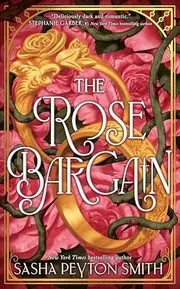
Marketed as young adult, it suits teens and adults who enjoy romantasy and fae stories.
400 pages, about 6.5 to 9.5 hours.
Victorian fae court intrigue where a crown costs more than blood. 51% taste match
The story
The Rose Bargain is a young adult romantasy by Sasha Peyton Smith, first published in 2025. It blends historical fiction with fae fantasy and runs to roughly 400 pages. The setting is a Victorian-inspired England in 1848, a country that has been ruled for four hundred years by an immortal fae queen, Queen Mor. She presents herself as generous by letting each of her subjects strike one bargain for their greatest wish.
The story follows Ivy Benton, who is preparing for her debut season. Her family's standing has collapsed, her sister is not the person she once was, and her own prospects for marriage look bleak. When the queen opens a competition for the hand of Prince Bram, Ivy signs up first, hoping a crown can solve what a bargain cannot. Prince Emmett, Bram's brother, offers to help her win the contest in exchange for a price, and as the season of balls moves forward, the trials set by the queen grow harsher. Readers who enjoy Bridgerton, The Selection, or The Cruel Prince may find this a fitting next read.
Themes
FantasyRomanceRomantasyYoung AdultFaeFantasy RomanceHistorical
By the numbers
- The median edition runs 400 pages. Counting about 275 words a page and an adult reading pace of 250 words a minute, that is about 7.3 hours of reading.
- Open Library tracks 10 editions from 5 publishers, across 2 languages.
- On reader demand it ranks in the top 17% of the recent releases books in our catalog (1,627 of them).
- Libraries shelve it under Dewey [Fic] and Library of Congress class PZ-0007.10000000.S6555Ro 2025.
 BookWard’s take
Victorian fae court intrigue where a crown costs more than blood
The Rose Bargain drops Ivy Benton into a 1848 London ruled by an immortal fae queen, and it wastes no time: Ivy signs her name in blood to compete for a prince's hand. That is a strong hook, and the premise of one bargain per subject, each with a cost, gives the plot a clear internal logic to work from. The tradeoff is familiarity. The book is openly pitched beside Bridgerton, The Selection and The Cruel Prince, and it leans heavily on well-worn tropes, with romance at the center rather than on the margins. The setting, a blend of Victorian England and fae rule, feels fresher, and the pace should keep moving through the balls and trials. It is a story-led, character-driven romantasy, not a book of ideas.
At roughly 400 pages it is mid-sized, longer than BookWard's tight ideal but not sprawling.
A season of balls and escalating trials keeps events moving, close to the brisk pace BookWard enjoys.
Fae rule over Victorian London adds a fresh angle, though the competition-for-a-prince frame is familiar.
Ivy's family and her desires drive her choices, though the contest supplies the plot, so the two are balanced.
The tone mixes dark fae bargains with romance and ambition, landing between bleak and hopeful.
A conventional, forward-moving contest structure, more traditional than BookWard's mild experimental streak.
Romantic and tense more than comic, with room for wit alongside the court intrigue.
Vicious trials and bargain costs give real menace beneath the glamour, a middle level of dark.
Family worry, rivalry and falling for the wrong brother point to strong feelings, a bit above BookWard's middle.
See all 50 dialsEvery position, side by side with this book
Where it lines up
- OpeningBookWard 10 · book 9
- PaceBookWard 8 · book 7
- Story or ideasBookWard 3 · book 2
Where it pulls apart
- Familiar tropesBookWard 10 · book 3
- LengthBookWard 1 · book 5
- OriginalityBookWard 9 · book 4
At roughly 400 pages it is mid-sized, longer than BookWard's tight ideal but not sprawling.
Ivy signs the queen's competition in blood early on, an immediate hook that matches BookWard's taste for openings that grab at once.
It is pitched beside Bridgerton, The Selection and The Cruel Prince, so it leans on well-worn romance and competition tropes, which cuts against BookWard.
The one-bargain-per-subject rule and the rule that every faerie deal has a cost give the world firm mechanics BookWard likes.
A season of balls and escalating trials keeps events moving, close to the brisk pace BookWard enjoys.
Fae rule over Victorian London adds a fresh angle, though the competition-for-a-prince frame is familiar.
Ivy's family troubles and her sister's decline give her real stakes, though the romance cast may lean on types.
Romance-centered YA fantasy tends toward the emotional and swoony, warmer than BookWard's restrained preference.
The queen's increasingly vicious trials suggest darkness that serves the stakes, not shock for its own sake.
Fiction, so this dial does not apply.
Genre-typical romantasy voice; it reads as polished more than strikingly distinctive.
This is firmly story-led, built on competition, romance and bargains, which matches BookWard's story-first lean.
A new fae-ruled England needs some setup, but the bargain mechanic can be shown through scenes, near BookWard's taste.
A structure of escalating trials gives the middle a built-in engine, suiting BookWard's liking for sustained books.
Ivy's family and her desires drive her choices, though the contest supplies the plot, so the two are balanced.
The tone mixes dark fae bargains with romance and ambition, landing between bleak and hopeful.
A conventional, forward-moving contest structure, more traditional than BookWard's mild experimental streak.
Romantic and tense more than comic, with room for wit alongside the court intrigue.
A young adult romantasy reads easily, less demanding than BookWard's mid-range comfort.
Fiction, but this dial does not apply.
Fiction, but this dial does not apply.
An immortal fae queen rules England, making this firmly fantastical, beyond BookWard's mixed comfort.
A court of rival contestants, two princes, Ivy and her family point to a moderately full cast.
The stakes are one woman's family and a court, with a kingdom's rule behind them, so between intimate and epic.
Balls, trials and bargains give external action, balanced with Ivy's longing and worry.
The pitch is vying for one brother and falling for the other, so romance is the core of the book.
A Victorian London ruled by fae is an unfamiliar blend, matching BookWard's taste for new settings.
Set in 1848, so firmly in the past, away from BookWard's lean toward the present.
A trend-friendly romantasy with a strong hook, but more of its moment than lasting.
Fiction, but this dial does not apply.
Bargains and the queen's feigned benevolence add gray, but the stakes appear mostly clear-cut.
Glittering balls and a Victorian fae court invite lavish detail, richer than BookWard's middle.
Fiction, so this dial does not apply.
Fiction, so this dial does not apply.
Fiction, but this dial does not apply.
Bargains with hidden costs and vicious trials set up plenty of reversals, matching BookWard's taste.
A romantic competition story reads as an escape, more comforting than challenging.
Vicious trials and bargain costs give real menace beneath the glamour, a middle level of dark.
Family worry, rivalry and falling for the wrong brother point to strong feelings, a bit above BookWard's middle.
A rakish prince suggests wit more than broad comedy, around BookWard's middle.
The queen's vicious trials bring some menace, but this is young adult romance, so it sits mid-scale.
Fiction, but this dial does not apply.
Royal succession and a ruling queen make court power central, though it serves the romance.
Period setting and fae terms add flavor, but the language stays accessible for a young audience.
Ivy's close perspective colors events, but the narration stays fairly neutral.
A Victorian setting with a centuries-old queen looks backward more than forward.
Ivy hopes a crown can fix what a bargain cannot, yet the queen's false benevolence adds cynicism.
Review written by BookWard, dial version 1, November 2026.
Who is The Rose Bargain right for?
Marketed as young adult, it suits teens and adults who enjoy romantasy and fae stories. Expect romance, court intrigue and trials described as vicious, so check the darker moments for younger readers.
A young adult romantasy reads easily, less demanding than BookWard's mid-range comfort.
Vicious trials and bargain costs give real menace beneath the glamour, a middle level of dark.
Family worry, rivalry and falling for the wrong brother point to strong feelings, a bit above BookWard's middle.
The queen's vicious trials bring some menace, but this is young adult romance, so it sits mid-scale.
Book CompanionThe Rose Bargain: ideas, characters, themes
In a London ruled by an immortal fae queen, Ivy Benton stakes her future on a competition for a prince's hand, and discovers that every faerie bargain carries a cost.
- The queen's one bargain. Queen Mor lets each subject strike one deal for their deepest desire, a gesture meant to look generous while she keeps control.
- Ivy's reasons. Her family's standing is in ruins, her sister is not herself, and her marriage prospects are bleak, so a crown looks like the solution.
- The competition. Ivy signs first in blood for Prince Bram's hand and becomes a surprising front-runner.
- The rakish ally. Prince Emmett offers to help Ivy win his brother's heart for a price.
- Glamour hiding danger. Glittering balls veil the queen's increasingly vicious trials, and the stakes grow beyond a wedding.
Characters
Ivy Benton
Protagonist
A debutante whose family has fallen on hard times and who enters the queen's competition hoping to change her fortunes.
Queen Mor
Ruler
The immortal fae queen who has held England for four hundred years and grants each subject one bargain.
Prince Bram
The prize
The prince whose hand the contest is for.
Prince Emmett
Ally and rival interest
Bram's rakish brother, who promises to help Ivy for a price.
Themes
Every deal with the fae asks something in return, often more than expected.
The queen keeps control by looking benevolent while ruling by trick.
Ivy's family's social standing shapes her choices and desperation.
Competing for one brother while drawn to the other sets heart against ambition.
Ivy's concern for her changed sister helps drive her decisions.
Discussion questions
- Would you sign your name in blood for a chance at a crown, given Ivy's circumstances?
- What does the queen's one-bargain rule say about generosity used as control?
- How does Prince Emmett's price change the way we read his offer to help?
- Why might a Victorian setting suit a story about bargains, status and marriage?
- What costs do you expect Ivy to discover, and which would be hardest to pay?
Personalize your Book Companion
This is the general edition. In BookWard, the Companion is written for you: your reading profile, your notes, and spoiler-safe to the page you are on.
Buy, listen or borrow The Rose Bargain
Each link opens a search for this book on that store, in a new tab.
Read on a device
Borrow
Reviews and community
If you liked The Rose Bargain
A witch vigilante and a witch hunter court each other under false pretenses
Arcana AcademyElise KovaA fake engagement, a stolen tarot card, and a school of forbidden magic
Fate Inked in BloodDanielle L. JensenA shield maiden, a blood oath, and a forbidden pull
WisteriaAdalyn GraceA gothic romantasy finale that wants you invested in the series
Sources: Open Library.
Track The Rose Bargain and find your next favorite
Add it to your shelf, rate what you have read, and BookWard will recommend what fits you.
Free to start. No credit card needed.