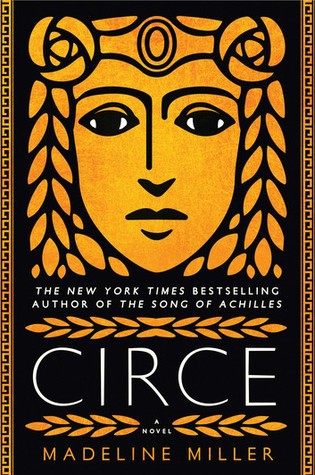
Circe
by Madeline Miller
★ Top 10 book of 2018 · #9 on Best Books of 2018
The unusual daughter of the sun god discovers she has the power of witchcraft and is exiled to a lonely island. There she meets famous mythological figures and must decide where she truly belongs.
Best for: Readers who enjoy mythology retold through a strong, independent female lead
Circe is #9 on BookWard's Best Books of 2018, out of 60 2018 books that cleared our data bar.
What Circe is about
Circe is born into the house of Helios, the sun god and mightiest of the Titans, but she has neither her father's power nor her mother's dangerous allure. Overlooked among the gods, she turns to the world of mortals for companionship, and there she discovers she has a talent for witchcraft. Her magic can turn rivals into monsters, and it frightens the gods enough that Zeus banishes her to a deserted island.
Alone there, she sharpens her craft and learns to tame wild beasts. Over time her path crosses with figures from Greek myth, among them the Minotaur, Daedalus and Icarus, Medea and Odysseus, and she draws the anger of both men and gods. Told in lyrical, immersive prose, it reimagines an old story from the point of view of a woman finding her strength. In the end she must decide where she truly belongs, with the gods or with mortals.
Circe on the Best Books of 2018
Circe came out in 2018. Of the 60 books first published in 2018 that met BookWard's data bar, it ranks #9 on our Best Books of 2018 list.
Why it made the list: 1,125 readers have shelved it on Open Library; readers rate it 4.2 out of 5 (109 ratings); 28 are reading it right now. The list ranks each year’s books on how many readers have picked them up, how highly readers rate them, and how many are reading them right now.
Nearby on the 2018 list
- Normal People Sally Rooney, #7
- Then She Was Gone Lisa Jewell, #8
- Restore Me Tahereh Mafi, #10
- Educated Tara Westover, #11
See all Best Books of 2018 Best books by year
More years: Best Books of 2017 Best Books of 2019.
The numbers behind it
- Readers: 934 want to read it, 28 are reading it now and 162 have read it, according to Open Library.
- Ratings: 4.2 out of 5 from 109 Open Library ratings.
| Signal | This book (0 to 100) | Weight |
|---|---|---|
| Reach | 87 | 55% |
| Reader love | 68 | 25% |
| Being read right now | 78 | 20% |
Questions about Circe
When was Circe published?
Circe by Madeline Miller was first published in 2018.
Was Circe one of the best books of 2018?
Circe is #9 on BookWard's Best Books of 2018, out of 60 2018 books that cleared our data bar. 1,125 readers have shelved it on Open Library; readers rate it 4.2 out of 5 (109 ratings); 28 are reading it right now.
Why is Circe on the Best Books of 2018 list?
1,125 readers have shelved it on Open Library; readers rate it 4.2 out of 5 (109 ratings); 28 are reading it right now.
More of the best books of 2018
- Heartstopper, Volume 1 Alice Oseman, #1
- Where the Crawdads Sing Delia Owens, #2
- The Laws of Human Nature Robert Greene, #3
- Atomic Habits James Clear, #4
- Five Feet Apart Rachael Lippincott, #5
- Verity Colleen Hoover, #6
See the full Best Books of 2018, the Top 100, or new books on Rising.
How we know
This page uses public data: Open Library reader counts and ratings, and Wikipedia page views for recent years. The description is paraphrased from real source text. Rankings reflect reading interest, not quality or sales, and can be affected by data gaps. Lists update monthly.
It suits adult and older teen readers who enjoy myth and character-driven stories.
Depends on the edition you pick.
Circe's life told in her own wry, watchful voice. 61% taste match
 BookWard’s take
Circe's life told in her own wry, watchful voice
Madeline Miller takes a minor figure from Greek myth and gives her a whole life, starting in the house of Helios and moving to exile on a deserted island. The character work is the draw: Circe grows from overlooked daughter into someone with real craft and real stakes. The book feels highly original, because the familiar myths are retold from a fresh angle rather than recited. The prose leans lyrical, a touch more ornate than some readers will want, though it suits the material. The pace is steady and the story rarely sags, since each encounter shifts something for her. If you want familiar tropes handled with care and an ending that lands, this delivers.
A full life told across many years gives it real heft, longer than BookWard's love of tight books.
It moves at a measured clip, slower than BookWard's preferred drive but never stalling.
Retelling myth through one witch's eyes is a distinctive take, close to what BookWard rewards.
The language is lyrical and image-rich, more ornate than BookWard usually favours.
Her inner growth drives events more than any external plot, a good match for BookWard.
After loneliness and hardship it settles somewhere warm, leaning hopeful, as BookWard does.
Circe's life unfolds in plain chronological order, conventional like BookWard's usual picks.
Wit appears in Circe's dry asides, but the book stays largely serious.
Cruelty, loss and divine wrath bring real darkness, a touch above BookWard's midpoint.
Love, loneliness and fierce protectiveness give it strong feeling, above BookWard's usual.
See all 50 dialsEvery position, side by side with this book
Where it lines up
- EndingBookWard 8 · book 8
- Authorial voiceBookWard 9 · book 9
- Story or ideasBookWard 3 · book 3
Where it pulls apart
- LengthBookWard 1 · book 6
- OpeningBookWard 10 · book 7
- Familiar tropesBookWard 10 · book 7
A full life told across many years gives it real heft, longer than BookWard's love of tight books.
It opens on a strange, overlooked daughter of a god, which pulls you in without rushing.
Myth is familiar ground, but Circe's angle on it feels fresh and avoids the stock heroics.
Magic, gods and consequences follow consistent rules, which suits BookWard's taste for airtight worlds.
It moves at a measured clip, slower than BookWard's preferred drive but never stalling.
Retelling myth through one witch's eyes is a distinctive take, close to what BookWard rewards.
Circe is drawn in rich, shifting detail, matching BookWard's love of deeply built characters.
Her journey reaches a clear, earned resolution, in line with BookWard's preference for closure.
It is moving without leaning on easy emotion, a little warmer than BookWard's restrained pick.
Cruelty and loss in the story serve her arc rather than existing for effect.
This is fiction, so the nonfiction rigor dial does not apply.
Circe's dry, observant narration gives the book a strong, unmistakable voice BookWard admires.
This is firmly story-led, following one life, which matches BookWard's preference.
Myth and history arrive through scenes and encounters rather than lectures, as BookWard likes.
Each new arrival on the island changes Circe's situation, so the middle holds up well.
The language is lyrical and image-rich, more ornate than BookWard usually favours.
Her inner growth drives events more than any external plot, a good match for BookWard.
After loneliness and hardship it settles somewhere warm, leaning hopeful, as BookWard does.
Circe's life unfolds in plain chronological order, conventional like BookWard's usual picks.
Wit appears in Circe's dry asides, but the book stays largely serious.
The language is rich but the story is easy to follow, so it reads accessibly.
Told entirely through Circe, a single view, narrower than BookWard's taste for many voices.
Her life moves forward in order across a very long span, as BookWard expects.
Gods, witchcraft and monsters make it highly fantastical, beyond BookWard's mid-range comfort.
Many figures from myth cross her path, though the focus stays on Circe.
Intimate life on an island sits against a mythic backdrop, so scale lands in the middle.
Her thoughts and feelings drive the book more than action, close to BookWard's balance.
Conversation with gods and mortals matters, balanced against long stretches of reflection.
Love and desire are part of her life but not the engine of the book.
The Greek mythic world is vivid and strange, more unfamiliar than BookWard's usual settings.
It is set in ancient myth, far from the present day BookWard leans toward.
It draws on myths that have lasted for millennia, so it feels enduring.
Circe tells her own story plainly and honestly, which is reliable, unlike BookWard's lean.
Gods and mortals alike act with mixed motives, giving it a morally layered feel.
The island, the palaces and the magic are described richly, beyond BookWard's middle.
It stands alone as one complete life story, matching BookWard's middle ground.
Fate shapes the story more than surprise, so shocks are fewer than BookWard prefers.
It asks real questions about power and belonging while staying readable.
Cruelty, loss and divine wrath bring real darkness, a touch above BookWard's midpoint.
Love, loneliness and fierce protectiveness give it strong feeling, above BookWard's usual.
Any humor is dry and understated, in keeping with BookWard's own taste.
Monsters, vengeance and harm occur, though not as relentless spectacle.
Desire and relationships are present but not dwelt on.
Power between gods and mortals is a theme, though not a political argument.
The prose is elevated, but the sentences stay clear and readable.
Circe's strong views color the telling, so narration is clearly opinionated.
The story draws on ancient myth and reflects on the past, looking back.
Circe grows from bitterness toward a warmer worldview, leaning mildly idealistic.
Review written by BookWard, dial version 1, November 2026.
Who is Circe right for?
It suits adult and older teen readers who enjoy myth and character-driven stories. It includes violence, cruelty and some sexual content, so it may not suit younger readers.
The language is rich but the story is easy to follow, so it reads accessibly.
Cruelty, loss and divine wrath bring real darkness, a touch above BookWard's midpoint.
Love, loneliness and fierce protectiveness give it strong feeling, above BookWard's usual.
Monsters, vengeance and harm occur, though not as relentless spectacle.
Book CompanionCirce: ideas, characters, themes
A god's overlooked daughter finds her own power, and must choose between the gods who made her and the mortals she loves.
- A strange child. Circe is born into the house of Helios but fits neither her father's power nor her mother's allure.
- Turning to mortals. Seeking companionship, she looks to the mortal world and discovers she has the power of witchcraft.
- Banished to an island. After threatening the gods, Zeus sends her to a deserted island, where she hones her craft.
- Famous crossings. On the island she meets figures from myth such as the Minotaur, Daedalus and Icarus, Medea and Odysseus.
- A final choice. She must decide whether she belongs with the gods or the mortals she has come to love.
Characters
Circe
Narrator and witch
The daughter of Helios who finds her power in witchcraft and is exiled for it.
Helios
Her father
The sun god and mightiest of the Titans, in whose house Circe is born.
Zeus
King of the gods
The ruler who banishes Circe to a deserted island after she threatens the gods.
Odysseus
Mortal visitor
The wily hero of myth who crosses paths with Circe.
Medea
Figure from myth
A murderous presence among the famous figures Circe encounters.
Themes
Who holds it, who fears it, and what it costs a woman to claim it.
Choosing between the family you are born into and the one you find.
What isolation breaks in a person and what it lets them build.
How caring for mortals means accepting that they die.
The pull and damage of kin who never truly accept you.
Discussion questions
- Why might Circe find mortals easier company than gods?
- How does exile change what Circe becomes?
- What does retelling a myth from a minor figure's view reveal?
- Is Circe's power a gift, a threat, or both?
- Which choice at the end feels most defining, and why?
Personalize your Book Companion
This is the general edition. In BookWard, the Companion is written for you: your reading profile, your notes, and spoiler-safe to the page you are on.
Buy, listen or borrow Circe
Each link opens a search for this book on that store, in a new tab.
Read on a device
Borrow
Reviews and community
If you liked Circe
The Trojan War, told through the man beside the hero
JunieErin Crosby EckstineA grieving enslaved girl, a sister's spirit, and a plantation's secrets
Lady MacbethAva ReidShakespeare's villainess gets a voice, a past, and real magic
The Last UnicornPeter S. BeagleA lyrical fantasy quest that earns its sorrow and wonder
Find your own best books
Add what you have read, rate it, and BookWard will recommend what to read next.
Free to start. No credit card needed.