Often shelved as juvenile literature, it suits young readers and adults alike, and its tone is gentle on the surface.
248 pages, about 4 to 6 hours.
A lyrical fantasy quest that earns its sorrow and wonder. 68% taste match
The story
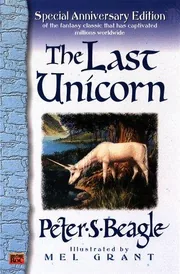
The Last Unicorn is a fantasy novel by Peter S. Beagle, first published in 1968. It is an American work of fantasy fiction built around the legend of the unicorn, and it has appeared in 46 editions, with a typical length of around 248 pages. Its subjects also place it within juvenile literature and legends and stories.
The story follows a unicorn who lives alone in a lilac wood. She leaves the safety of her enchanted forest to search for others of her kind. Along the way she is joined by Schmendrick, a magician, and by Molly Grue. Their journey leads to the castle of a despondent monarch, where the unicorn faces the creature that threatens her kind with extinction. The book moves through love, loss and wonder as the unicorn comes to know the joys and sorrows of life. A separate novella, The Last Unicorn: The Lost Version, presents an earlier form of the manuscript, written in 1962 and issued by Subterranean Press in 2006.
The unicorn lived in a lilac wood, and she lived all alone.
Themes
UnicornsLegends and storiesAmerican literatureUnicorniosNovelas
- Want to read 244
- Reading now 8
- Read 46
Most people shelving it are saving it for later.
Of 298 readers who put it on a shelf, 82% want to read it, 3% are reading it now, 15% have finished it and 0% stopped before the end.
By the numbers
- The median edition runs 248 pages. Counting about 275 words a page and an adult reading pace of 250 words a minute, that is about 4.5 hours of reading.
- Open Library tracks 46 editions from 35 publishers, the earliest dated 1968 and the latest 2025, across 8 languages.
- On reader demand it ranks in the top 4% of the classic books in our catalog (8,749 of them).
- Libraries shelve it under Dewey 813.54 and Library of Congress class PS-3552.00000000.E13 Las 1979.
 BookWard’s take
A lyrical fantasy quest that earns its sorrow and wonder
Peter S. Beagle opens with a sentence that does its job at once: the unicorn lived in a lilac wood, and she lived all alone. From there it is a quest story, but a strange and inventive one, with a unicorn leaving her enchanted forest to look for others of her kind. It feels original, because the legend is reworked rather than recycled. Characters like the bumbling magician Schmendrick and Molly Grue give the book real depth, well beyond what the genre usually offers, and it turns out to be funny where you might expect solemnity. The prose is more ornate than I usually like, but it serves the mood rather than showing off. At 248 pages it is short, and the pace stays steady rather than sagging. The feeling it leaves is mixed, in the best way: love and loss both land.
At 248 pages it is compact for a fantasy quest, which suits BookWard's liking for tight books.
The journey moves steadily from one encounter to the next without rushing, a touch gentler than BookWard's preferred speed.
A classic legend is treated with fresh wit and melancholy, which makes it feel distinct within fantasy.
The language is lyrical and image-rich, more ornate than BookWard usually favors, though it fits the fable.
The quest matters, but the changes within the unicorn and her companions carry the book.
Joy and sorrow sit side by side here, so hope is real but never uncomplicated.
It follows a traditional quest shape, with the voice rather than the form doing the inventing.
Schmendrick's bumbling and the book's dry asides bring genuine humor into a sorrowful tale.
There is sorrow and a looming threat, handled with restraint rather than grimness.
Longing, loss and wonder are felt strongly, and the book does not hold back on feeling.
See all 50 dialsEvery position, side by side with this book
Where it lines up
- Character depthBookWard 8 · book 8
- LengthBookWard 1 · book 2
- OpeningBookWard 10 · book 9
Where it pulls apart
- Internal logicBookWard 10 · book 7
- Familiar tropesBookWard 10 · book 8
- RealityBookWard 4 · book 10
At 248 pages it is compact for a fantasy quest, which suits BookWard's liking for tight books.
The first sentence sets the lonely unicorn and the lilac wood immediately, a quick and effective way in.
Unicorns and quests are familiar ground, but the book plays against the usual fairy-tale expectations rather than leaning on them.
The magic follows its own consistent rules within the story, though it prizes feeling over strict mechanics.
The journey moves steadily from one encounter to the next without rushing, a touch gentler than BookWard's preferred speed.
A classic legend is treated with fresh wit and melancholy, which makes it feel distinct within fantasy.
Schmendrick and Molly Grue are drawn with flaws and warmth, well beyond fairy-tale types.
The quest reaches a real conclusion, though the book leaves a bittersweet aftertaste rather than a tidy bow.
It is openly tender about love and loss, but the wit keeps it from tipping into sweetness.
Its sadness grows out of the story and its themes, not from darkness added for effect.
This is a novel, so rigor does not apply.
Beagle's narration is unmistakable, poetic and wry in a way few fantasy writers match.
It is firmly story-led, with ideas about mortality and wonder carried by the journey.
The tale mostly lets events and encounters speak, with little stopping to explain the world.
The episodic road structure keeps fresh people and places arriving, so the middle holds up.
The language is lyrical and image-rich, more ornate than BookWard usually favors, though it fits the fable.
The quest matters, but the changes within the unicorn and her companions carry the book.
Joy and sorrow sit side by side here, so hope is real but never uncomplicated.
It follows a traditional quest shape, with the voice rather than the form doing the inventing.
Schmendrick's bumbling and the book's dry asides bring genuine humor into a sorrowful tale.
The story reads easily, with a fable's clarity, though the lyrical prose rewards slow attention.
The story keeps close to the unicorn's journey and the few companions beside her.
The quest unfolds in a straightforward forward line from the lilac wood onward.
Unicorns, magicians and enchanted forests make this fully fantasy, with no grounding in the everyday world.
A small circle of travelers and a few encounters keep the cast contained.
The stakes touch her whole kind, yet the telling stays personal and fable-sized.
The journey is physical, but what matters most is what the unicorn feels and learns.
Conversations between the unicorn and her companions carry plenty of charm and wit.
Love is part of what the unicorn learns, but it is one thread, not the engine.
An enchanted, legend-soaked realm far from ordinary life gives it a distinctly unfamiliar setting.
It belongs to a timeless fairy-tale past rather than anything resembling the present day.
Decades after 1968 it is still widely loved, because its themes of wonder and loss do not date.
The storyteller can be trusted, guiding the fable with a clear and steady hand.
The good and the sorrowful are mostly clear, though choices carry real cost.
Lilac woods and castle scenes are painted with rich, vivid imagery.
It stands on its own as a single complete story.
There are turns along the way, but the book is more about feeling than plot surprises.
Its melancholy asks something of the reader, but it remains approachable and beautifully told.
There is sorrow and a looming threat, handled with restraint rather than grimness.
Longing, loss and wonder are felt strongly, and the book does not hold back on feeling.
The humor is witty and sly more than slapstick, with some comic bumbling mixed in.
Menace exists but the book keeps harm mostly implied rather than shown.
Nothing in this fairy-tale quest centers on sexual content.
Power and kingship appear as story elements, but politics is not the point.
The language is clear and fable-like, with no heavy dialect to wade through.
The narration has a wry, knowing personality that colors how events are told.
The book is steeped in myth and what is lost to time, so it looks backward.
It believes in wonder and love while staying clear-eyed about loss.
Review written by BookWard, dial version 1, November 2026.
Who is The Last Unicorn right for?
Often shelved as juvenile literature, it suits young readers and adults alike, and its tone is gentle on the surface. It deals with loss and the threat of extinction, which may touch younger readers more deeply.
The story reads easily, with a fable's clarity, though the lyrical prose rewards slow attention.
There is sorrow and a looming threat, handled with restraint rather than grimness.
Longing, loss and wonder are felt strongly, and the book does not hold back on feeling.
Menace exists but the book keeps harm mostly implied rather than shown.
Book CompanionThe Last Unicorn: ideas, characters, themes
A solitary unicorn leaves her enchanted forest to find others of her kind and learns, through love and loss, what it means to live.
- A lonely beginning. The story opens with a unicorn living alone in a lilac wood, which sets up her search for others like her.
- The quest starts. She leaves the safety of her forest to look for the rest of her kind.
- Companions join. Along the way she is joined by the bumbling magician Schmendrick and the indomitable Molly Grue.
- A despondent king. Their journey leads to the castle of a despondent monarch.
- A threat to her kind. There she must face the creature that would drive unicorns to extinction.
Characters
The unicorn
Protagonist
A lone unicorn who leaves her lilac wood to search for others of her kind.
Schmendrick
Companion
A bumbling magician who joins her journey.
Molly Grue
Companion
An indomitable traveler who joins the unicorn along the way.
The despondent monarch
Ruler
A king whose castle the journey leads to.
Themes
The book weighs what is gained and what is given up when we care for something.
A sense of awe at the strange, beautiful and magical things in the world.
The threat to unicorns stands for what vanishes and cannot be retrieved.
The unicorn's solitude drives her search for others of her kind.
The unicorn learns about the joys and sorrows of life through her journey.
Discussion questions
- Why do you think the unicorn is willing to leave the safety of her forest?
- What do Schmendrick and Molly Grue each bring to the journey that the unicorn lacks?
- How does the book balance humor with sadness?
- What does extinction mean here, beyond a threat to one creature?
- Does the unicorn change over the course of the story, and how?
Personalize your Book Companion
This is the general edition. In BookWard, the Companion is written for you: your reading profile, your notes, and spoiler-safe to the page you are on.
Buy, listen or borrow The Last Unicorn
Each link opens a search for this book on that store, in a new tab.
Read on a device
Borrow
Reviews and community
If you liked The Last Unicorn
Circe's life told in her own wry, watchful voice
Someone You Can Build a Nest inJohn WiswellA monster falls for a human, and the humans are worse
The Graveyard BookNeil GaimanA boy raised by ghosts, with a murderer still looking
The Thief of AlwaysClive BarkerA short, sharp fable about boredom, bargains and stolen youth
Sources: Open Library.
Track The Last Unicorn and find your next favorite
Add it to your shelf, rate what you have read, and BookWard will recommend what fits you.
Free to start. No credit card needed.