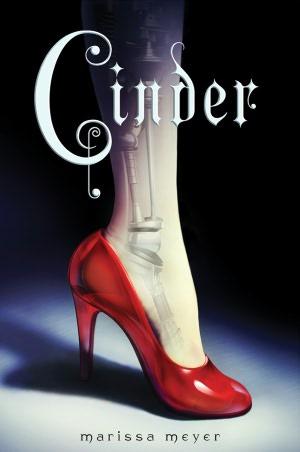
Cinder
by Marissa Meyer
★ Top 25 book of 2011 · #14 on Best Books of 2011
In New Beijing, Cinder is a gifted mechanic and cyborg who is looked down on by society and her stepmother. A connection with Prince Kai pulls her into a struggle that threatens Earth's future.
Best for: Readers who enjoy futuristic fairy-tale retellings with cyborgs, royalty, and forbidden attraction
Cinder is #14 on BookWard's Best Books of 2011, out of 53 2011 books that cleared our data bar.
What Cinder is about
New Beijing is a city of crowded streets where people and androids share the pavement, and a deadly plague is spreading through its population. Overhead, the ruthless people of the moon watch and wait. Cinder is a skilled mechanic and a cyborg, treated as a second-class citizen with a past she cannot explain. Her stepmother despises her and blames her for a stepsister's illness. Then her path crosses with Prince Kai, and she is drawn into a conflict far bigger than her own life, along with an attraction that is not allowed. To protect her world, she will have to learn the truth about where she comes from.
Marissa Meyer's 2011 novel moves quickly and invents freely, weaving questions of identity, prejudice and fate into an adventure. It will appeal to readers who like science fiction with a fairy-tale shape and a heroine who has to fight for her place.
Cinder on the Best Books of 2011
Cinder came out in 2011. Of the 53 books first published in 2011 that met BookWard's data bar, it ranks #14 on our Best Books of 2011 list.
Why it made the list: 900 readers have shelved it on Open Library; readers rate it 4.1 out of 5 (55 ratings); 48 are reading it right now. The list ranks each year’s books on how many readers have picked them up, how highly readers rate them, and how many are reading them right now.
Nearby on the 2011 list
- Outwitting the Devil Napoleon Hill, #12
- The Lean Startup Eric Ries, #13
- Gone Girl Gillian Flynn, #15
- The One and Only Ivan Katherine Applegate, #16
See all Best Books of 2011 Best books by year
More years: Best Books of 2010 Best Books of 2012.
The numbers behind it
- Readers: 737 want to read it, 48 are reading it now and 115 have read it, according to Open Library.
- Ratings: 4.1 out of 5 from 55 Open Library ratings.
| Signal | This book (0 to 100) | Weight |
|---|---|---|
| Reach | 74 | 55% |
| Reader love | 58 | 25% |
| Being read right now | 74 | 20% |
Questions about Cinder
When was Cinder published?
Cinder by Marissa Meyer was first published in 2011.
Was Cinder one of the best books of 2011?
Cinder is #14 on BookWard's Best Books of 2011, out of 53 2011 books that cleared our data bar. 900 readers have shelved it on Open Library; readers rate it 4.1 out of 5 (55 ratings); 48 are reading it right now.
Why is Cinder on the Best Books of 2011 list?
900 readers have shelved it on Open Library; readers rate it 4.1 out of 5 (55 ratings); 48 are reading it right now.
More of the best books of 2011
- Sapiens Yuval Noah Harari, #1
- The Song of Achilles Madeline Miller, #2
- Thinking, Fast and Slow Daniel Kahneman, #3
- Steve Jobs Walter Isaacson, #4
- The Son of Neptune Rick Riordan, #5
- Shatter Me Tahereh Mafi, #6
See the full Best Books of 2011, the Top 100, or new books on Rising.
How we know
This page uses public data: Open Library reader counts and ratings, and Wikipedia page views for recent years. The description is paraphrased from real source text. Rankings reflect reading interest, not quality or sales, and can be affected by data gaps. Lists update monthly.
Suits young adult readers and anyone who enjoys fairy-tale retellings with a science-fiction twist.
Depends on the edition you pick.
Cinderella reimagined as a cyborg mechanic in New Beijing. 50% taste match
 BookWard’s take
Cinderella reimagined as a cyborg mechanic in New Beijing
Cinder is a fairy-tale retelling that moves quickly and knows exactly which story it is borrowing from. The hook is strong: a cyborg mechanic in New Beijing, a plague, a watching lunar court, all in play early. The trade-off is that it leans on familiar tropes. The Cinderella frame, the stepmother and the prince give it a predictable shape, though the sci-fi trappings keep it feeling fresh. The pace is fast, and since this is the first of several books, the ending resolves its own arc while pointing onward to what comes next. Romance sits in the middle of the story without taking it over. For a reader who wants a brisk, inventive young adult adventure, it delivers; for one who would rather avoid well-worn tropes, it plays them openly.
A mid-sized young adult novel; it takes its time setting up a larger series without feeling bloated, though it is not a short read.
The plot keeps moving, with the plague, the prince and the lunar threat all pushing forward, matching BookWard's liking for speed.
Setting a Cinderella story among cyborgs and a lunar empire is a distinctive twist on a well-worn tale, if not wholly new.
Plain, accessible prose that serves the story without calling attention to itself, close to BookWard's mid-range.
Plot and character share the work, with Cinder's identity driving events as much as the court intrigue does.
Despite plague and prejudice, the tone is ultimately hopeful, centered on a heroine finding her place.
A straightforward, conventional structure that follows one heroine through a clear sequence of events.
There is banter and light moments, but the tone stays mostly earnest and serious.
A plague and prejudice give it some shadow, but the overall feel is gentle for young adult fiction.
Cinder's isolation and longing carry real feeling, though it stays within a young adult register.
See all 50 dialsEvery position, side by side with this book
Where it lines up
- PaceBookWard 8 · book 8
- Story or ideasBookWard 3 · book 3
- OpeningBookWard 10 · book 8
Where it pulls apart
- Familiar tropesBookWard 10 · book 4
- LengthBookWard 1 · book 5
- Internal logicBookWard 10 · book 6
A mid-sized young adult novel; it takes its time setting up a larger series without feeling bloated, though it is not a short read.
Cinder's status as a cyborg mechanic in a plague-struck New Beijing is established straight away, which suits BookWard's love of an immediate grip.
It openly follows the Cinderella outline, so the shape is familiar, which sits below BookWard's taste for avoiding tropes.
The world of androids, a plague and a lunar people hangs together well enough for the story, without being airtight.
The plot keeps moving, with the plague, the prince and the lunar threat all pushing forward, matching BookWard's liking for speed.
Setting a Cinderella story among cyborgs and a lunar empire is a distinctive twist on a well-worn tale, if not wholly new.
Cinder is drawn with real interiority around her identity and status, though some supporting figures follow familiar roles.
This book closes its own arc while clearly setting up the rest of the series, so it resolves partly rather than fully.
It leans into romance and longing for its young adult audience, without becoming overwrought.
Its darker moments, like the plague and Cinder's treatment, feel tied to the world rather than added for effect.
The narration is clear and engaging with a recognisable young adult tone, though it is not strikingly idiosyncratic.
This is a story-led book: the plot and its heroine drive it, with ideas about identity as an undercurrent.
World details arrive mostly through scenes and events, with only occasional stretches of explaining.
The momentum holds across the book, with the plot threads continuing to tighten as it goes.
Plain, accessible prose that serves the story without calling attention to itself, close to BookWard's mid-range.
Plot and character share the work, with Cinder's identity driving events as much as the court intrigue does.
Despite plague and prejudice, the tone is ultimately hopeful, centered on a heroine finding her place.
A straightforward, conventional structure that follows one heroine through a clear sequence of events.
There is banter and light moments, but the tone stays mostly earnest and serious.
An easy, fast read that asks little of the reader beyond following its world.
The events unfold in a straightforward forward order without time jumps.
A far-future world of androids, cyborgs and a lunar people places it firmly in the fantastical camp.
A moderate cast of family members, courtiers and allies, enough to populate the world without crowding it.
It touches on a fate-of-the-world conflict between Earth and the moon, so the stakes feel large.
Cinder's inner struggles matter, but external events like the plague and palace intrigue drive much of the action.
A forbidden attraction between Cinder and Prince Kai runs prominently through the story alongside the larger plot.
New Beijing and the lunar kingdom make an unfamiliar, richly imagined setting for most readers.
The story is set in a distant future rather than the present day, so it reads as far from now.
The fairy-tale foundation gives it lasting appeal, though its young adult framing ties it somewhat to its time.
The narration is straightforward and trustworthy, with no games played about what Cinder knows.
Right and wrong are mostly clear, with a cruel stepmother and a scheming lunar court as the antagonists.
Enough detail brings New Beijing and its machinery to life without lingering too long.
This is the first book in The Lunar Chronicles, so it is built to lead into further volumes.
Secrets about Cinder's past and the lunar threat provide a fair number of turns and reveals.
A comfortable, accessible adventure that rarely pushes the reader into difficult territory.
A plague and prejudice give it some shadow, but the overall feel is gentle for young adult fiction.
Cinder's isolation and longing carry real feeling, though it stays within a young adult register.
Where humor appears it is light and wry rather than broad or slapstick.
There is danger and illness, but little graphic violence on the page.
Romance stays at attraction and tension, with nothing sexual on the page.
Court power, prejudice against cyborgs and interplanetary conflict give it a political edge without dominating.
The language is plain and easy to follow throughout.
Narration mostly stays close to Cinder's experience rather than editorializing.
As a far-future story about what comes next for Earth and its people, it faces forward.
Cinder's determination and the story's belief in her worth give it an idealistic streak.
Review written by BookWard, dial version 1, November 2026.
Who is Cinder right for?
Suits young adult readers and anyone who enjoys fairy-tale retellings with a science-fiction twist. It deals with illness, prejudice and a cruel household, but stays gentle on violence and has no sexual content.
An easy, fast read that asks little of the reader beyond following its world.
A plague and prejudice give it some shadow, but the overall feel is gentle for young adult fiction.
Cinder's isolation and longing carry real feeling, though it stays within a young adult register.
There is danger and illness, but little graphic violence on the page.
Book CompanionCinder: ideas, characters, themes
A cyborg mechanic in a futuristic city, scorned by society, discovers secrets about her past that put her at the center of a struggle between Earth and the moon.
- A fairy tale reimagined. The story borrows the shape of Cinderella, with a mistreated heroine and a stepmother, then moves it into a futuristic world of androids and cyborgs.
- A heroine on society's margins. Cinder is a gifted mechanic and a cyborg, treated as a second-class citizen, which shapes how she moves through the world.
- A world under threat. A deadly plague ravages the population while a ruthless lunar people watch from space, giving the story its larger stakes.
- A forbidden connection. Cinder's life becomes tied to Prince Kai, creating a forbidden attraction that complicates her choices.
- Secrets about her past. Cinder must uncover the mysteries of her own origins in order to protect her world's future.
Characters
Cinder
Protagonist
A gifted mechanic and cyborg living as a second-class citizen in New Beijing, with a mysterious past.
Prince Kai
Love interest
The handsome prince whose path crosses Cinder's and draws her into larger events.
Cinder's stepmother
Antagonist
Reviles Cinder and blames her for her stepsister's illness.
Themes
Who Cinder is, and what her origins and her cyborg nature mean for how she sees herself.
How society treats cyborgs as lesser, and what that costs the people it targets.
The pull between what is expected of Cinder and what she wants for herself.
Who can be trusted when family, love and power pull in different directions.
Whether one person can change the course of a world, and what that burden asks.
Discussion questions
- How does setting Cinderella in a world of cyborgs and androids change what the old story means?
- Why might the book make Cinder a mechanic, and how does her work shape her character?
- How does the treatment of cyborgs as second-class citizens echo real-world prejudice?
- What does the forbidden attraction between Cinder and Kai add to the larger conflict?
- Does knowing the Cinderella outline make the story more satisfying or more predictable?
Personalize your Book Companion
This is the general edition. In BookWard, the Companion is written for you: your reading profile, your notes, and spoiler-safe to the page you are on.
Buy, listen or borrow Cinder
Each link opens a search for this book on that store, in a new tab.
Read on a device
Borrow
Reviews and community
If you liked Cinder
A fairy-tale retelling with a sci-fi engine and a second heroine
EverblazeShannon MessengerBook three of a fantasy series that bets everything on momentum
UgliesScott WesterfeldA fast YA dystopia about beauty, choice, and a friend's escape
The Darkest MindsAlexandra BrackenA fast YA dystopia with a hooked-in-chapter-one premise
Find your own best books
Add what you have read, rate it, and BookWard will recommend what to read next.
Free to start. No credit card needed.