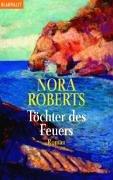
Born in Fire
by Nora Roberts
★ Top 25 book of 1994 · #21 on Best Books of 1994
Maggie Concannon is a fiercely independent glassmaker in the west of Ireland, shaped by a scarred past. When a Dublin gallery owner who admires her art arrives, a strong attraction begins to heal her.
Best for: Romance readers who love Irish settings and strong-willed, artistic heroines
Born in Fire is #21 on BookWard's Best Books of 1994, out of 42 1994 books that cleared our data bar.
What Born in Fire is about
Maggie Concannon is the eldest of three sisters, a glassmaker and a Clare woman from the west of Ireland. She is stubborn, independent and quick to anger, and she prefers her own company to anyone else's. Her glass is striking, though, and Dublin gallery owner Rogan Sweeney sees something in it that others miss. He promises to help her build a career.
Soon a fierce attraction grows between two people who rarely give way. Nora Roberts's romance, set against the beauty of Ireland and the bond between sisters, follows how love slowly begins to ease the hurts Maggie carries from her past. It suits readers who like romance rooted in craft, place and family.
Born in Fire on the Best Books of 1994
Born in Fire came out in 1994. Of the 42 books first published in 1994 that met BookWard's data bar, it ranks #21 on our Best Books of 1994 list.
Why it made the list: 213 readers have shelved it on Open Library; readers rate it 4.2 out of 5 (10 ratings). The list ranks each year’s books on how many readers have picked them up, how highly readers rate them, and how many are reading them right now.
Nearby on the 1994 list
- It's Perfectly Normal Robie H. Harris, #19
- Bird by Bird Anne Lamott, #20
See all Best Books of 1994 Best books by year
More years: Best Books of 1993 Best Books of 1995.
The numbers behind it
- Readers: 160 want to read it, 11 are reading it now and 42 have read it, according to Open Library.
- Ratings: 4.2 out of 5 from 10 Open Library ratings.
| Signal | This book (0 to 100) | Weight |
|---|---|---|
| Reach | 38 | 55% |
| Reader love | 71 | 25% |
| Being read right now | 33 | 20% |
Questions about Born in Fire
When was Born in Fire published?
Born in Fire by Nora Roberts was first published in 1994.
Was Born in Fire one of the best books of 1994?
Born in Fire is #21 on BookWard's Best Books of 1994, out of 42 1994 books that cleared our data bar. 213 readers have shelved it on Open Library; readers rate it 4.2 out of 5 (10 ratings).
Why is Born in Fire on the Best Books of 1994 list?
213 readers have shelved it on Open Library; readers rate it 4.2 out of 5 (10 ratings).
More of the best books of 1994
- Guess How Much I Love You Sam McBratney, #1
- Artificial Intelligence Stuart J. Russell, #2
- The Six Pillars of Self-esteem Nathaniel Branden, #3
- Long Walk to Freedom Nelson Mandela, #4
- Mercury and Me Jim Hutton, #5
- Men Are from Mars, Women Are from Venus John Gray, #6
See the full Best Books of 1994, the Top 100, or new books on Rising.
How we know
This page uses public data: Open Library reader counts and ratings, and Wikipedia page views for recent years. The description is paraphrased from real source text. Rankings reflect reading interest, not quality or sales, and can be affected by data gaps. Lists update monthly.
Best suited to adult and older teen readers who enjoy contemporary romance.
Depends on the edition you pick.
A glassmaker, a gallery owner, and a slow-burning Irish romance. 47% taste match
 BookWard’s take
A glassmaker, a gallery owner, and a slow-burning Irish romance
Born in Fire is a contemporary romance set in County Clare, built around Maggie Concannon, a stubborn, free-spirited glassblower, and Rogan Sweeney, the Dublin gallery owner who sees the soul in her work. It is a mixed fit for this reader. The love story sits squarely at the center of the book, which is a long way from a preference for romance as a minor thread. Familiarity is the weak spot too, since a prickly artist and a persistent patron make a well-worn pairing. The pleasures lie in the craft detail of glassmaking and the Irish setting, which give the descriptions and the voice a real texture. It is also the first of a trilogy about three sisters, so anyone who likes to settle into a series will find it a promising start.
A full-length romance novel, longer than BookWard's taste for tight books, though not sprawling.
Steady rather than brisk, letting the attraction and the work of glassmaking unfold at a measured rate.
The glassblowing craft gives it a distinct angle, but the central romance follows a well-known path.
Clear, readable commercial prose with some lyrical touches when describing glass and the Irish landscape.
The story runs on who Maggie is and how she lets love in, far more than on external plot.
Love heals a scarred past, so the outlook is warm and hopeful.
A conventional romance structure, told straightforwardly without formal experiment.
Mostly gentle, with a scarred past providing some shadow but not heavy darkness.
Attraction, anger and healing give it real feeling, though within romance's comfortable bounds.
See all 50 dialsEvery position, side by side with this book
Where it lines up
- EndingBookWard 8 · book 9
- Shock for effectBookWard 9 · book 8
- Story or ideasBookWard 3 · book 2
Where it pulls apart
- Familiar tropesBookWard 10 · book 3
- LengthBookWard 1 · book 5
- OpeningBookWard 10 · book 6
A full-length romance novel, longer than BookWard's taste for tight books, though not sprawling.
The premise of a fierce artist and the man who champions her sets the romance in motion early, a decent but not instant hook.
The reclusive artist and persistent patron is a familiar romance pairing, so it leans on tropes more than BookWard likes.
Romance plots like this run on clear cause and effect, with a scarred past and a growing bond that hold together sensibly.
Steady rather than brisk, letting the attraction and the work of glassmaking unfold at a measured rate.
The glassblowing craft gives it a distinct angle, but the central romance follows a well-known path.
Maggie is drawn with temper, independence and a scarred past, giving the leads more shape than stock types.
Romance conventions point to a satisfying, resolved close, which suits BookWard's taste for a finished story.
Warm and openly emotional in the way romance tends to be, more sentimental than BookWard's restrained preference.
It trades on feeling and attraction rather than shock, and its darkness is mild, so nothing is there for effect.
Not applicable; this is a novel.
Roberts writes with a recognizable, accessible commercial voice, warm and assured rather than strikingly singular.
Squarely story-led, built on a relationship and a career rather than on arguments or ideas.
Mostly dramatized through scene and relationship, with the craft detail woven into the action.
Clear, readable commercial prose with some lyrical touches when describing glass and the Irish landscape.
The story runs on who Maggie is and how she lets love in, far more than on external plot.
Love heals a scarred past, so the outlook is warm and hopeful.
A conventional romance structure, told straightforwardly without formal experiment.
An easy, accessible read that asks little of the reader beyond attention to the story.
A grounded, realistic contemporary setting with no fantastical elements.
Centered on the Concannon sisters and a small circle around Maggie and Rogan, so the cast stays compact.
An intimate story about one woman's art, family and love rather than anything epic.
The focus is on feeling, attraction and personal history more than outward action.
The love story between Maggie and Rogan is the heart of the book.
The glassmaking studio and west of Ireland give it a setting that feels fresh to many readers.
Published in 1994 and set in its own modern day, so a little dated for today's reader.
Its warm, character-based romance has lasting appeal, though some period details have aged.
Right and wrong stay clear, with no deep ethical ambiguity at its center.
Rich in the textures of hand-blown glass and the Clare countryside.
The first of a trilogy about three sisters, so it is part of a larger run.
Driven by a relationship arc readers can see coming, with few major surprises.
A comforting, reassuring read rather than a challenging one.
Mostly gentle, with a scarred past providing some shadow but not heavy darkness.
Attraction, anger and healing give it real feeling, though within romance's comfortable bounds.
Light, character-based humor from Maggie's temper and the leads' sparring.
As a romance with a fierce attraction at its center, it includes sensual content, though not as its whole point.
Plain, readable English with only light Irish flavor to the setting.
Roberts's narration warms to her characters and shapes sympathy for them.
A contemporary story concerned with the present and the relationships being built in it.
Believes in love, craft and healing, giving it an idealistic streak.
Review written by BookWard, dial version 1, November 2026.
Who is Born in Fire right for?
Best suited to adult and older teen readers who enjoy contemporary romance. It includes sensual content and a character with a painful past.
An easy, accessible read that asks little of the reader beyond attention to the story.
Mostly gentle, with a scarred past providing some shadow but not heavy darkness.
Attraction, anger and healing give it real feeling, though within romance's comfortable bounds.
Book CompanionBorn in Fire: ideas, characters, themes
A fiercely independent glass artist finds that accepting both a champion for her work and love can heal a scarred past.
- The artist at the center. Maggie Concannon is a reclusive, stubborn glassmaker whose independence and temper drive the story.
- A patron who sees her. Dublin gallery owner Rogan Sweeney recognizes the soul in her work and vows to help build her career.
- Craft as character. Hand-blown glass is described as exacting and difficult, a delicate art made by a strong woman.
- Attraction and healing. Their fierce attraction sits alongside a slow healing of Maggie's past.
- Ireland as setting. The turbulent west country of Clare shapes the mood and the people.
Characters
Maggie Concannon
Protagonist
The eldest Concannon sister, a reclusive, free-spirited glassmaker with a stubborn, strong-willed nature.
Rogan Sweeney
Love interest
A Dublin gallery owner who believes in Maggie's art and wants to build her career.
Margaret Mary
Maggie's formal name
The glass artist's given name, tied to her fierce independence and volatile temper.
Themes
Maggie's fierce self-reliance and what it costs to let someone in.
The skill, patience and risk involved in making something beautiful by hand.
How love and trust can slowly repair a scarred past.
The pull of sisters, home and the Irish west country.
What it means to have your work seen and valued.
Discussion questions
- Why does Maggie guard her independence so fiercely, and what does it protect?
- How does glassmaking work as a picture of Maggie's own character?
- What does Rogan offer Maggie beyond romance?
- How much does the Irish setting shape the story's mood?
- Where does the romance follow familiar patterns, and where does it feel fresh?
Personalize your Book Companion
This is the general edition. In BookWard, the Companion is written for you: your reading profile, your notes, and spoiler-safe to the page you are on.
Buy, listen or borrow Born in Fire
Each link opens a search for this book on that store, in a new tab.
Read on a device
Borrow
Reviews and community
If you liked Born in Fire
A cozy Irish winter romance that trades surprise for comfort
The Shots You TakeRachel ReidA second-chance hockey romance, set in small-town Nova Scotia
When He Was WickedJulia QuinnA Regency romance built on friendship, grief and one long secret
Bed of RosesNora RobertsA warm, familiar friends-to-lovers romance in a Connecticut wedding business
Find your own best books
Add what you have read, rate it, and BookWard will recommend what to read next.
Free to start. No credit card needed.