Suits adult readers who enjoy contemporary romance and cozy ensemble stories.
414 pages, about 6.5 to 9.5 hours.
A warm, familiar friends-to-lovers romance in a Connecticut wedding business. 44% taste match
The story
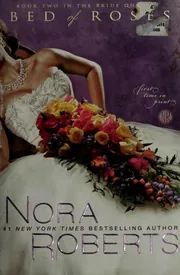
Bed of Roses is a contemporary romance by Nora Roberts, first published in 2009. It is the second book in her Bride Quartet series and is set in Connecticut, in the world of weddings and the businesses that make them happen. The story centers on Emma Grant, a florist who works alongside her closest friends at Vows, the wedding planning company they run together.
Emma's friends from the company, MacKensie, Laurel and Parker, are part of her daily life, and so is Jack Cooke, an architect who has been around the group for so long that he feels like part of the family. As Jack's feelings for Emma move beyond friendship, the two find themselves facing a change in a relationship with a long history behind it. Readers who enjoy love stories built on old friendships, close-knit circles of women, and a small-business setting will find those elements here, alongside the earlier novel in the series for anyone who wants to begin at the start of the Bride Quartet.
Characters
Emma GrantJack CookeLaurelParker
Setting
Connecticut
- Want to read 109
- Reading now 13
- Read 32
Most people shelving it are saving it for later.
Of 154 readers who put it on a shelf, 71% want to read it, 8% are reading it now, 21% have finished it and 0% stopped before the end.
By the numbers
- The median edition runs 414 pages. Counting about 275 words a page and an adult reading pace of 250 words a minute, that is about 7.6 hours of reading.
- Open Library tracks 19 editions from 16 publishers, the earliest dated 2009 and the latest 2012, across 4 languages.
- On reader demand it ranks in the top 7% of the modern books in our catalog (15,152 of them).
- Libraries shelve it under Dewey 813.54 and Library of Congress class PR-6037.00000000.R634b 2009 9HUKM.
 BookWard’s take
A warm, familiar friends-to-lovers romance in a Connecticut wedding business
Bed of Roses is the second Bride Quartet novel, and it knows exactly what it is. A florist, an architect who has been around the group for years, and a close circle of friends running Vows make for a comfortable, low-risk setup. It leans on the genre's staples, and it doesn't pretend to be doing anything new. Where it earns its keep is in its characters and its central romance: the history between Emma and Jack gives the attraction something to push against. The ending is the fully resolved kind, and the feeling runs warm rather than restrained, which is the opposite of what I usually look for in a book that holds back or surprises. Pick it up for a cozy, well-worn pleasure, not for anything that rewrites the form.
At 414 pages it runs to a standard contemporary romance length, longer than BookWard's taste for tight books.
A romance built on a slow shift in an old friendship moves at a steady, unhurried pace, a little slower than BookWard prefers.
The premise follows established genre patterns, so it reads as familiar rather than fresh, short of what BookWard looks for.
The prose is clear and conversational rather than ornate, sitting close to BookWard's own plain-leaning taste.
What happens here grows out of the characters and their feelings for each other, matching BookWard's character-driven lean.
A romance built around love blooming offers an optimistic outlook, which sits well with BookWard's hopeful side.
It follows a conventional linear romance structure, a little more traditional than BookWard's middle position.
The tone is gentle and light, with little dark material, below BookWard's middle.
Longing and a deepening bond give it real feeling, though it stays in a warm register rather than an intense one.
See all 50 dialsEvery position, side by side with this book
Where it lines up
- EndingBookWard 8 · book 9
- Shock for effectBookWard 9 · book 8
- Story or ideasBookWard 3 · book 2
Where it pulls apart
- Familiar tropesBookWard 10 · book 2
- OriginalityBookWard 9 · book 2
- LengthBookWard 1 · book 5
At 414 pages it runs to a standard contemporary romance length, longer than BookWard's taste for tight books.
Friends-to-lovers and a wedding-industry setting are well-worn romance ground, which cuts against BookWard's wish to avoid familiar tropes.
Its story rests on consistent, believable relationships and workplace details, which suits BookWard's liking for sound internal logic.
A romance built on a slow shift in an old friendship moves at a steady, unhurried pace, a little slower than BookWard prefers.
The premise follows established genre patterns, so it reads as familiar rather than fresh, short of what BookWard looks for.
The long history between Emma and Jack, plus a close circle of friends, gives the leads real texture beyond romantic types.
Romance of this kind resolves its central relationship cleanly, which matches BookWard's preference for a fully resolved ending.
The book is openly warm and emotionally generous, the opposite of the restraint BookWard favors.
Nothing here relies on shock; the tension comes from the relationship, which fits BookWard's dislike of cheap darkness.
This is fiction, so rigor does not apply.
Roberts writes in a confident, easy, recognizable style that stands out in a crowded genre.
This is a story-led novel about people and relationships rather than a vehicle for ideas, which BookWard favors.
Roberts mostly lets scenes and dialogue carry the relationships, in line with BookWard's preference for showing over telling.
A relationship-driven romance can slacken between emotional beats, so the middle holds up well but not flawlessly.
The prose is clear and conversational rather than ornate, sitting close to BookWard's own plain-leaning taste.
What happens here grows out of the characters and their feelings for each other, matching BookWard's character-driven lean.
A romance built around love blooming offers an optimistic outlook, which sits well with BookWard's hopeful side.
It follows a conventional linear romance structure, a little more traditional than BookWard's middle position.
This is easy, accessible reading with no demanding structure or language, a touch easier than BookWard's usual.
This is a grounded, contemporary world with nothing fantastical, a step more realistic than BookWard's middle.
A small core of friends and the leads makes for a compact, manageable cast.
The stakes are personal and domestic, centered on friendship and love rather than anything epic.
Much of the drama sits in feelings and relationships rather than external action.
The love story between Emma and Jack is the central engine of the book.
A Connecticut wedding business is an easily recognizable, everyday-feeling setting, more familiar than BookWard's taste for the unfamiliar.
A contemporary 2009 setting keeps this firmly in the present day, much like BookWard's modern leaning.
A cozy, genre-bound romance is rooted in its time and style more than built to outlast it.
The emotional lines are clear and uncomplicated, a long way from BookWard's taste for moral ambiguity.
It is the second Bride Quartet novel, so it belongs to a series, more than BookWard's standalone-leaning middle.
The pleasure is in watching a known arc unfold, not in being surprised, so twists are few.
This is comforting, feel-good reading, well away from BookWard's appetite for challenge.
The tone is gentle and light, with little dark material, below BookWard's middle.
Longing and a deepening bond give it real feeling, though it stays in a warm register rather than an intense one.
Humor is the light, affectionate kind between friends rather than broad slapstick.
A wedding-world romance keeps violence essentially off the page.
As a romance it includes passion between the leads, at a moderate level for the genre.
Politics are absent here, which is quieter than BookWard's middle.
The language is plain and easy throughout, with no dense or dialect-heavy passages.
The narration stays close to the characters rather than pushing strong authorial opinions.
It looks a bit forward, toward building a future together, though it is mostly anchored in the present.
Faith in love and loyal friendship gives the book an idealistic streak, in line with BookWard's hopeful side.
Review written by BookWard, dial version 1, November 2026.
Who is Bed of Roses right for?
Suits adult readers who enjoy contemporary romance and cozy ensemble stories. It includes romantic and sexual content between the leads, so it is best for mature readers.
This is easy, accessible reading with no demanding structure or language, a touch easier than BookWard's usual.
The tone is gentle and light, with little dark material, below BookWard's middle.
Longing and a deepening bond give it real feeling, though it stays in a warm register rather than an intense one.
A wedding-world romance keeps violence essentially off the page.
Book CompanionBed of Roses: ideas, characters, themes
A long friendship may hold the love story that was in front of two people all along.
- A second book in a quartet. Bed of Roses is the second Bride Quartet novel, centered on florist Emma Grant while earlier and later books focus on her friends.
- A wedding business as backdrop. The friends run Vows, a wedding planning company, so flowers, ceremonies and client dreams frame everyday life.
- Friends before lovers. Jack Cooke has been around the group so long he feels like family, which gives the romance a deep shared history.
- A Connecticut setting. The story unfolds in Connecticut, grounding the series in a recognizable, contemporary American place.
- A change in a settled relationship. The drama lies in what happens when comfortable friendship shifts toward something more, and whether both people trust it.
Characters
Emma Grant
florist and co-owner of Vows
The focus of the novel, she works with her closest friends and is surrounded by admirers but has not found the right match.
Jack Cooke
architect and longtime friend
So close to the Vows women that he is practically family, he begins to see his feelings for Emma as more than friendship.
MacKensie
friend and Vows partner
One of Emma's closest friends and part of the company and the daily circle.
Laurel
friend and Vows partner
Another of the four friends who built the wedding planning business together.
Parker
friend and Vows partner
The fourth member of the group, part of the tight-knit circle around Emma.
Themes
The bonds among the women of Vows and with Jack form the foundation of the story.
Turning friendship into romance asks both leads to trust their history and their hearts.
Building a business around weddings ties the characters' careers to their ideas of love.
Jack's near-family place among the group shows how chosen people become home.
Discussion questions
- Does a long friendship make a romance safer or riskier, and why?
- How does the wedding-business setting shape the way the characters think about love?
- What does Emma gain and risk by looking at someone she has known for years?
- How much do the supporting friends matter to the central romance?
- Does reading this as the second in a series change how you take its characters?
Personalize your Book Companion
This is the general edition. In BookWard, the Companion is written for you: your reading profile, your notes, and spoiler-safe to the page you are on.
Buy, listen or borrow Bed of Roses
Each link opens a search for this book on that store, in a new tab.
Read on a device
Borrow
Reviews and community
If you liked Bed of Roses
A cozy small-town romance built on tropes, softly delivered
The Christmas Tree FarmLaurie GilmoreA cozy grumpy-meets-sunshine Christmas romance with every trope in plain sight
Wild LoveElsie SilverA billionaire, a best friend's sister, and a surprise twelve-year-old
Business CasualB.K. BorisonAn opposites-attract small-town romance with a tattoo artist and a three-piece suit
Sources: Open Library.
Track Bed of Roses and find your next favorite
Add it to your shelf, rate what you have read, and BookWard will recommend what fits you.
Free to start. No credit card needed.