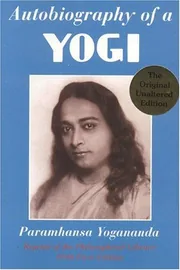
Autobiography of a Yogi
by Yogananda Paramahansa · 1946
Best suited to mature teens and adults interested in spirituality, yoga or religious memoir.
514 pages, about 8 to 12 hours.
A sprawling spiritual memoir that opened yoga to the West. 38% taste match
What it covers
Autobiography of a Yogi is a spiritual memoir by Paramahansa Yogananda, first published in 1946. It follows the life of Yogananda, who lived from 1893 to 1952, and centers on his search for a guru. Along the way he meets a range of spiritual leaders as well as noted scientists, and the book sets out his teachings on Kriya Yoga. The opening pages reflect on the long Indian tradition of seeking ultimate truths through the relationship between disciple and teacher.
The story moves across India, with places such as Calcutta, Puri and the Himalayas, and later extends to Boston and Los Angeles. For many Western readers it was an early introduction to yoga and meditation. It has been translated into over fifty languages and appears in 183 editions, with a median length of 514 pages. Readers interested in spiritual biography, yoga, and the encounter between Eastern and Western thought will find a firsthand account of one teacher's path.
Für die indische Kultur ist seit alters zweierlei charakteristisch: die Suche nach der letzten Wahrheit und das damit zusammenhängende Verhältnis zwischen Guru und Jünger.
Setting
IndiaCalcuttaHimalayasPuriBoston
Period
1893-19521893-1945
Themes
AutobiographyYogisYogaYoguisBiografíaSpiritual biographyBiography & AutobiographyNew Age
- Want to read 1,326
- Reading now 180
- Read 53
- Stopped 1
Most people shelving it are saving it for later.
Of 1560 readers who put it on a shelf, 85% want to read it, 12% are reading it now, 3% have finished it and 0% stopped before the end.
By the numbers
- The median edition runs 514 pages. Counting about 275 words a page and an adult reading pace of 250 words a minute, that is about 9.4 hours of reading.
- Open Library tracks 183 editions from 62 publishers, the earliest dated 1946 and the latest 2023, across 15 languages.
- On reader demand it ranks in the top 1% of the classic books in our catalog (8,749 of them).
- Libraries shelve it under Dewey 294.55 and Library of Congress class BP-0605.00000000.S43 Y6 1946.
 BookWard’s take
A sprawling spiritual memoir that opened yoga to the West
Autobiography of a Yogi is Paramahansa Yogananda's account of his life and his search for a guru, first published in 1946. It runs 514 pages and moves from India to Boston and Los Angeles. It is a long book, and I tend to prefer something tighter. It is also a devotional first-person account rather than an analytical argument, so it never tries to prove its claims in the way a more rigorous study would. The voice, though, is distinctive and unmistakably his own, and that counts for a great deal. As for staying power, it has proved itself: it has been translated into over fifty languages and is still widely read. The outlook is hopeful and the worldview idealistic, and the whole thing stays personal from start to finish. Read it as one teacher's testimony, not a neutral survey of yoga.
At 514 pages and many encounters, it is long and wide-ranging, well past the tight shape BookWard favors.
It moves across years and places, but at a contemplative, episodic rhythm that is slower than BookWard likes.
It was many Westerners' first introduction to yoga and meditation, which gave it real novelty for its readers.
The language is formal and sometimes ornate, with a devotional register that leans elevated.
It follows one man's inner and outer search, so his development matters more than plot mechanics.
It is an uplifting book about spiritual seeking and realization, with little despair.
It is a chronological life story with conventional memoir architecture.
Gentle warmth appears now and then, but the book is serious about its subject.
The tone is gentle and uplifting, with little grim material.
Devotion and reverence give it real feeling, though it is not melodramatic.
See all 50 dialsEvery position, side by side with this book
Where it lines up
- Authorial voiceBookWard 9 · book 9
- OriginalityBookWard 9 · book 7
- Character depthBookWard 8 · book 6
Where it pulls apart
- LengthBookWard 1 · book 8
- OpeningBookWard 10 · book 4
- Internal logicBookWard 10 · book 4
At 514 pages and many encounters, it is long and wide-ranging, well past the tight shape BookWard favors.
It opens by reflecting on the Indian tradition of guru and disciple, a measured start more than an instant grab.
Spiritual memoir has familiar shapes, but its subject matter and settings were fresh to most Western readers in 1946.
Its claims rest on faith and personal testimony, so the internal logic follows devotion, not airtight argument.
It moves across years and places, but at a contemplative, episodic rhythm that is slower than BookWard likes.
It was many Westerners' first introduction to yoga and meditation, which gave it real novelty for its readers.
The author is drawn closely from the inside, while the many teachers he meets are sketched more briefly.
As a life story told from a settled spiritual vantage, it closes with a sense of completed purpose.
Warm reverence and devotion run throughout, which is the opposite of the restraint BookWard prizes.
Its startling episodes come from the spiritual claims themselves, not from shock added for effect.
It is a devotional memoir of one teacher's path, so anecdote and testimony carry the weight, not evidence.
Yogananda's earnest, devotional voice is unmistakably his own, a quality BookWard rewards.
It is told as a life story, but the teachings on Kriya Yoga are what give it purpose.
Teachings and spiritual ideas are often explained directly to the reader instead of dramatized.
A long catalog of teachers and encounters can feel episodic, though the search for a guru gives it a thread.
The language is formal and sometimes ornate, with a devotional register that leans elevated.
It follows one man's inner and outer search, so his development matters more than plot mechanics.
It is an uplifting book about spiritual seeking and realization, with little despair.
It is a chronological life story with conventional memoir architecture.
Gentle warmth appears now and then, but the book is serious about its subject.
The prose is readable, though the spiritual concepts and length ask for some patience.
Everything comes through Yogananda's own eyes as a single first-person account.
It follows his life from birth through adulthood in largely straightforward order.
It describes miracles and superphysical feats as fact, which pushes it well beyond the ordinary.
He meets a wide range of spiritual leaders and scientists over the course of the book.
It stays centered on one life, but spans India, Boston and Los Angeles and a vast spiritual tradition.
Travels and meetings carry the story, though the aim is inner realization.
Conversations with teachers and seekers appear regularly without dominating the pages.
Romance is not a concern of this spiritual memoir.
For most Western readers, early twentieth-century India and its yogic world were largely unfamiliar territory.
It covers 1893 to the mid-1940s and was published in 1946, so it belongs firmly to the past.
Still widely read and translated into over fifty languages, it has clearly outlasted its moment.
The author tells his own life sincerely, with no sign of an unreliable teller.
The book offers a clear spiritual framework with little moral ambiguity.
Places like Calcutta, Puri and the Himalayas are painted with real richness.
Narrative storytelling carries it, with teachings woven into the life story instead of analysis.
It is a first-person account of the author's own spiritual path.
It stands as a single self-contained book.
The surprises are the miraculous episodes and unexpected encounters, not plot reversals.
It asks readers to take unfamiliar spiritual claims seriously, which can stretch some outlooks.
The tone is gentle and uplifting, with little grim material.
Devotion and reverence give it real feeling, though it is not melodramatic.
Humor is mild and sits mostly in affectionate anecdotes.
Violence is not a feature of this spiritual memoir.
The book is not concerned with sexual content.
Politics is peripheral to its spiritual focus.
Some Sanskrit terms and spiritual vocabulary add density, though the sentences are readable.
The author argues openly for his teachings and his guru's path, so the narration is strongly opinionated.
It draws on an ancient tradition and the author's past, looking mostly backward.
It is wholeheartedly idealistic about human spiritual potential.
Review written by BookWard, dial version 1, November 2026.
Who is Autobiography of a Yogi right for?
Best suited to mature teens and adults interested in spirituality, yoga or religious memoir. It contains no graphic content, but it presents miraculous claims as fact, which may prompt discussion.
The prose is readable, though the spiritual concepts and length ask for some patience.
The tone is gentle and uplifting, with little grim material.
Devotion and reverence give it real feeling, though it is not melodramatic.
Violence is not a feature of this spiritual memoir.
Book CompanionAutobiography of a Yogi: ideas, characters, themes
A life spent seeking a guru becomes a firsthand introduction to Kriya Yoga and the spiritual traditions of India.
- The search for a guru. The book centers on Yogananda's search for his teacher and on the disciple-and-teacher bond.
- Many teachers. Along the way he meets a range of spiritual leaders as well as noted scientists.
- Kriya Yoga. The book sets out his teachings on Kriya Yoga.
- From India to America. The story moves from Calcutta, Puri and the Himalayas to Boston and Los Angeles.
- A Western introduction. For many Westerners it was an early introduction to yoga and meditation when published in 1946.
Characters
Paramahansa Yogananda
Author and narrator
The yogi (1893-1952) whose spiritual search the book recounts.
Themes
The bond between seeker and teacher as the route to truth.
Spiritual practice carried from India to Western readers.
Spiritual teachers and noted scientists share the same pages.
Inner practice as a path to realization.
Discussion questions
- What makes a teacher worth following, and how does the book answer that?
- How does the book blend spiritual claims with the idea of scientific encounter?
- Why might this book have reached so many Western readers in 1946?
- How does reading it as testimony change what you expect from it?
- Which parts of the book's worldview feel most and least persuasive to you?
Personalize your Book Companion
This is the general edition. In BookWard, the Companion is written for you: your reading profile, your notes, and spoiler-safe to the page you are on.
Buy, listen or borrow Autobiography of a Yogi
Each link opens a search for this book on that store, in a new tab.
Read on a device
Borrow
Reviews and community
If you liked Autobiography of a Yogi
A restless young man's road from the world to a Trappist monastery
The Pilgrim's ProgressJohn BunyanBunyan's dreamed road to the heavenly city, still walking
I Cheerfully RefuseLeif EngerA gentle musician sails a sentient Lake Superior through a ruined America
The Jungle BookRudyard KiplingKipling's jungle tales: short, vivid, and nothing like the cartoon
Sources: Open Library.
Track Autobiography of a Yogi and find your next favorite
Add it to your shelf, rate what you have read, and BookWard will recommend what fits you.
Free to start. No credit card needed.