Best suited to mature teens and adult readers interested in civil rights and political history.
384 pages, about 6 to 9 hours.
A wry, furious memoir that refuses the state's version of her. 57% taste match
What it covers
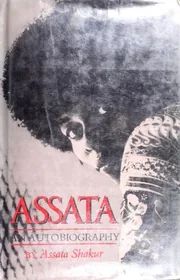
Assata is an autobiography by Assata Shakur, first published in 1987. Shakur, a member of the Black Panther Party who was earlier known as JoAnne Chesimard, tells her own story in a personal and political voice. The book follows the experiences that drew her into activism and looks at the rise and decline of Black and white revolutionary groups during the 1960s and 1970s, a period when government agencies under J. Edgar Hoover targeted Black nationalist organizations and their leaders.
A central episode is the shootout on the New Jersey Turnpike in 1973 that killed a white state trooper. Shakur was wounded and held in a hospital while police questioned her, and she was later convicted in 1977 as an accomplice to murder. She escaped from prison two years afterward. The story moves through places including New York City, North Carolina, New Jersey and the San Francisco Bay Area, and it touches on figures such as the lawyer Evelyn Williams, Kamau Sadiki and Sundiata Acoli. Readers interested in Black nationalism, Black feminism, race relations and the history of African American women in political movements will find it relevant. The book runs to roughly 384 pages in its typical edition.
There were lights and sirens.
Characters
Evelyn Williams (lawyer)Kamau SadikiSundiata Acoli
Setting
New York CityNorth CarolinaNew JerseySan Francisco Bay Area
Period
1960s1970s
Themes
Black Panther PartyBlack nationalismRace relationsBlack FeminismRacismAfrican AmericansBiographyNew York Times reviewed
- Want to read 216
- Reading now 16
- Read 23
Most people shelving it are saving it for later.
Of 255 readers who put it on a shelf, 85% want to read it, 6% are reading it now, 9% have finished it and 0% stopped before the end.
By the numbers
- The median edition runs 384 pages. Counting about 275 words a page and an adult reading pace of 250 words a minute, that is about 7.0 hours of reading.
- Open Library tracks 27 editions from 17 publishers, the earliest dated 1987 and the latest 2022, across 10 languages.
- On reader demand it ranks in the top 4% of the modern books in our catalog (15,152 of them).
- Libraries shelve it under Dewey 920.932242 and Library of Congress class E--0185.97000000.S53A3 2001.
 BookWard’s take
A wry, furious memoir that refuses the state's version of her
Assata Shakur tells her own story in a voice the media never let her have. The book opens on a hospital bed in 1973, handcuffed and close to death, then moves through the experiences that drew her into activism. The voice is about as distinctive as memoir gets: candid, funny, and political in the same breath. It is also deeply personal and firmly narrative, so it reads as testimony more than argument. This is an advocate's account, powerful but openly partisan, and that shapes how you weigh its claims, especially if you want your nonfiction rigorously sourced. The politics are front and center, and the opinions are unmistakable. The pace holds because the story keeps moving between New York, North Carolina, New Jersey and the Bay Area.
At 384 pages it is mid-length for a memoir, neither tight nor sprawling, which sits a little longer than BookWard's preference.
The narrative moves briskly between episodes and places, a good match for BookWard's taste for momentum.
Few memoirs combine this subject, this period and this voice, though the genre itself has well-worn shapes.
The prose is direct and conversational rather than ornate, a little plainer than BookWard's middle position.
It is driven by Shakur's formation and choices more than by plot, which suits BookWard's character lean.
It holds anger and loss alongside resilience, ending without clear triumph, so it sits near the middle of the outlook scale.
It moves between her past and the later legal ordeal rather than running straight, more experimental than the conventional memoir.
It is mostly serious, with flashes of dry wit that lift it, a lighter touch than the subject suggests.
It deals with police violence, imprisonment and loss, making it a dark if purposeful read.
Anger, grief and defiance run strongly through it, a more intense register than BookWard's usual.
See all 50 dialsEvery position, side by side with this book
Where it lines up
- Character depthBookWard 8 · book 8
- OpeningBookWard 10 · book 9
- PaceBookWard 8 · book 7
Where it pulls apart
- LengthBookWard 1 · book 5
- Internal logicBookWard 10 · book 6
- Familiar tropesBookWard 10 · book 7
At 384 pages it is mid-length for a memoir, neither tight nor sprawling, which sits a little longer than BookWard's preference.
It opens on a wounded Shakur handcuffed to a hospital bed, a scene that grabs at once, exactly what BookWard wants.
The memoir form and the activist-origin arc are familiar, but her specific voice and material keep it from feeling stock.
As a first-person account it hangs together, though it is her telling and not an independently checked record.
The narrative moves briskly between episodes and places, a good match for BookWard's taste for momentum.
Few memoirs combine this subject, this period and this voice, though the genre itself has well-worn shapes.
Shakur draws herself and those around her with candor, including strengths and weaknesses, which BookWard rewards.
It leaves her story unfinished, with escape and exile outside the frame, so it resolves less than BookWard likes.
It carries real feeling but is told with wit and edge rather than gloss, though it is not fully restrained.
The darkness comes from lived events and state violence rather than effect, which fits BookWard's demand to earn it.
It is a personal testimony with a strong point of view, so it is less rigorous than BookWard's high bar.
Her wit, candor and political fire are unmistakable and unlike any generic memoir voice, a clear BookWard win.
It is firmly story-led, built on her life and experiences, which is close to BookWard's story-first lean.
It mostly shows through scene and recollection, though it does stop to explain political context, near BookWard's preference.
The mix of personal episodes and political history keeps interest up across the length, as BookWard likes.
The prose is direct and conversational rather than ornate, a little plainer than BookWard's middle position.
It is driven by Shakur's formation and choices more than by plot, which suits BookWard's character lean.
It holds anger and loss alongside resilience, ending without clear triumph, so it sits near the middle of the outlook scale.
It moves between her past and the later legal ordeal rather than running straight, more experimental than the conventional memoir.
It is mostly serious, with flashes of dry wit that lift it, a lighter touch than the subject suggests.
The prose is accessible but the political and historical material asks for attention, a bit more effort than BookWard's norm.
It is told from Shakur's single perspective throughout, narrower than the many viewpoints BookWard likes.
The narrative shifts between the hospital, prison and earlier life, so the timeline is far from linear, which BookWard likes.
It is entirely grounded in real events and places, as a memoir should be.
A sizable circle of activists, lawyers and fellow prisoners appears, larger than the typical memoir.
It is personal at heart but set against a national movement and government campaign, giving it real breadth.
It balances her inner life with events and confrontations, close to BookWard's slightly inward lean.
Recalled conversations carry a good share of the telling, close to BookWard's liking for talk on the page.
Romance is a minor thread next to politics and survival, in line with BookWard's low interest.
For many readers the movements, prisons and politics are unfamiliar territory, which BookWard enjoys.
It looks back at the 1960s and 1970s, well before the present day, though its concerns still echo.
Its questions about race, policing and the state keep it relevant decades after 1987, as BookWard values.
Shakur narrates her own account, which is sincere but partisan, so reliability is a matter of perspective.
She states a firm moral view, though readers may weigh competing accounts of the events themselves.
Places and people come through in vivid, specific detail, richer than BookWard's usual middle point.
It is autobiography told as story, not analysis, so it sits firmly on the narrative side.
It is the most personal form there is, a first-person account of her own life and ordeal.
It is a standalone memoir and needs nothing else to be read.
As a memoir it has fewer surprises, though its turns of fortune and the escape draw attention.
It confronts racism, state power and political violence and does not comfort, a strong match for BookWard.
It deals with police violence, imprisonment and loss, making it a dark if purposeful read.
Anger, grief and defiance run strongly through it, a more intense register than BookWard's usual.
The humor is dry and ironic rather than broad, leavening a heavy subject.
Gunfire, police brutality and prison conditions appear on the page, so violence is notable though not gratuitous.
Sexual content is minimal and incidental to the story.
It is a political autobiography through and through, with Black nationalism and radical movements at its center.
The language is plain and conversational, with some period and movement vocabulary but nothing dense.
Shakur's views are never hidden, and the narration argues its case openly.
It mainly looks back at her past and the movements of her era, though with an eye to what endures.
It is clear-eyed about betrayal and failure yet driven by a commitment to liberation, leaning idealistic.
Review written by BookWard, dial version 1, November 2026.
Who is Assata right for?
Best suited to mature teens and adult readers interested in civil rights and political history. It includes police violence, imprisonment and frank discussion of racism.
The prose is accessible but the political and historical material asks for attention, a bit more effort than BookWard's norm.
It deals with police violence, imprisonment and loss, making it a dark if purposeful read.
Anger, grief and defiance run strongly through it, a more intense register than BookWard's usual.
Gunfire, police brutality and prison conditions appear on the page, so violence is notable though not gratuitous.
Book CompanionAssata: ideas, characters, themes
Assata Shakur tells her own story to counter the fearsome public image built by the media and the state, tracing how she became an activist and what happened to the movements she joined.
- A hospital opening. The story begins in 1973 with Shakur gravely wounded and handcuffed to a bed as police try to question her about the New Jersey Turnpike shootout.
- Countering a public image. The book aims to replace the image of JoAnne Chesimard projected by the media with her own personal and political account.
- Path into activism. She recounts the experiences that led her to a life of activism and the groups she joined along the way.
- Rise and decline of movements. The memoir assesses the strengths, weaknesses and eventual demise of Black and white revolutionary groups under government pressure.
- Trial, conviction and escape. She was convicted in 1977 as an accomplice to murder and escaped from prison two years later, later finding asylum in Cuba.
Characters
Assata Shakur
Author and narrator
A Black Panther, earlier known as JoAnne Chesimard, who tells her own story with wit and candor.
Evelyn Williams
Lawyer
A lawyer named among the figures connected to Shakur's story.
Kamau Sadiki
Associate
A figure named in connection with Shakur's account.
Sundiata Acoli
Associate
A figure named in connection with Shakur's account and the events on the New Jersey Turnpike.
Themes
How growing up Black in America shapes her view of the country and its institutions.
The government campaign under J. Edgar Hoover against Black nationalist groups and their leaders.
The choices that draw a person into radical politics and what they cost.
A woman's place and voice within revolutionary movements.
Trial, conviction and imprisonment seen from the person at the center.
Discussion questions
- How does Shakur's voice change the way you read the public image of JoAnne Chesimard?
- What does the memoir suggest about why revolutionary groups declined?
- How should a reader weigh a personal account against the official record?
- Why open with the hospital scene instead of her early life?
- What does the book add to the tradition of Black American autobiography?
Personalize your Book Companion
This is the general edition. In BookWard, the Companion is written for you: your reading profile, your notes, and spoiler-safe to the page you are on.
Buy, listen or borrow Assata
Each link opens a search for this book on that store, in a new tab.
Read on a device
Borrow
Reviews and community
If you liked Assata
A funny, hard-edged childhood memoir from apartheid South Africa
The Color of WaterJames McBrideA son's memoir, and his mother's own voice breaking through it
Compound FractureAndrew Joseph WhiteA trans, autistic teen fights a sheriff and a haunting
Black BoyRichard WrightA hungry boy in the Jim Crow South, told without flinching
Sources: Open Library.
Track Assata and find your next favorite
Add it to your shelf, rate what you have read, and BookWard will recommend what fits you.
Free to start. No credit card needed.