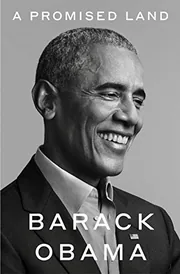
A Promised Land
by Barack Obama, Francisco José Ramos Mena · 2020
Suits mature teens and adults interested in politics and history.
928 pages, about 14.5 to 21.5 hours.
A president's first term, told at length and with candor. 53% taste match
What it covers
A Promised Land is a presidential memoir by Barack Obama, first published in 2020. It is the opening installment of a planned two-part work and centers on his political life, tracing his path from a young man working out who he was to the highest office in the United States.
The book follows his early political ambitions, his win in the Iowa caucus, and his election as the 44th president on November 4, 2008, which made him the first African American to hold that office. It then moves through the first term of his administration, from 2009 onward, up to the events of May 2011 surrounding the killing of Osama bin Laden. Along the way it looks at how presidential power works and where it stops, and at partisan politics and international diplomacy, with scenes set in the Oval Office and the White House Situation Room. It runs to 768 pages in its standard edition, and an audiobook version is read by the author.
Themes
New York Times bestsellerNew York Times reviewedObama, barack, 1961-PresidentsBiographyAfrican American politiciansRacially mixed peoplePolitics and government
- Want to read 190
- Reading now 11
- Read 27
Most people shelving it are saving it for later.
Of 228 readers who put it on a shelf, 83% want to read it, 5% are reading it now, 12% have finished it and 0% stopped before the end.
By the numbers
- The median edition runs 928 pages. Counting about 275 words a page and an adult reading pace of 250 words a minute, that is about 17 hours of reading.
- Open Library tracks 20 editions from 16 publishers, the earliest dated 2020 and the latest 2022, across 2 languages.
- On reader demand it ranks in the top 4% of the recent books in our catalog (6,647 of them).
- Libraries shelve it under Library of Congress class E--0908.00000000.A3 2020.
 BookWard’s take
A president's first term, told at length and with candor
Obama's memoir is a very long book that covers a lot of ground: his early years, the Iowa caucus, the 2008 election and the first term, up to the events of May 2011. It is sprawling, and longer than I would normally like a book to be. But it holds up better than the page count suggests. The opening is not a thriller hook, yet the voice is distinctive and personal, and the rigor comes from a firsthand account of how presidential power works and where it stops. Expect dialogue and scenes in the Situation Room rather than abstract argument. Readers who want a fast pace will feel the weight in places, but the setting is unfamiliar enough to stay interesting. It is a considered, candid book, with a clear point of view.
A presidential memoir of this scope runs long and sprawling, which sits far from BookWard's preference for tight, short books.
The book moves deliberately through detail and deliberation, slower than BookWard's taste for speed.
The shape is familiar for the genre, but the access and the personal reflection give it its own angle.
The writing is polished and literary at times, but it stays readable rather than ornate.
The narrative follows a person's growth and choices more than a plot machine.
It argues that progress is possible within the American experiment, while admitting costs and defeats.
It moves in a broadly chronological, conventional way through a life and a term in office.
Humor appears in moments, but the book is serious about its subject.
It deals with crisis, war and opposition but is not graphic or bleak in tone.
Feeling is present and sincere but kept under control.
See all 50 dialsEvery position, side by side with this book
Where it lines up
- Character depthBookWard 8 · book 8
- Shock for effectBookWard 9 · book 9
- Authorial voiceBookWard 9 · book 9
Where it pulls apart
- LengthBookWard 1 · book 10
- OpeningBookWard 10 · book 6
- Familiar tropesBookWard 10 · book 6
A presidential memoir of this scope runs long and sprawling, which sits far from BookWard's preference for tight, short books.
It opens with a personal, reflective voice rather than a jolt, so it builds more than it grabs.
Presidential memoirs follow a familiar arc, though Obama's personal framing keeps it from feeling rote.
The account follows cause and effect through decisions and consequences, which suits BookWard's liking for airtight reasoning.
The book moves deliberately through detail and deliberation, slower than BookWard's taste for speed.
The shape is familiar for the genre, but the access and the personal reflection give it its own angle.
Obama writes about himself, his family and colleagues with real interiority and self-doubt, which BookWard values.
As the first of two volumes it stops at a chosen point rather than closing everything off.
It carries warmth and belief in progress but stays measured about setbacks and disappointment.
The drama comes from real events, and it earns its weight rather than reaching for effect.
It is an insider's firsthand account, detailed on policy and process, though memoir is not the same as scholarship.
The reflective, candid first-person voice is unmistakably Obama's, a strength by BookWard's standards.
It is largely story-led, with ideas about power and democracy coming out of events.
Policy and politics are often explained outright, though the book also uses scenes to carry them.
Over this length some stretches of process and deliberation slow down, though the stakes keep recurring.
The writing is polished and literary at times, but it stays readable rather than ornate.
The narrative follows a person's growth and choices more than a plot machine.
It argues that progress is possible within the American experiment, while admitting costs and defeats.
It moves in a broadly chronological, conventional way through a life and a term in office.
Humor appears in moments, but the book is serious about its subject.
The prose is clear, yet the length and policy detail ask for sustained attention.
It is told from Obama's single perspective, with others seen through him.
The book proceeds largely in order, from early years through the first term.
This is entirely grounded in real events and people.
Cabinet members, foreign leaders, advisers and family fill a very large cast.
It covers a presidency, a financial crisis and world diplomacy, far from small-scale storytelling.
It balances his private reflection with outward events, leaning slightly toward introspection.
Recounted meetings and conversations carry much of the book, though it is not dialogue-driven throughout.
Marriage and family appear as part of the life story but are not the focus.
Most readers will find the White House, the Situation Room and foreign capitals unfamiliar territory.
The events are recent enough to feel close, though they are already history.
As a record of a presidency it should stay of interest, though much is tied to its moment.
Obama tells his own account directly; the question is selectivity, not deception.
He wrestles openly with hard choices and often lands on difficult trade-offs rather than neat answers.
Places, rooms and people are drawn with a good amount of specific detail.
It is memoir first, told as narrative rather than as analysis.
It is intimate and first-person, about as personal as nonfiction gets.
It is the first of a planned two-volume memoir and ends before the presidency does.
Events are historical and largely known, so there are few narrative surprises.
It asks readers to weigh contested decisions and political realities rather than comforting them.
It deals with crisis, war and opposition but is not graphic or bleak in tone.
Feeling is present and sincere but kept under control.
Where wit appears it is dry and understated.
War and the bin Laden operation are discussed, but not dwelt on graphically.
There is essentially no sexual content.
Politics is the whole subject, front and center from page one.
The language is clear and plain, with only policy terms to wade through.
The author's views and judgments are present throughout, openly stated.
It looks back on a past presidency, though with a view to what progress still needs.
Obama keeps a stubborn belief in democracy and progress, tempered by experience.
Review written by BookWard, dial version 1, November 2026.
Who is A Promised Land right for?
Suits mature teens and adults interested in politics and history. It discusses war, political conflict and the killing of Osama bin Laden, though not graphically.
The prose is clear, yet the length and policy detail ask for sustained attention.
It deals with crisis, war and opposition but is not graphic or bleak in tone.
Feeling is present and sincere but kept under control.
War and the bin Laden operation are discussed, but not dwelt on graphically.
Book CompanionA Promised Land: ideas, characters, themes
A president looks back on his path to office and first term, arguing that progress is possible even when power has real limits.
- A search for identity. The book begins with a young man working out who he is before politics takes over.
- The grassroots rise. It follows his early ambitions and the Iowa caucus win that showed what organizing could do.
- Election night. The 2008 victory made him the first African American elected to the presidency.
- Power and its limits. He reflects on both the reach and the constraints of the office.
- Crisis and decision. The first term brings financial crisis, healthcare reform, war strategy and the bin Laden operation.
Characters
Barack Obama
Author and narrator
The 44th president, telling his own story with candor about doubt and disappointment.
Vladimir Putin
World leader
A foreign figure Obama takes the measure of during his time in office.
Osama bin Laden
Historical figure
The book leads up to the operation that ended in his death.
Themes
The promise that drew a generation to his campaign and the work of delivering on it.
What a president can and cannot do within a divided system.
Running for office and leading as a Black American, with the expectations that brought.
The idea that self-government is built together day by day, not handed down.
How life in the White House affected his wife and daughters.
Discussion questions
- How does the book balance personal reflection with political history?
- Where does Obama show self-doubt, and does it change how you read his decisions?
- What does the book suggest about the limits of presidential power?
- How does his sense of identity shape his campaign and presidency?
- Is the faith in progress persuasive after the setbacks he describes?
Personalize your Book Companion
This is the general edition. In BookWard, the Companion is written for you: your reading profile, your notes, and spoiler-safe to the page you are on.
Buy, listen or borrow A Promised Land
Each link opens a search for this book on that store, in a new tab.
Read on a device
Borrow
Reviews and community
If you liked A Promised Land
Merlin's boyhood told with historical weight and quiet magic
Alexander HamiltonRon ChernowA sweeping, readable life of the man behind the Treasury
Permanent RecordEdward SnowdenA whistleblower's memoir that explains the machine he helped build
MarshaTourmalineA full-color biography of Marsha P. Johnson, by Tourmaline
Sources: Open Library.
Track A Promised Land and find your next favorite
Add it to your shelf, rate what you have read, and BookWard will recommend what fits you.
Free to start. No credit card needed.