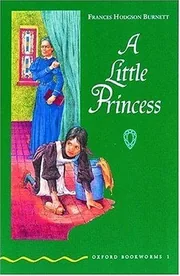
A Little Princess
by Frances Hodgson Burnett · 1905
It suits children from roughly eight or nine and up, and adults who enjoy classic stories.
186 pages, about 3 to 4.5 hours.
A kind girl keeps her dignity when fortune turns against her. 52% taste match
About the book
A Little Princess is a children's novel by Frances Hodgson Burnett, first published in 1905. It grew out of earlier versions of the same story, a novella from 1888 and a play from 1902, and it follows a girl named Sara Crewe. Sara begins as a wealthy child who arrives in London by cab with her father and enters a private boarding school, where she is treated as a favored pupil. The story is set in Victorian England, in the late 1800s, with India also part of its background.
When her circumstances change, Sara is left an orphan with almost nothing and must live as a servant under the school's harsh headmistress. The novel traces her life in the household, her few loyal friends, and the way she keeps her composure and kindness while living in hardship. It sits within children's and juvenile fiction and deals with orphans, boarding school life, and the social customs of its time. At around 186 pages in a typical edition, it has been reissued many times, with roughly 600 editions in circulation.
Setting
London (England)Great BritainEnglandLondonIndia
Period
Victoria, 1837-190119th century1800-1950
Themes
OrphansSchoolsBoarding schoolsHistorySocial life and customsChildren's stories, EnglishChildren's playsGirls
- Want to read 424
- Reading now 50
- Read 53
Most people shelving it are saving it for later.
Of 527 readers who put it on a shelf, 80% want to read it, 9% are reading it now, 10% have finished it and 0% stopped before the end.
By the numbers
- The median edition runs 186 pages. Counting about 275 words a page and an adult reading pace of 250 words a minute, that is about 3.4 hours of reading.
- Open Library tracks 600 editions from 119 publishers, the earliest dated 1905 and the latest 2023, across 4 languages.
- On reader demand it ranks in the top 2% of the classic books in our catalog (8,749 of them).
- Libraries shelve it under Dewey 823.912 and Library of Congress class PZ-0007.00000000.B934Lg 2019.
 BookWard’s take
A kind girl keeps her dignity when fortune turns against her
Frances Hodgson Burnett's 1905 novel follows Sara Crewe, a pampered pupil at a London boarding school who is left an orphan and made a servant under a cruel headmistress. Its pull is Sara herself. The character depth is real: her pride, kindness and imagination are shown in how she treats people, not announced. The ending is fully resolved and the outlook hopeful, which fits BookWard's love of closure. Sentiment runs higher here than BookWard prefers, since the story leans openly on comfort, and the moral lines are drawn clearly, with cruel adults and loyal friends sorted early. At 186 pages it is short, and the pace stays steady with little sagging. A classic for readers who want virtue rewarded and a well-built small world.
At 186 pages it is short and compact, which suits BookWard's liking for tight books.
Events move steadily through Sara's changed circumstances, a little slower than BookWard's preference for speed.
The tale reworks the rags-to-riches pattern with a distinctive heroine, but the framework itself is well worn.
The prose is clear and old-fashioned with some flourish, close to BookWard's plain-leaning middle.
The plot exists mostly to test and reveal Sara's character, which fits BookWard's character-driven lean.
Even in cold and hunger the book insists on kindness and a better outcome, a hopeful tone BookWard welcomes.
The book moves forward in a conventional line from comfort to hardship and beyond.
Light touches of warmth appear, but the tone is serious and sympathetic rather than funny.
Poverty, hunger and cruelty are real but treated gently for a young audience.
The feeling runs strong in Sara's loneliness and endurance, yet is kept in check by Burnett's calm voice.
See all 50 dialsEvery position, side by side with this book
Where it lines up
- Character depthBookWard 8 · book 8
- Story or ideasBookWard 3 · book 3
- LengthBookWard 1 · book 2
Where it pulls apart
- Familiar tropesBookWard 10 · book 3
- OpeningBookWard 10 · book 6
- Internal logicBookWard 10 · book 6
At 186 pages it is short and compact, which suits BookWard's liking for tight books.
Sara's arrival at the school sets the story moving, though it opens more gently than BookWard's taste for an instant hook.
An orphan, a cruel headmistress and a reversal of fortune are familiar fairy-tale shapes, which BookWard marks down.
The story follows its own cause and effect cleanly, though it leans on convenient turns that BookWard finds less than airtight.
Events move steadily through Sara's changed circumstances, a little slower than BookWard's preference for speed.
The tale reworks the rags-to-riches pattern with a distinctive heroine, but the framework itself is well worn.
Sara is drawn with real inner life, and her composure under hardship is the heart of the book, matching BookWard's taste.
The story resolves its threads completely, which is exactly the closure BookWard rewards.
The book openly invites tears and comfort, which sits on the sentimental side of BookWard's restrained taste.
Sara's hardship is sad but never lurid, so its darkness is earned, which BookWard values.
Burnett's warm, storytelling narrator has a recognizable character, though less singular than the strongest voices BookWard admires.
This is a story-led book, driven by Sara's fortunes more than by arguments, close to where BookWard sits.
Much of the setup and feeling is told directly by the narrator, a little more than BookWard's show-in-scene preference.
The middle holds up well because Sara's changing situation keeps giving the story fresh pressure.
The prose is clear and old-fashioned with some flourish, close to BookWard's plain-leaning middle.
The plot exists mostly to test and reveal Sara's character, which fits BookWard's character-driven lean.
Even in cold and hunger the book insists on kindness and a better outcome, a hopeful tone BookWard welcomes.
The book moves forward in a conventional line from comfort to hardship and beyond.
Light touches of warmth appear, but the tone is serious and sympathetic rather than funny.
Burnett's language is accessible and the plot easy to follow, so the reading effort is low.
The narration stays close to Sara rather than splitting among many perspectives.
Events unfold in order, with no structural jumping through time.
The world is grounded in Victorian London, though Sara's imaginative games give it a faint enchantment.
A boarding school and household supply a modest cast of pupils, staff and a few friends.
The story stays within one school and a few lives, an intimate canvas.
Much of the interest lies in Sara's thoughts, imagination and resolve rather than in action.
Conversation carries a fair share of the scenes without dominating the narration.
The story concerns friendship and kindness, with no romantic thread at its center.
Victorian London and a boarding school are distant from today's reader, giving a moderately unfamiliar setting.
Written in 1905 and set in the late 1800s, it belongs firmly to the past.
Its themes of dignity under hardship have kept it reissued many times, a lasting appeal BookWard respects.
The narrator is warm, open and trustworthy, a reliable guide.
Good and cruel characters are clearly marked, leaving little ambiguity, unlike BookWard's taste for gray areas.
Rooms, clothes and small comforts are drawn with enough detail to make the school vivid.
It stands alone as a complete story, though it grew out of earlier versions.
The story has some turns of fortune, but they unfold along expected lines.
It is a comforting read at heart, offering reassurance more than difficulty.
Poverty, hunger and cruelty are real but treated gently for a young audience.
The feeling runs strong in Sara's loneliness and endurance, yet is kept in check by Burnett's calm voice.
Gentle touches rather than broad comedy, leaning toward the dry and mild.
Harshness is mostly emotional and economic, with little physical violence on the page.
There is no sexual content in this children's novel.
Social class and treatment of the poor are present, but they are not the book's argument.
The language is of its era but easy to follow, with little dense dialect.
The narrator openly takes Sara's side and guides the reader's sympathies.
The story looks back at a Victorian setting and settles accounts within it.
The book holds that inner nobility and kindness matter more than circumstance, a strongly idealistic stance.
Review written by BookWard, dial version 1, November 2026.
Who is A Little Princess right for?
It suits children from roughly eight or nine and up, and adults who enjoy classic stories. It includes poverty, hunger and cruelty toward a child, treated with restraint.
Burnett's language is accessible and the plot easy to follow, so the reading effort is low.
Poverty, hunger and cruelty are real but treated gently for a young audience.
The feeling runs strong in Sara's loneliness and endurance, yet is kept in check by Burnett's calm voice.
Harshness is mostly emotional and economic, with little physical violence on the page.
Book CompanionA Little Princess: ideas, characters, themes
A girl keeps her character intact when wealth and comfort are stripped away.
- A change of fortune. Sara enters a London boarding school as a favored, wealthy pupil, and the loss of her father leaves her an orphan with almost nothing.
- Life as a servant. She is made to work in the household under the school's harsh headmistress, who resents her independent spirit.
- A few loyal friends. Despite her low standing, a handful of people remain secretly faithful to her.
- Inner nobility. Sara keeps her composure and generous spirit, showing what the book means by being a real princess.
- Many versions. The story began as an 1888 novella and a 1902 play before becoming the 1905 novel.
Characters
Sara Crewe
Protagonist
A wealthy girl who becomes an orphan and servant yet keeps her dignity and kindness.
The headmistress
Antagonist
The harsh head of the boarding school who treats Sara cruelly once her circumstances change.
Themes
True worth lies in character and conduct rather than wealth or rank.
Generosity toward others remains possible, and meaningful, even when one has little.
Status can vanish quickly, and treatment of people often follows money.
Small loyalties offer comfort and strength when circumstances are bleak.
Discussion questions
- What makes Sara a princess in spirit even after she loses her wealth?
- How does the headmistress's behavior change when Sara's circumstances change, and what does that say about her?
- Why might Burnett have rewritten this story as a novella, a play and a novel?
- How does the Victorian setting shape what Sara can and cannot do?
- Is the book's idealism comforting, unrealistic, or both?
Personalize your Book Companion
This is the general edition. In BookWard, the Companion is written for you: your reading profile, your notes, and spoiler-safe to the page you are on.
Buy, listen or borrow A Little Princess
Each link opens a search for this book on that store, in a new tab.
Read on a device
Borrow
Reviews and community
If you liked A Little Princess
A short fairy tale about an unloved duckling who becomes a swan
Where the Red Fern GrowsWilson RawlsA boy, two hounds, and the Ozarks: a classic that earns its tears
The Secret Book SocietyMadeline MartinA cozy 1895 book club with a murder rumor attached
Captains CourageousRudyard KiplingA spoiled boy, a cold ocean, and honest work at sea
Sources: Open Library.
Track A Little Princess and find your next favorite
Add it to your shelf, rate what you have read, and BookWard will recommend what fits you.
Free to start. No credit card needed.