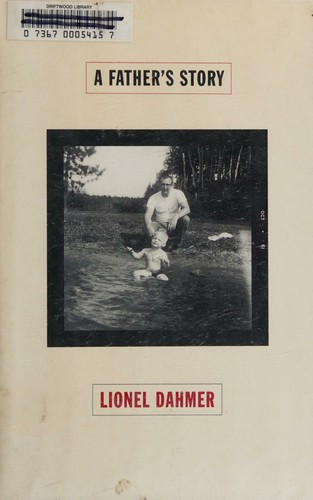
A Father's Story
by Lionel Dahmer
★ Top 25 book of 1994 · #12 on Best Books of 1994
Chemist Lionel Dahmer recounts learning in 1991 that his son Jeffrey was a murderer. The book follows his path from denial to painful acceptance, focusing on a father's reckoning rather than the killer himself.
Best for: Readers interested in true crime told through a parent's painful search for understanding
A Father's Story is #12 on BookWard's Best Books of 1994, out of 42 1994 books that cleared our data bar.
What A Father's Story is about
In July 1991, Lionel Dahmer, a research chemist in Milwaukee, learned that police were investigating a homicide involving his son Jeffrey. He assumed Jeffrey was a victim. This memoir tells what followed, moving in order from Jeffrey's birth to his arrest and imprisonment. Lionel examines every possible cause for his son's crimes, beginning with himself, and judges that he was a distant, inadequate father. He wonders whether his own shyness, his fascination with bombs and his fear of abandonment passed something monstrous down to his son. He also describes his long denial, before he could accept the truth. Somber and anguished, it speaks to anyone who has wrestled with family guilt, or with the question of how much a parent is responsible for what a child becomes.
A Father's Story on the Best Books of 1994
A Father's Story came out in 1994. Of the 42 books first published in 1994 that met BookWard's data bar, it ranks #12 on our Best Books of 1994 list.
Why it made the list: 340 readers have shelved it on Open Library; 20 are reading it right now. The list ranks each year’s books on how many readers have picked them up, how highly readers rate them, and how many are reading them right now.
Nearby on the 1994 list
- The Seven Spiritual Laws of Success Deepak Chopra, #10
- One for the Money Janet Evanovich, #11
- Good Night Gorilla Peggy Rathmann, #13
- Lord of Chaos Robert Jordan, #14
See all Best Books of 1994 Best books by year
More years: Best Books of 1993 Best Books of 1995.
The numbers behind it
- Readers: 309 want to read it, 20 are reading it now and 11 have read it, according to Open Library.
| Signal | This book (0 to 100) | Weight |
|---|---|---|
| Reach | 69 | 55% |
| Reader love | 67 | 25% |
| Being read right now | 71 | 20% |
Questions about A Father's Story
When was A Father's Story published?
A Father's Story by Lionel Dahmer was first published in 1994.
Was A Father's Story one of the best books of 1994?
A Father's Story is #12 on BookWard's Best Books of 1994, out of 42 1994 books that cleared our data bar. 340 readers have shelved it on Open Library; 20 are reading it right now.
Why is A Father's Story on the Best Books of 1994 list?
340 readers have shelved it on Open Library; 20 are reading it right now.
More of the best books of 1994
- Guess How Much I Love You Sam McBratney, #1
- Artificial Intelligence Stuart J. Russell, #2
- The Six Pillars of Self-esteem Nathaniel Branden, #3
- Long Walk to Freedom Nelson Mandela, #4
- Mercury and Me Jim Hutton, #5
- Men Are from Mars, Women Are from Venus John Gray, #6
See the full Best Books of 1994, the Top 100, or new books on Rising.
How we know
This page uses public data: Open Library reader counts and ratings, and Wikipedia page views for recent years. The description is paraphrased from real source text. Rankings reflect reading interest, not quality or sales, and can be affected by data gaps. Lists update monthly.
Suits mature adult readers comfortable with painful true-crime subject matter.
Depends on the edition you pick.
A father puts himself on trial beside his son. 52% taste match
 BookWard’s take
A father puts himself on trial beside his son
Lionel Dahmer's 1994 memoir is not really a book about Jeffrey. It is a chronological account of a father moving from denial to a harder acceptance, starting with the call from Milwaukee police in July 1991. It reads easily enough, but it is a challenging book emotionally, because the author keeps turning the questions on himself. His voice is distinctive: a research chemist weighing his own shyness and emotional distance as possible causes. It is not an investigation, and its rigor is limited, since this is personal reckoning rather than inquiry. The outlook is bleak, and the perspective is as personal as nonfiction gets. It earns its darkness through self-scrutiny, not spectacle, which matters most for a reader who dislikes shock for effect.
A single-thread memoir that stays focused on one father's experience, so it runs short of sprawling, close to BookWard's preference for tight.
Chronological and reflective, it moves at a measured speed, slower than BookWard's lean toward brisk.
The father's-eye angle on a notorious case is uncommon, though the memoir form itself is familiar.
Plain, direct and unadorned, which fits BookWard's slight preference for plainness.
What drives the book is one father's inner change, far more than events, which fits BookWard's character-driven taste.
It is a bleak journey from denial to hard truth, with little consolation, leaning darker than BookWard's hopeful side.
A straight chronological memoir from birth to imprisonment, conventional in form.
A deeply serious subject, with no room for humor.
The subject is among the darkest imaginable, though handled through reflection.
Grief, guilt and denial run through the book at a high pitch.
See all 50 dialsEvery position, side by side with this book
Where it lines up
- Character depthBookWard 8 · book 8
- SentimentBookWard 8 · book 7
- Shock for effectBookWard 9 · book 8
Where it pulls apart
- Internal logicBookWard 10 · book 6
- Rigor (nonfiction)BookWard 9 · book 4
- LengthBookWard 1 · book 4
A single-thread memoir that stays focused on one father's experience, so it runs short of sprawling, close to BookWard's preference for tight.
Avoids the true-crime formula by centering the parent's self-examination instead of the crimes, which BookWard values.
The memoir follows a clear chronological arc of cause and reflection, though grief and speculation loosen its reasoning in places.
Chronological and reflective, it moves at a measured speed, slower than BookWard's lean toward brisk.
The father's-eye angle on a notorious case is uncommon, though the memoir form itself is familiar.
Lionel examines himself and his son in painful detail, giving real depth to the central figure, which suits BookWard well.
It ends at the arrest and imprisonment, closing the personal journey even though the central question stays unanswered.
Emotion is present but the author is self-critical rather than self-pitying, leaning mostly toward restraint.
The crimes are heavy but the book uses them to drive self-reckoning, not to jolt the reader, which earns its darkness.
It is a personal account built on memory and reflection, not documented investigation, so it is more anecdotal than rigorous.
A chemist's plain, searching, self-incriminating voice gives the book a recognizable personal stamp.
The book is shaped by its narrative of events, though it keeps circling the idea of inherited blame.
The author often explains his feelings and reasoning directly instead of dramatizing them, a mild mismatch with BookWard's taste for showing.
The steady chronological structure sustains interest, though the reflective stretches can slow the middle.
Plain, direct and unadorned, which fits BookWard's slight preference for plainness.
What drives the book is one father's inner change, far more than events, which fits BookWard's character-driven taste.
It is a bleak journey from denial to hard truth, with little consolation, leaning darker than BookWard's hopeful side.
A straight chronological memoir from birth to imprisonment, conventional in form.
A deeply serious subject, with no room for humor.
Plainly written and easy to follow, though emotionally taxing.
Told entirely from the father's perspective, a single viewpoint.
Runs in order from Jeffrey's birth to his imprisonment.
Entirely grounded in real events.
Centered on a father and son with a small circle around them.
A deeply intimate family story set against a public case.
Dominated by the author's self-scrutiny more than by external action.
Romance is not a concern here.
An ordinary American household and a Milwaukee courtroom, mostly familiar settings.
Set in recent history (the 1990s), not the present day.
The question of parental responsibility endures beyond the case itself.
A self-aware narrator trying to be honest about his own failings, mostly reliable though grief colors his judgments.
The book wrestles openly with blame and responsibility, leaving the moral picture more clear than ambiguous but still unresolved.
Descriptions are functional and sparse, serving the reflection instead of scene-painting.
It is told as a personal story instead of an analytical study.
A first-person account of a father's own guilt and grief, as personal as nonfiction gets.
A standalone memoir.
Its structure is known from the start; the surprises are emotional, not plot-based.
Reading about a parent's self-indictment over a son's crimes is hard going and offers little comfort.
The subject is among the darkest imaginable, though handled through reflection.
Grief, guilt and denial run through the book at a high pitch.
No humor to speak of; the tone is somber.
The crimes involve sexual elements, but the book keeps focus on the family's reckoning.
Largely personal, not political.
Plain, everyday language.
The author freely judges himself and his choices, making the narration strongly opinionated about his own conduct.
The book looks back, tracing a life to understand what went wrong.
A sobering, cynical reckoning with what a parent cannot control.
Review written by BookWard, dial version 1, November 2026.
Who is A Father's Story right for?
Suits mature adult readers comfortable with painful true-crime subject matter. It deals with murder, necrophilia and cannibalism, mostly by reference, along with heavy grief and guilt.
Plainly written and easy to follow, though emotionally taxing.
The subject is among the darkest imaginable, though handled through reflection.
Grief, guilt and denial run through the book at a high pitch.
Book CompanionA Father's Story: ideas, characters, themes
A father tries to understand how his son became a killer, and ends up putting himself on trial.
- The phone call. In July 1991 Milwaukee police tell Lionel his son is part of a homicide investigation. He first assumes Jeffrey is a victim.
- Denial. Lionel first believes Jeffrey is innocent, then that he was only the tool of someone more evil, before the evidence says otherwise.
- Chronological reckoning. The memoir runs from Jeffrey's birth to his arrest and imprisonment, searching for causes along the way.
- Self-scrutiny. Lionel judges himself an emotionally distant father and wonders whether his own traits became a monstrous inheritance.
- Not Jeffrey's story. The book itself says it is the story of a father coming to a painful truth, not an explanation of the killer.
Characters
Lionel Dahmer
Author and narrator
A Milwaukee research chemist who examines his own role in his son's life.
Jeffrey Dahmer
His son
Convicted of the murders and sentenced to life imprisonment in February 1992.
Themes
A parent's sense of responsibility for a child's acts.
The mind's refusal to accept unbearable facts.
Whether traits and failings pass from parent to child.
How a lack of closeness shapes a family.
The slow, painful move toward honest admission.
Discussion questions
- Does Lionel's self-blame feel honest, excessive, or both?
- How does the book change when the crimes are told through a parent instead of a detective?
- What does the author's chemist's habit of analysis bring to his grief?
- Can anyone fully explain why a person commits acts like these?
- What responsibility, if any, does a parent bear for an adult child's choices?
Personalize your Book Companion
This is the general edition. In BookWard, the Companion is written for you: your reading profile, your notes, and spoiler-safe to the page you are on.
Buy, listen or borrow A Father's Story
Each link opens a search for this book on that store, in a new tab.
Read on a device
Borrow
Reviews and community
If you liked A Father's Story
A daughter's memoir of the family behind 8 Passengers
John BarleycornJack LondonJack London's candid, argumentative memoir of drink and his long struggle
Let Me Hear Your VoiceCatherine MauriceA mother's urgent, unsparing account of fighting her daughter's autism
This Is MeHayden PanettiereA former child star reclaims her story, on her terms
Find your own best books
Add what you have read, rate it, and BookWard will recommend what to read next.
Free to start. No credit card needed.