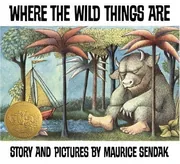
Where the Wild Things Are
by Maurice Sendak · 1963
It suits young children, especially as a read-aloud, and works for older readers who enjoy the artwork.
42 pages, about 0.5 to 1 hours.
A wolf-suited boy, a jungle bedroom, and a very short, perfect trip. 64% taste match
About the book
Where the Wild Things Are is a children's picture book by Maurice Sendak, who both wrote and illustrated it. It first appeared in 1963 from Harper & Row and runs about 42 pages. The book won the Caldecott Medal and has been issued in well over a hundred editions, including Spanish-language versions and a miniature format.
The central figure is Max, a boy in a wolf suit who spends an evening making one bit of mischief after another. His mother calls him a wild thing, and he is sent to his room without supper. From there his imagination takes over. The room turns into a jungle, and Max travels across the sea to an island where large, monstrous creatures live. These are the Wild Things of the title, and Max becomes their king.
The book belongs to the fantasy tradition for young readers and draws on dreams, imagination and monsters, all set within the world of childhood. It follows a naughty child through stormy feelings on an imagined voyage. Families, teachers and librarians looking for a picture book about a young boy's inner adventures will find a classic starting point in this one.
La noche que Max se puso un traje de lobo y comenzo a hacer una travesura tras otra su mama le dijo: "!ERES UN MONSTROU!"
Characters
Maurice Sendak
Themes
DreamsFantasyImaginationMiniature booksMonstersSpecimensFantastyMonstruos
- Want to read 904
- Reading now 34
- Read 190
Most people shelving it are saving it for later.
Of 1128 readers who put it on a shelf, 80% want to read it, 3% are reading it now, 17% have finished it and 0% stopped before the end.
By the numbers
- The median edition runs 42 pages. Counting about 275 words a page and an adult reading pace of 250 words a minute, that is about 45 minutes of reading.
- Open Library tracks 124 editions from 81 publishers, the earliest dated 1963 and the latest 2018, across 15 languages.
- On reader demand it ranks in the top 1% of the classic books in our catalog (8,749 of them).
- Libraries shelve it under Dewey [E] and Library of Congress class PZ-0007.00000000.S47 Wh 1999.
 BookWard’s take
A wolf-suited boy, a jungle bedroom, and a very short, perfect trip
Where the Wild Things Are is about as tight as a book gets: 42 pages, one boy, one imagined voyage. It hooks at once, since Max is already in his wolf suit making mischief on the first page, and the pace never drops. The ending is fully resolved, which is exactly what a story like this needs. It is wildly fantastical, with a bedroom that becomes a jungle and a sea that carries Max to an island of Wild Things, yet the feeling underneath is grounded in a real child's temper. Sendak's voice is unmistakable, with pictures and words working as one, and he earns his monsters without leaning on shock. He is restrained about sentiment, too. Short enough to read in minutes, big enough to return to for decades.
At 42 pages it is as short as a book can be, which matches BookWard's love of the tight and brief.
Events move briskly from mischief to bedroom to sea to island, though the wordless spreads let the story breathe.
A picture book that treats a child's anger seriously and sends him to a monster kingdom was strikingly original in 1963.
The text is plain and spare, letting the illustrations carry the richness.
A simple plot, but it exists to show Max's inner state, so it leans slightly toward character.
Max moves from punishment to a kind of kingship and back to comfort, which ends on a warm note.
A straightforward there-and-back journey told in order, with pictures that grow and then shrink.
There is playfulness in the monsters and the wild rumpus, but the book stays mostly earnest.
The monsters look fierce, but the mood stays safe and gentle.
Max's anger, loneliness and longing come through strongly in very few words.
See all 50 dialsEvery position, side by side with this book
Where it lines up
- LengthBookWard 1 · book 1
- OpeningBookWard 10 · book 10
- OriginalityBookWard 9 · book 9
Where it pulls apart
- Internal logicBookWard 10 · book 7
- Familiar tropesBookWard 10 · book 8
- ViewpointsBookWard 7 · book 1
At 42 pages it is as short as a book can be, which matches BookWard's love of the tight and brief.
Max is in his wolf suit and causing trouble from the opening line, so it grabs a reader immediately, just as BookWard likes.
Monsters and imagined journeys are familiar territory, but Sendak's wild, strange creatures and his treatment of a child's anger feel fresh.
Dream logic rules here, yet each step from bedroom to jungle to island follows cleanly from Max's imagination and holds together.
Events move briskly from mischief to bedroom to sea to island, though the wordless spreads let the story breathe.
A picture book that treats a child's anger seriously and sends him to a monster kingdom was strikingly original in 1963.
Max is a child drawn through a handful of actions and images, with real feeling packed into very little space.
Max's adventure comes to a satisfying close, giving the closure BookWard prefers over open endings.
It treats a boy's temper and loneliness plainly, with warmth but little syrup.
The monsters are big and strange but never cruel for effect; the story earns its wildness through Max's feelings.
This is a picture book of fiction, so rigor does not apply.
Sendak both wrote and illustrated it, and the result is unmistakably his, with a voice no other picture book shares.
Story leads throughout: a boy, a punishment, a voyage, a kingdom, with feelings carried inside the plot.
Nothing is explained; the pictures and a few short lines do all the telling in scene, which BookWard prizes.
With so few pages there is no middle to sag, and the energy holds from first page to last.
The text is plain and spare, letting the illustrations carry the richness.
A simple plot, but it exists to show Max's inner state, so it leans slightly toward character.
Max moves from punishment to a kind of kingship and back to comfort, which ends on a warm note.
A straightforward there-and-back journey told in order, with pictures that grow and then shrink.
There is playfulness in the monsters and the wild rumpus, but the book stays mostly earnest.
Very easy to read, suited to early readers and to being read aloud.
The story stays with Max alone from start to finish.
Events run in a single line from that evening to Max's return.
The room turns into a jungle and Max sails to an island of Wild Things, so imagination takes over completely.
Max, his mother, and the Wild Things make a very small cast.
Though the island feels vast to Max, the story is intimate, centered on one boy's bedroom and mood.
Most of the adventure is Max's imagination working through his own feelings, though the rumpus is vivid outward action.
Very little is spoken, so the words stay light.
No romance appears in this story of a boy and his temper.
The jungle and the island of Wild Things are strange places, though anchored by a familiar bedroom.
First published in 1963, it is set in a timeless bedroom rather than a particular present.
Over a hundred editions and a Caldecott Medal show how well it has held its place across generations.
The narration is simple and straightforward, with nothing hidden from the reader.
It avoids a tidy lesson and treats anger and imagination as part of being a child.
Description lives mostly in the artwork rather than in the sparse words.
This is fiction, so nonfiction style does not apply.
This is a picture-book story, so nonfiction perspective does not apply.
It stands alone as a single self-contained story.
The path from bedroom to island is the surprise itself; after that the story unfolds without twists.
A comforting, gentle read that reassures rather than unsettles.
The monsters look fierce, but the mood stays safe and gentle.
Max's anger, loneliness and longing come through strongly in very few words.
Humor is quiet and playful rather than broad.
No real violence appears; the Wild Things roar and gnash but harm no one.
Nothing sexual appears in the book.
Politics is absent; the book concerns one boy and his feelings.
The language is plain and simple throughout.
The narration is neutral and simply reports what happens.
It looks back to childhood and home more than it looks ahead.
It trusts imagination and the comfort of being loved, which leans quietly idealistic.
Review written by BookWard, dial version 1, November 2026.
Who is Where the Wild Things Are right for?
It suits young children, especially as a read-aloud, and works for older readers who enjoy the artwork. The monsters look fierce and Max is punished by being sent to bed without supper, but nothing is truly frightening or violent.
Very easy to read, suited to early readers and to being read aloud.
The monsters look fierce, but the mood stays safe and gentle.
Max's anger, loneliness and longing come through strongly in very few words.
No real violence appears; the Wild Things roar and gnash but harm no one.
Book CompanionWhere the Wild Things Are: ideas, characters, themes
A boy sent to his room for misbehaving travels in his imagination to a land of monsters, where he rules, before choosing to return home.
- The wolf suit. Max begins the story already in costume, making mischief, and his mother calls him a wild thing.
- Sent without supper. His punishment sends him to his room, where the real story begins.
- The room changes. Imagination turns his bedroom into a jungle and carries him across the sea.
- The Wild Things. On the island he meets large monstrous creatures and becomes their king.
- Words and pictures. Sendak wrote and illustrated the book, so the art carries as much of the story as the text.
Characters
Max
The central boy
A mischievous boy in a wolf suit whose stormy feelings drive the whole imagined adventure.
Max's mother
The one who sends him to his room
She calls him a wild thing and sends him to bed without supper.
The Wild Things
The island's monstrous creatures
Large, strange beings who make Max their king.
Themes
The mind can turn an ordinary room into a whole world.
Strong feelings are real and can be worked through safely.
The story is told entirely within a child's view of the world.
Frightening creatures can be faced and even ruled.
After the wildness, there is a place to come back to.
Discussion questions
- Why do you think Max puts on a wolf suit and makes so much mischief?
- What does Max's imagination do to his bedroom, and why might it do that?
- Why does Max become king of the Wild Things rather than simply running from them?
- What do the pictures show that the words leave out?
- How does Max feel at the end, and what made him want to return?
Personalize your Book Companion
This is the general edition. In BookWard, the Companion is written for you: your reading profile, your notes, and spoiler-safe to the page you are on.
Buy, listen or borrow Where the Wild Things Are
Each link opens a search for this book on that store, in a new tab.
Read on a device
Borrow
Reviews and community
If you liked Where the Wild Things Are
A short, sharp children's horror with a door worth fearing
The Wild RobotPeter BrownA robot on a wild island, told with quiet nerve
Room on the BroomJulia DonaldsonA rhyming broomstick tale where kindness gets crowded and then pays off
The Thief of AlwaysClive BarkerA short, sharp fable about boredom, bargains and stolen youth
Sources: Open Library.
Track Where the Wild Things Are and find your next favorite
Add it to your shelf, rate what you have read, and BookWard will recommend what fits you.
Free to start. No credit card needed.