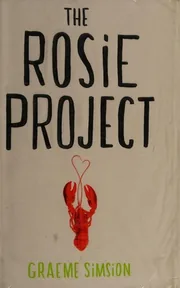
Suits adult and older teen readers who enjoy light contemporary romance.
326 pages, about 5 to 7.5 hours.
A rule-bound geneticist hunts for a wife by questionnaire. 54% taste match
The story
The Rosie Project is a contemporary romance by Graeme Simsion, first published in 2013. It is set in present-day Australia, with Melbourne as its backdrop, and follows Don Tillman, a professor of genetics who has trouble sustaining relationships with women. Deciding that marriage is a problem to be solved methodically, Don draws up a lengthy questionnaire meant to screen potential partners and find the right match.
Rosie Jarman enters the picture as someone who meets few of his requirements, yet she becomes a significant presence in his life. Don's expertise in DNA leads him to help her with a search of her own, the identity of her biological father, and the two begin working together on it. The novel combines university life, scientific research and the uncertain business of finding a partner, and it centres on how a man who relies on logic comes to terms with feelings that do not follow a plan. Fans of lighthearted contemporary fiction about marriage and relationships will find a familiar fit here. The book runs to roughly 326 pages in its typical edition and has appeared in many editions since its debut.
Characters
Don TillmanRosie Jarman
Setting
AustraliaMelbourneAustralie
Period
21st century
Themes
Australiageneticsresearchromancemarriagecollege teachersInterpersonal relationsNew York Times bestseller
- Want to read 245
- Reading now 16
- Read 50
Most people shelving it are saving it for later.
Of 311 readers who put it on a shelf, 79% want to read it, 5% are reading it now, 16% have finished it and 0% stopped before the end.
By the numbers
- The median edition runs 326 pages. Counting about 275 words a page and an adult reading pace of 250 words a minute, that is about 6.0 hours of reading.
- Open Library tracks 37 editions from 29 publishers, the earliest dated 2013 and the latest 2021, across 8 languages.
- On reader demand it ranks in the top 2% of the modern books in our catalog (15,152 of them).
- Libraries shelve it under Dewey 823 and Library of Congress class PR-9619.30000000.S497 R67 2013b.
 BookWard’s take
A rule-bound geneticist hunts for a wife by questionnaire
The Rosie Project is a romantic comedy built on a smart premise: Don Tillman treats marriage as a problem to be solved and designs a sixteen-page survey to solve it. The opening is strong, since the Wife Project is on the page almost at once. It is funny, too, and quick at 326 pages, with dialogue doing much of the work. Where I part company with it is on its familiar tropes: the opposites-attract romance is a well-worn shape, and the ending resolves just the way the genre promises. It is driven by character, and Don's voice is distinctive and carries the book. Light, warm and fast, it is better at charm than at surprise.
At 326 pages it is compact and brisk, which suits BookWard's love of tight books.
Short chapters and a clear goal keep it moving, close to BookWard's preferred speed.
The questionnaire-driven courtship is a fresh angle, but the genre underneath is familiar.
The prose is plain, clear and conversational, well under BookWard's middling position.
The story turns on how Don changes, so it is more character-led than plot-led.
It is an openly optimistic book about connection, more hopeful than BookWard's own lean.
A single linear narrative with no formal experiments, more conventional than BookWard prefers.
Comedy comes from Don's literal-minded view of social life, putting it well above BookWard's humor level.
The tone is light and gentle throughout, lighter than BookWard's middle position.
Feeling is present but kept warm and wry, around BookWard's level.
See all 50 dialsEvery position, side by side with this book
Where it lines up
- Shock for effectBookWard 9 · book 9
- Story or ideasBookWard 3 · book 3
- PaceBookWard 8 · book 7
Where it pulls apart
- Familiar tropesBookWard 10 · book 4
- Internal logicBookWard 10 · book 6
- Rigor (nonfiction)BookWard 9 · book 3
At 326 pages it is compact and brisk, which suits BookWard's love of tight books.
The Wife Project and its sixteen-page survey set up the story right away, which BookWard rewards.
The odd-couple romance follows a familiar track, so it sits well below BookWard's taste for avoiding tropes.
Don's methodical approach gives the plot a clear internal order, though romantic comedy bends plausibility for charm.
Short chapters and a clear goal keep it moving, close to BookWard's preferred speed.
The questionnaire-driven courtship is a fresh angle, but the genre underneath is familiar.
Don is drawn with real specificity, though the supporting cast is lighter than BookWard likes.
The romantic arc closes in the satisfying way the genre promises, matching BookWard's liking for resolution.
It leans warm and affectionate, a little softer than BookWard's restrained preference.
Nothing here relies on shock; the book is gentle and its stakes are emotional, which BookWard approves.
This is a novel, so rigor applies only loosely, though the genetics backdrop is treated seriously.
Don's literal, precise narration gives the book a distinctive and consistent voice.
It is firmly story-led, with the science serving the romance rather than the other way round.
Don's explanations of his own logic are stated outright, though mostly worked into scenes.
The Father Project gives the middle a second thread, so momentum holds fairly well.
The prose is plain, clear and conversational, well under BookWard's middling position.
The story turns on how Don changes, so it is more character-led than plot-led.
It is an openly optimistic book about connection, more hopeful than BookWard's own lean.
A single linear narrative with no formal experiments, more conventional than BookWard prefers.
Comedy comes from Don's literal-minded view of social life, putting it well above BookWard's humor level.
It reads easily and quickly, far lighter than BookWard's moderate reading effort.
The story is told from Don's single viewpoint, where BookWard leans toward many.
The story moves forward in a straight line, more conventional than BookWard's mix.
It is entirely grounded in contemporary university and city life.
A small circle of colleagues, friends and Rosie keeps the cast easy to track.
It stays personal, following one man's relationships rather than anything epic.
Much of the interest sits in Don's thinking, so it leans toward inner life.
Conversations carry much of the comedy and the relationship, putting it heavy on dialogue.
Romance is the engine of the story, from the Wife Project onward.
Present-day Melbourne is a familiar, ordinary setting, less foreign than BookWard's lean.
It is set in the present day, matching BookWard's contemporary lean and then some.
Its theme of love is lasting, but the light contemporary tone makes it somewhat of its moment.
Don narrates in a straightforward, honest way, a reliable guide though he misreads others.
Right and wrong are clear and kindly drawn, with little moral ambiguity.
The telling is spare and functional, with Don noticing facts rather than lingering on scenery.
Told in the first person, it feels close and personal rather than detached.
It begins a series, though the first book stands comfortably on its own.
The romance and the search for Rosie's father bring some turns, but the story mostly follows expectations.
It is a comforting, feel-good read, well below BookWard's appetite for challenge.
The tone is light and gentle throughout, lighter than BookWard's middle position.
Feeling is present but kept warm and wry, around BookWard's level.
The humor is affectionate and situational, sitting between dry and broad.
There is essentially no violence, below BookWard's middle position.
Romance is central but the treatment is light, so sexual content stays modest.
Politics is largely absent, which sits below BookWard's middle position.
The language is plain and contemporary, easier than BookWard's middle position.
Don's candid, fixed opinions color every scene, giving the narration plenty of attitude.
It looks ahead to Don's changing life, close to BookWard's forward lean.
It argues that connection is possible for anyone, a clearly idealistic stance.
Review written by BookWard, dial version 1, November 2026.
Who is The Rosie Project right for?
Suits adult and older teen readers who enjoy light contemporary romance. Content is mild, with romantic situations and some adult themes but little to offend.
It reads easily and quickly, far lighter than BookWard's moderate reading effort.
The tone is light and gentle throughout, lighter than BookWard's middle position.
Feeling is present but kept warm and wry, around BookWard's level.
There is essentially no violence, below BookWard's middle position.
Book CompanionThe Rosie Project: ideas, characters, themes
A man who treats love as a data problem discovers that what he needs cannot be filtered by questionnaire.
- The Wife Project. Don designs a sixteen-page survey to screen candidates, applying scientific method to finding a partner.
- Rosie fails the test. Rosie meets few of his criteria, yet she becomes a significant presence in his life.
- The Father Project. Don's DNA expertise lets him help Rosie search for her biological father, and the two begin working together.
- Logic meets feeling. The novel follows how a man who relies on logic comes to terms with feelings that do not follow a plan.
- Setting. The story unfolds in present-day Melbourne, mixing university life and research with the uncertainty of dating.
Characters
Don Tillman
Narrator and professor of genetics
A brilliant, socially challenged man who approaches marriage as a problem to solve.
Rosie Jarman
The unlikely candidate
Fiery and intelligent, she fits few of Don's requirements yet becomes central to his life.
Themes
Whether feeling can be planned, measured or optimized.
How someone who is socially awkward finds connection on his own terms.
Rosie's search for her biological father shows how origins shape who we are.
Don must adjust his rigid routines to make room for another person.
Discussion questions
- Does Don's questionnaire reveal anything true about what people want in a partner?
- Why does Rosie matter to Don despite failing his criteria?
- How does the Father Project change the relationship between Don and Rosie?
- Is Don's literal outlook mainly a source of humor, or does the book want us to take it seriously?
- Would the story work as well if told from Rosie's point of view?
Personalize your Book Companion
This is the general edition. In BookWard, the Companion is written for you: your reading profile, your notes, and spoiler-safe to the page you are on.
Buy, listen or borrow The Rosie Project
Each link opens a search for this book on that store, in a new tab.
Read on a device
Borrow
Reviews and community
If you liked The Rosie Project
Office enemies, petty games, and a kiss that complicates everything
Simon Vs. the Homo Sapiens AgendaBecky AlbertalliA warm, funny blackmail story about coming out on your own terms
Better Than the MoviesLynn PainterA warm, funny teen rom-com that knows its own tropes
She Drives Me CrazyKelly QuindlenA fake-dating YA romcom that trades surprise for warmth and laughs
Sources: Open Library.
Track The Rosie Project and find your next favorite
Add it to your shelf, rate what you have read, and BookWard will recommend what fits you.
Free to start. No credit card needed.