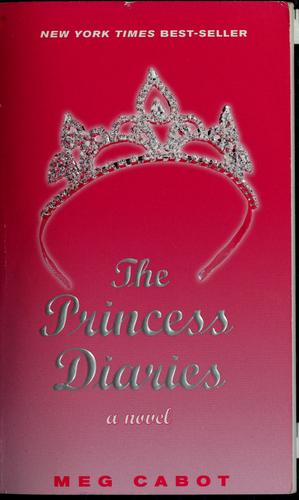
The Princess Diaries
by Meg Cabot
★ Top 25 book of 2000 · #17 on Best Books of 2000
Mia Thermopolis, a tall freshman failing Algebra, gets a double shock: Mom is dating her teacher, and Dad is the crown prince of Genovia. It launched a bestselling series that inspired a feature film.
Best for: Teen readers who like humorous diary-style stories; parents should note its mature content
The Princess Diaries is #17 on BookWard's Best Books of 2000, out of 46 2000 books that cleared our data bar.
What The Princess Diaries is about
Mia Thermopolis is a five-foot-nine freshman who is flunking Algebra and has no date for the Cultural Diversity Dance. Then two surprises land at once: her mom is dating her Algebra teacher, and her dad announces he is the crown prince of Genovia. Mia is suddenly in line to be a princess.
Told through her diary entries, the story is chatty, funny and full of early-2000s references. It is really about a girl working out who she is while family, friends and school keep getting more complicated. It is the first of a long series that follows Mia through high school. Readers who know the film should expect somewhat more mature content in the books.
The Princess Diaries on the Best Books of 2000
The Princess Diaries came out in 2000. Of the 46 books first published in 2000 that met BookWard's data bar, it ranks #17 on our Best Books of 2000 list.
Why it made the list: 224 readers have shelved it on Open Library. The list ranks each year’s books on how many readers have picked them up, how highly readers rate them, and how many are reading them right now.
Nearby on the 2000 list
- Gathering Blue Lois Lowry, #15
- Basic Economics Thomas Sowell, #16
- Me Talk Pretty One Day David Sedaris, #18
- The Visitor Lee Child, #19
See all Best Books of 2000 Best books by year
More years: Best Books of 1999 Best Books of 2001.
The numbers behind it
- Readers: 191 want to read it, 12 are reading it now and 21 have read it, according to Open Library.
| Signal | This book (0 to 100) | Weight |
|---|---|---|
| Reach | 48 | 55% |
| Reader love | 76 | 25% |
| Being read right now | 50 | 20% |
Questions about The Princess Diaries
When was The Princess Diaries published?
The Princess Diaries by Meg Cabot was first published in 2000.
Was The Princess Diaries one of the best books of 2000?
The Princess Diaries is #17 on BookWard's Best Books of 2000, out of 46 2000 books that cleared our data bar. 224 readers have shelved it on Open Library.
Why is The Princess Diaries on the Best Books of 2000 list?
224 readers have shelved it on Open Library.
More of the best books of 2000
- Harry Potter and the Goblet of Fire J. K. Rowling, #1
- The 48 Laws of Power Robert Greene, #2
- Because of Winn-Dixie Kate DiCamillo, #3
- The Gruffalo Julia Donaldson, #4
- Life of Pi Yann Martel, #5
- Esperanza Rising Pam Muñoz Ryan, #6
See the full Best Books of 2000, the Top 100, or new books on Rising.
How we know
This page uses public data: Open Library reader counts and ratings, and Wikipedia page views for recent years. The description is paraphrased from real source text. Rankings reflect reading interest, not quality or sales, and can be affected by data gaps. Lists update monthly.
It suits young teens and up who enjoy funny, confessional narrators.
Depends on the edition you pick.
A diary-form teen comedy about a reluctant, flat-chested, algebra-failing princess. 54% taste match
 BookWard’s take
A diary-form teen comedy about a reluctant, flat-chested, algebra-failing princess
Meg Cabot's first Mia Thermopolis book gets its comedy from voice. Mia is a five-foot-nine freshman who is flunking Algebra, and she narrates everything through diary entries, so the opening hooks at once: Mom is dating the Algebra teacher, and Dad has news about Genovia. The voice is the real engine here, distinctive, chatty and self-deprecating. The pace is brisk because the entries run short, and the tone leans funny without turning mean. This is a character-driven, intimate story, and it has relatively little dialogue for a novel. Familiar tropes do show up, since the secret-royal premise is classic wish-fulfilment, so whatever freshness it has comes from execution rather than concept. It is also the first of a long series, which shapes how complete the ending feels.
A light diary-format novel that moves in short entries, which sits close to BookWard's preference for tight reads.
Short diary entries keep things moving at a quick clip, close to BookWard's preferred speed.
The concept is familiar, though the diary treatment and voice give it its own flavor, a little under BookWard's bar.
The prose is plain, chatty and conversational by design, slightly plainer than BookWard's middle position.
Mia's inner life and relationships drive it more than any big plot machinery, in step with BookWard.
Underneath the embarrassment, the outlook is warm and optimistic, matching BookWard's hopeful lean.
The epistolary diary format is a distinctive form, somewhat more experimental than BookWard's usual taste.
Humor drives nearly every entry, well past BookWard's already comic-friendly setting.
The tone is light and funny, with only teenage worries to weigh on it, lighter than BookWard's setting.
Embarrassment and affection are felt strongly but played for comedy, near BookWard's middle.
See all 50 dialsEvery position, side by side with this book
Where it lines up
- PaceBookWard 8 · book 8
- Authorial voiceBookWard 9 · book 9
- OpeningBookWard 10 · book 9
Where it pulls apart
- Familiar tropesBookWard 10 · book 4
- Internal logicBookWard 10 · book 6
- OriginalityBookWard 9 · book 5
A light diary-format novel that moves in short entries, which sits close to BookWard's preference for tight reads.
Mom's dating news and Dad's royal reveal land almost immediately, matching BookWard's love of an instant hook.
The secret-princess setup is a well-worn wish-fulfilment trope, which is where BookWard is least comfortable.
The premise is a lighthearted fantasy of identity, not a system that needs to be airtight, so the logic is loose but consistent.
Short diary entries keep things moving at a quick clip, close to BookWard's preferred speed.
The concept is familiar, though the diary treatment and voice give it its own flavor, a little under BookWard's bar.
Mia is vividly drawn from the inside, though the supporting people are more sketched, a decent fit for BookWard.
As the first of a long series, it closes its own arc but leaves threads running, less resolved than BookWard likes.
It is warm and sometimes tender, but keeps its feeling light and comic, in the middle of the range for BookWard.
Nothing here is dark for effect; the surprises are comic and personal, which BookWard appreciates.
Mia's chatty, self-mocking diary voice is the book's signature, exactly the distinctive voice BookWard values.
This is a story-led comedy of embarrassment and secrets, not an argument, in line with BookWard's lean.
Diary form means Mia often explains events directly to the reader, a little more telling than BookWard prefers.
Short entries and constant small crises keep the middle moving, close to BookWard's standard.
The prose is plain, chatty and conversational by design, slightly plainer than BookWard's middle position.
Mia's inner life and relationships drive it more than any big plot machinery, in step with BookWard.
Underneath the embarrassment, the outlook is warm and optimistic, matching BookWard's hopeful lean.
The epistolary diary format is a distinctive form, somewhat more experimental than BookWard's usual taste.
Humor drives nearly every entry, well past BookWard's already comic-friendly setting.
It reads very easily and quickly, below BookWard's moderate comfort with effort.
The whole book comes through Mia's single diary, whereas BookWard is happy with many viewpoints.
Entries run in straightforward day-by-day order, more linear than BookWard's slight lean toward shifting time.
Genovia is invented, but the daily world is grounded teen life, a touch below BookWard's setting.
A modest circle of family, friends and classmates, in line with BookWard.
Stakes are school, family and one big secret, which is intimate, even smaller than BookWard's setting.
Everything is filtered through Mia's thoughts and worries, more inward than BookWard's balance.
Conversation shows up inside diary entries but the form leans on narration, so dialogue is lighter than BookWard likes.
Crushes and dating threads are present but sit beside family and identity plots, near BookWard's middle.
A New York teen life is highly familiar, with Genovia as the only exotic touch, below BookWard's preference.
It captures the early 2000s with period pop-culture references, so it sits somewhat in the recent past.
Heavy 2000s pop-culture references date it, though the teen insecurity at its core holds up.
Mia is candid with her diary and mostly trustworthy, though she exaggerates her troubles, so the narrator is fairly reliable.
Right and wrong are straightforward in a gentle teen comedy, clearer than BookWard's taste for ambiguity.
Settings are mentioned in passing through Mia's diary rather than painted in depth, sparser than BookWard likes.
A first-person diary makes this about as personal as a book gets, well beyond BookWard's setting.
This is the opening book of a long, multi-volume series, firmly serial where BookWard is mid-range.
The big reveals come early, with smaller comic surprises after, a bit under BookWard's liking for turns.
It is a comforting, easy read, far gentler than BookWard's lean toward challenging books.
The tone is light and funny, with only teenage worries to weigh on it, lighter than BookWard's setting.
Embarrassment and affection are felt strongly but played for comedy, near BookWard's middle.
The jokes are playful and exaggerated rather than bone-dry, so broader than BookWard's balance.
There is essentially none on the page, below BookWard's middle setting.
Teen crushes bring some mild talk of dating and relationships, though it stays light; parents are warned the books are more mature than the movies.
Royal succession is a plot device rather than a platform, so politics stays in the background.
The language is plain teen diary speak, easier than BookWard's usual density.
Mia has strong views on everything and says so, far more opinionated than BookWard's slight lean.
It lives in Mia's present with an eye to what comes next, balanced close to BookWard's setting.
A hopeful, believe-in-yourself spirit runs through it, in line with BookWard's idealistic side.
Review written by BookWard, dial version 1, November 2026.
Who is The Princess Diaries right for?
It suits young teens and up who enjoy funny, confessional narrators. The books contain more mature content than the movies, so parents may want to preview them for younger readers.
It reads very easily and quickly, below BookWard's moderate comfort with effort.
The tone is light and funny, with only teenage worries to weigh on it, lighter than BookWard's setting.
Embarrassment and affection are felt strongly but played for comedy, near BookWard's middle.
There is essentially none on the page, below BookWard's middle setting.
Book CompanionThe Princess Diaries: ideas, characters, themes
A gawky New York freshman learns she is the heir to a tiny European principality and has to fit a throne into her ordinary teenage life.
- Diary as engine. The story arrives as Mia's diary entries, so her voice and running commentary shape everything we learn.
- Two worlds colliding. Mia must juggle regular teenage life with the demands of being a royal princess.
- Family disruption. Mom starts dating Mia's Algebra teacher and Dad reveals he is the crown prince of Genovia.
- Period flavor. Frequent 2000s pop-culture references color the plot and anchor it in its era.
- Start of a series. This is the first of a long run of novels and novellas, so it sets up a world rather than wrapping everything.
Characters
Mia Thermopolis
Narrator and heroine
A tall, awkward freshman who is flunking Algebra and discovers she is Genovia's princess.
Mia's mom
Parent
Announces she is dating Mia's Algebra teacher, adding to Mia's troubles.
Mia's dad
Parent
Reveals that he is the crown prince of Genovia, setting the story in motion.
Themes
Figuring out who you are when your family history suddenly changes it.
Feeling out of place at school and at home, and finding where you fit.
Parents' choices, secrets and new relationships reshape a teenager's world.
The everyday embarrassment and courage of being fourteen or fifteen.
Weighing the demands of a royal role against an ordinary teen life.
Discussion questions
- How does the diary format shape your sympathy for Mia?
- What does the book suggest about being unprepared for a role you did not choose?
- Which parts of Mia's school life feel most true to being a teenager?
- How do the 2000s pop-culture references affect the way the story reads today?
- What would you want to know about Genovia and Mia's future after this first book?
Personalize your Book Companion
This is the general edition. In BookWard, the Companion is written for you: your reading profile, your notes, and spoiler-safe to the page you are on.
Buy, listen or borrow The Princess Diaries
Each link opens a search for this book on that store, in a new tab.
Read on a device
Borrow
Reviews and community
If you liked The Princess Diaries
A year of vices and crushes, told in diary entries
Dork Diaries 7Rachel Renée RussellA chatty, doodle-filled diary for middle schoolers, seventh time around
Dork Diaries 15Rachel Renée RussellA Paris trip told in Nikki Maxwell's doodle-friendly diary voice
Big Nate in the ZoneLincoln PeirceA lucky foot, a hot streak, and a sixth grader on a roll
Find your own best books
Add what you have read, rate it, and BookWard will recommend what to read next.
Free to start. No credit card needed.