Often shelved as juvenile fiction and widely enjoyed by teens and adults.
399 pages, about 6.5 to 9.5 hours.
A fairy tale that winks at you and still lands. 57% taste match
The story
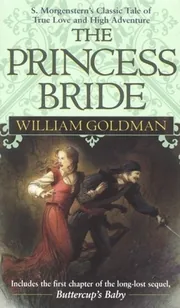
The Princess Bride is a fantasy romance by American writer William Goldman, first published in 1973. It blends comedy, adventure, drama, romance, and fairy tale, and it is framed as an abridgment of a longer work by a fictional author named S. Morgenstern, with Goldman's own commentary interrupting the story throughout. The edition is titled as the "Good Parts" version, and the full title presents it as a classic tale of true love and high adventure.
The story follows Westley, a farm boy who risks everything for the woman he loves, and Buttercup, the princess bride of the title. Around them are Inigo, a Spanish swordsman bent on avenging his father, Fezzik, a gentle giant, Vizzini, a Sicilian schemer, Prince Humperdinck, the ruler of Guilder, Count Rugen, and Miracle Max, a former Miracle Man to the King. The setting includes castles, pirates, and an assortment of strange creatures, and the narrative sets good against evil and love against hate. It has been shelved as general fantasy, action and adventure, and romance fiction, and it also appears among juvenile fiction.
Themes
CastlesPrincessesGood and evilPrincesFantasyPirates
- Want to read 358
- Reading now 18
- Read 137
Most people shelving it are saving it for later.
Of 513 readers who put it on a shelf, 70% want to read it, 4% are reading it now, 27% have finished it and 0% stopped before the end.
By the numbers
- The median edition runs 399 pages. Counting about 275 words a page and an adult reading pace of 250 words a minute, that is about 7.3 hours of reading.
- Open Library tracks 31 editions from 16 publishers, the earliest dated 1973 and the latest 2007.
- On reader demand it ranks in the top 2% of the classic books in our catalog (8,749 of them).
- Libraries shelve it under Dewey 813.54 and Library of Congress class PS-3557.00000000.O384 P7 2000.
 BookWard’s take
A fairy tale that winks at you and still lands
Goldman's Princess Bride is a fantasy romance that plays as comedy and adventure at once, wrapped in the conceit that he is merely abridging a longer work by S. Morgenstern. That framing gives it a distinctive voice, with his asides cutting in constantly, and it feels far from familiar even though it borrows the furniture of fairy tales. Pirates, castles, a farm boy, a princess and a schemer arrive with a straight face and a raised eyebrow. I like its tight internal logic and its funny, restrained handling of sentiment, though the tone runs warmer and lighter than I usually favor. At 399 pages it is not short, but the pace stays brisk and the opening hooks fast.
At 399 pages it runs moderately long, though the brisk adventure keeps it from feeling sprawling, which suits BookWard's taste for economy only partly.
Adventure follows adventure at a quick clip, close to BookWard's preference for momentum.
The abridgment-of-Morgenstern conceit and the interrupting asides make an old form feel new, which BookWard rewards.
The prose is clear and conversational, with playful flourishes but no ornate showiness.
Events and set pieces drive the book, with character serving the adventure rather than the reverse.
Love, loyalty and justice win out, giving the book a buoyant, hopeful outlook that sits well with BookWard.
The fictional-abridgment frame and the interrupting commentary are an inventive structural game, more experimental than BookWard's usual taste.
Comedy runs through the whole book, from banter to absurd situations, well past BookWard's balanced humor.
There is real cruelty and danger, but the tone stays light and the darkness never takes over.
It pairs genuine feeling with comic distance, so moments of love and loss land hard.
See all 50 dialsEvery position, side by side with this book
Where it lines up
- PaceBookWard 8 · book 8
- OriginalityBookWard 9 · book 8
- EndingBookWard 8 · book 7
Where it pulls apart
- LengthBookWard 1 · book 5
- Familiar tropesBookWard 10 · book 6
- ExpositionBookWard 2 · book 6
At 399 pages it runs moderately long, though the brisk adventure keeps it from feeling sprawling, which suits BookWard's taste for economy only partly.
The tone and the framing pull you in early, and the story quickly delivers a farm boy, a princess and real stakes.
It deliberately uses fairy-tale tropes, then twists and mocks them, so it is familiar in parts yet fresher than a straight retelling.
Its schemes and duels are set up so the payoffs feel earned, which BookWard values highly.
Adventure follows adventure at a quick clip, close to BookWard's preference for momentum.
The abridgment-of-Morgenstern conceit and the interrupting asides make an old form feel new, which BookWard rewards.
The leads are vivid and memorable, more archetype than psychological study, so depth is good but not the book's main point.
The central threads resolve with satisfying closure, in line with BookWard's liking for finished stories.
It is openly romantic and warm, yet the humor undercuts mawkishness, so it is less restrained than BookWard prefers.
Its dark moments, including cruelty and danger, serve the plot and are balanced by comedy rather than used for effect.
This is a novel, so the rigor dial does not apply.
Goldman's wry, interrupting narrator is the book's signature and one of the most distinctive voices in popular fantasy.
It is firmly story-led, built on quests, duels and love, with ideas riding underneath rather than driving.
Goldman often explains and comments outright in his asides, more than BookWard's show-it-in-scene preference.
The adventure keeps moving through its set pieces, with few stretches that drag.
The prose is clear and conversational, with playful flourishes but no ornate showiness.
Events and set pieces drive the book, with character serving the adventure rather than the reverse.
Love, loyalty and justice win out, giving the book a buoyant, hopeful outlook that sits well with BookWard.
The fictional-abridgment frame and the interrupting commentary are an inventive structural game, more experimental than BookWard's usual taste.
Comedy runs through the whole book, from banter to absurd situations, well past BookWard's balanced humor.
It reads easily and invites you along, with little effort required.
The story moves between several characters' fortunes, plus Goldman's own voice, giving a moderately wide view.
The plot runs mostly forward, though the framing and asides step outside the story's own time.
It is a proper fantasy with strange creatures and miracle cures, though it keeps one foot in tongue-in-cheek storybook territory.
A handful of memorable leads and villains makes a lively, manageable cast, a little larger than BookWard's norm.
A kingdom, a war and an elopement put it above intimate, yet the stakes stay personal.
Action, duels, chases and schemes dominate, with inner thought taking second place.
Banter and verbal sparring carry a great deal of the book, and the talk is a major pleasure.
True love is the spine of the story, which is central rather than a side thread.
Guilder, pirates and strange creatures make a storybook world that feels invented and unfamiliar.
It is set in a fairy-tale past, far from the present day, though the 1973 commentary is modern.
Its blend of adventure and wit has stayed beloved, and it reads as a lasting classic.
Goldman's narrator is playful and in on the joke, and mostly honest with you, so reliability is high.
Good and evil are clearly marked, in the way of a fairy tale, with little moral murk.
Description is present and colorful but kept light, since the energy goes into plot and talk.
This is fiction, so the nonfiction-style dial does not apply.
This is fiction, so the nonfiction-perspective dial does not apply.
It stands alone as a single complete story.
Reversals, near-deaths and surprise revelations come frequently, a hallmark of the adventure.
It is a warm, entertaining read that aims to delight rather than unsettle.
There is real cruelty and danger, but the tone stays light and the darkness never takes over.
It pairs genuine feeling with comic distance, so moments of love and loss land hard.
The humor is mostly wry and satirical, with some broad absurdity mixed in.
Duels, torture and danger appear, but they are stylized and tempered by the comic tone.
Romance stays chaste and storybook, with very little sexual content.
Wars and royal ambition appear as plot, with no real political agenda.
The language is plain and accessible, with a few wry flourishes but nothing dense.
Goldman's commentary is chatty, opinionated and constant, far from neutral narration.
It looks back to old fairy tales and romances, while being told from the early 1970s.
The book believes in true love, loyalty and the triumph of the good, so it leans idealistic.
Review written by BookWard, dial version 1, November 2026.
Who is The Princess Bride right for?
Often shelved as juvenile fiction and widely enjoyed by teens and adults. It contains swordplay, danger and some cruelty played with a light touch, so very young readers may want company.
It reads easily and invites you along, with little effort required.
There is real cruelty and danger, but the tone stays light and the darkness never takes over.
It pairs genuine feeling with comic distance, so moments of love and loss land hard.
Duels, torture and danger appear, but they are stylized and tempered by the comic tone.
Book CompanionThe Princess Bride: ideas, characters, themes
A swashbuckling fairy tale about true love and loyalty, told by an author who keeps stepping in to comment on it.
- The framing device. The book presents itself as Goldman's abridgment of S. Morgenstern's longer work, so every aside feels like part of the joke.
- True love at the center. Westley's devotion to Buttercup drives the plot and gives the adventure its emotional core.
- Genre mix. Comedy, adventure, romance and fairy tale all share the page, and the blend is the point.
- Villains with personality. Vizzini, Prince Humperdinck and Count Rugen are menacing and funny in different ways.
- Friendship and revenge. Inigo and Fezzik give the story a second heart, built on loyalty and a long-held vow.
Characters
Westley
Farm boy and hero
He risks everything, even his life, for the woman he loves.
Buttercup
The princess bride
The woman at the center of the story, said to be the most beautiful in the world.
Inigo
Spanish swordsman
He lives to avenge his father's death.
Fezzik
Gentle giant
Immensely strong and kind, he can uproot a tree with his bare hands.
Prince Humperdinck
Ruler of Guilder
A prince with an appetite for war and for Buttercup.
Themes
A devotion that is tested and tested again and still holds.
A clear contest, played with humor rather than gloom.
A long-held wish for justice, and what it costs the one who carries it.
How retelling, abridging and commenting change the way we hear a tale.
Friendship that survives danger and cruelty.
Discussion questions
- Why does Goldman frame the book as an abridgment of a work by S. Morgenstern, and what does it add?
- How do the narrator's interruptions change the way you feel about the romance?
- Which villain is most memorable, and what makes them work as comedy and threat at once?
- Does the book treat fairy-tale tropes with affection or mockery, or both?
- What makes Inigo's story land differently from Westley and Buttercup's?
Personalize your Book Companion
This is the general edition. In BookWard, the Companion is written for you: your reading profile, your notes, and spoiler-safe to the page you are on.
Buy, listen or borrow The Princess Bride
Each link opens a search for this book on that store, in a new tab.
Read on a device
Borrow
Reviews and community
If you liked The Princess Bride
A mouse, a rat, a princess, and a narrator who talks to you
Dirk Gently’s Holistic Detective AgencyDouglas AdamsA cosmic comic detective novel where everything turns out connected
StardustNeil GaimanA modern fairy tale with an old, wry heart
Anansi BoysNeil GaimanA comic fantasy of two brothers and one trickster father
Sources: Open Library.
Track The Princess Bride and find your next favorite
Add it to your shelf, rate what you have read, and BookWard will recommend what fits you.
Free to start. No credit card needed.