Updated November 2, 2026 · reading data through October 2026
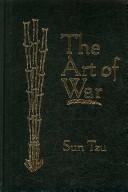
The Art of War
by Sun Tzu
Top 25
An ancient Chinese treatise on strategy, discipline, and winning without fighting. Short, aphoristic, and applied far beyond the battlefield. Read the full description
Best for: Anyone interested in strategy, in business or life
The Art of War is #23 on BookWard's Top 100 books for November 2026, with a BookWard Score of 76 out of 100. It climbed 9 places from #32 last month.
BookWard review of The Art of War
4 of 5 stars 4.0 out of 5, from 168 reader ratings
BookWard rates The Art of War 4.0 out of 5. That is the average of 168 reader ratings on Open Library (4.08), adjusted toward the typical book so that a small number of ratings cannot inflate it. Beyond the rating, it is #23 on BookWard's Top 100 books; 5,484 readers want to read it, 411 are reading it right now and 251 have finished it.
How this rating works
BookWard’s rating is calculated, not hand-scored. We take the average rating readers have given the book on Open Library and adjust it toward the typical book: adjusted = (n × average + 25 × 3.8) ÷ (n + 25), where n is the number of ratings. A book needs at least 50 ratings to be rated. The rating reflects how readers received the book, not whether it is right for you. Your own ratings on your shelf are private and are not part of this number.
The Art of War: reading interest over the past 12 months
Sources: Open Library’s public reading-log and ratings data (dump of 2026-10-31), Wikipedia page views and Wikidata. Monthly counts are exact; they show relative interest among readers of these public sources, not total readership.
Ranked against the other books on this list, The Art of War’s reading interest has run from #25 to #47 over these 12 months. Interest rank blends shelf adds, Wikipedia page views and rating activity, each compared with the other 99 books that month.
Shelf adds by month
The Art of War was added to Open Library readers’ shelves 954 times in the past 12 months, peaking in October 2026 with 200 (152% above its monthly average of 80). Over the latest three months (Aug 2026 to Oct 2026) shelf adds were up 84% on the three months before. 87% of the adds were “want to read”, 8% “currently reading” and 5% “already read”.
Want to read Currently reading Already read
Wikipedia page views
Its Wikipedia article was viewed 479,042 times in the past 12 months, peaking in April 2026 with 59,544 views. The latest three months were down 7% on the three before.
Source: Wikimedia monthly page views for the article The Art of War.
What the data says about The Art of War
- Moderate swings. Monthly shelf adds averaged 80 with some ups and downs.
- Busiest and quietest months. October 2026 was its busiest month (200 adds), about 4.3 times its quietest, June 2026 (47).
- Attention and shelf adds move independently. Its Wikipedia views and its shelf adds did not rise and fall together over these 12 months (correlation -0.32).
- Against its genre. It had 42% more shelf adds than the average Philosophy book on this list.
- Share of the list. It accounts for 0.9% of all shelf adds recorded for the Top 100 over these 12 months, #34 of 100.
Each finding is computed from the public data above and shown only when the numbers support it.
The Art of War on the Top 100: rank history
| Month | Rank | Score |
|---|---|---|
| November 2026 | #23 | 76 |
| October 2026 | #32 | 71 |
| September 2026 | #29 | 72 |
Is The Art of War rising or falling?
Holding steady Its weekly, monthly and yearly ranks are close together, so interest is steady rather than spiking.
On Open Library, The Art of War ranks #10 this week, #25 this month, and #39 over the past year. A longer bar means a higher position. Comparing the three windows shows whether readers are arriving faster than the book's long-term pace. Readings as of 2026-11-02.
Why The Art of War made the Top 100
The Art of War made the list mainly on momentum (+32.2 points) and being read right now (+20.5 points). Its smallest contribution is rising (+0.5). The BookWard Score blends five public signals, each scored from 0 to 100 and weighted as shown.
The reading-now, rating and rank signals come from Open Library’s public data, not from BookWard’s own readers. The score measures reading interest, not quality or sales. How the score works.
Open Library reader stats for The Art of War
Source: Open Library public reading logs, as of 2026-11-02. BookWard’s own monthly snapshots are added to the picture, and anonymous BookWard reader data will be layered in as the community grows.
More readers have The Art of War open right now than 68% of the other books on this list. These counts come from one public source, so they show relative interest rather than total readership.
Where it sits among Philosophy books
It is #1 of the 3 Philosophy books on this month’s list.
About The Art of War
What it’s about
Sun Tzu's treatise on war is short, formal and built to be quoted. It runs to 13 chapters, each taking up a different skill or art of warfare and showing how it bears on strategy and tactics. Sun looks at weapons, terrain and conditions, the money needed to keep an army in the field, morale, rank and discipline.
What may surprise a first-time reader is how little it glorifies fighting. Sun treats war as a costly, destructive last resort, and argues that a long campaign drains the state faster than any enemy could. His answer is to use diplomacy and sound economics to keep conflict brief, contained and cheap. Written around the 5th century BC, it has shaped military thinking in both East Asia and the West.
At a glance
- First published
- 1900
- Genre
- Philosophy
- Also described as
- economics, treatise, treatise on war
- Length
- about 90 pages (the median across its editions)
- Languages
- editions in 22 languages listed on Open Library
- Editions
- 1,543 on Open Library
- Places covered
- China
From Open Library and Wikidata public records. Missing rows mean the records do not list that fact.
Themes
- Strategy
- Preparation
- Knowing yourself and your opponent
What reading it is like
Short, aphoristic chapters. Ancient and compressed.
At about 90 pages it is a short read: roughly 2 hours at an average reading pace (about 250 words a minute, 300 words a page). Audiobook and edition lengths vary.
Good to know
Translations vary widely, so the edition matters. It is often applied to business.
The premise
Attributed to Sun Tzu, this ancient Chinese text gives short lessons on strategy: know yourself and your opponent, choose your battles, and win without fighting when possible.
What you’ll get
- Concise, quotable ideas
- Strategy for business and life
- Easy to read in an afternoon
You might skip it if you want a modern, example-rich business book.
Pairs well with: The 48 Laws of Power
Keep exploring the chart
Also on the chart at #22 and #24
More Philosophy on the Top 100
Questions about The Art of War
What rank is The Art of War on the Top 100 books?
The Art of War is #23 on BookWard's Top 100 books for November 2026, with a BookWard Score of 76 out of 100. It climbed 9 places from #32 last month.
Is The Art of War rising or falling?
Holding steady. Its weekly, monthly and yearly ranks are close together, so interest is steady rather than spiking. On Open Library, The Art of War ranks #10 this week, #25 this month, and #39 over the past year.
Why is The Art of War on the Top 100?
The Art of War made the list mainly on momentum (+32.2 points) and being read right now (+20.5 points). Its smallest contribution is rising (+0.5).
How many people are reading The Art of War right now?
Open Library's reading logs show 411 readers currently reading The Art of War, 5,484 who want to read it and 251 who have logged it as read (as of 2026-11-02). These are counts from one public source, not all readers.
How much interest has The Art of War had over the past year?
954 Open Library shelf adds in the past 12 months (peak October 2026, 200); latest three months up 84% on the prior three; 479,042 Wikipedia views in the past 12 months (down 7% over the latest three months). Figures come from Open Library and Wikipedia public data.
Who is The Art of War best for?
Anyone interested in strategy, in business or life.
Ask a question about The Art of War
Ask about this book's chart history, reading interest, or who it is for. Answers come from this page's data and can be wrong.
Answers are AI-written from BookWard’s own help content and can be wrong. Please do not share personal information: questions and answers may be saved and, if they are useful, shown on this site without your name.
How we know
This page is built from public data: Open Library’s dated reading-log and ratings dumps, Wikipedia page views, Wikidata, and BookWard’s own monthly Top 100 snapshots. The interest rank blends shelf adds (45%), Wikipedia page views (30%), rating activity (10%) and, for months where a snapshot exists, BookWard’s own score (15%), each as a percentile among the Top 100 books. Every month shown is real data; nothing is estimated. Rankings reflect reading interest, not quality or sales, and can be affected by data gaps. Last updated November 2026. Read the full methodology.
It suits older teens and adults, and its short, plain chapters make it approachable.
90 pages, about 1.5 to 2 hours.
Thirteen short chapters on winning wars by avoiding them. 53% taste match
 BookWard’s take
Thirteen short chapters on winning wars by avoiding them
The Art of War runs about ninety pages, and nearly every line is built to be quoted. Its thirteen chapters each take a different part of warfare, from money and terrain to morale, discipline and spies. It is about as tight as a book gets, and its reasoning holds together well, with each claim following from the one before. It treats war as a costly last resort, so the best victory is the cheap, brief one. Where it parts from my own liking is in how it teaches: it states its principles outright instead of showing them in scene, so it reads as a book of ideas rather than a story. Still, the voice is distinctive and the pace never sags.
Around ninety pages in thirteen chapters, it is as compact as a classic gets, which suits BookWard's love of tight books.
The short, dense chapters move briskly with no padding, close to BookWard's preferred speed.
The language is spare and economical, not ornate, built for memorable instruction rather than decoration.
With no plot or characters, this dial does not apply to a strategy treatise.
It is sober about war's destruction, but its aim of winning without ruin leaves a measured, practical outlook.
Thirteen thematic chapters give it an orderly, conventional treatise shape.
It is wholly serious in tone, with no attempt at humor.
It discusses war's costs soberly without dwelling on atrocity.
It is cool and analytical, keeping feeling out of its reasoning.
See all 50 dialsEvery position, side by side with this book
Where it lines up
- LengthBookWard 1 · book 1
- PaceBookWard 8 · book 8
- Shock for effectBookWard 9 · book 9
Where it pulls apart
- Story or ideasBookWard 3 · book 10
- ExpositionBookWard 2 · book 9
- OpeningBookWard 10 · book 7
Around ninety pages in thirteen chapters, it is as compact as a classic gets, which suits BookWard's love of tight books.
It opens straight on the stakes of war for the state, though as a treatise it hooks by argument rather than scene.
It is the source of many strategy commonplaces, so it reads fresh in origin even where later imitators have worn the ideas smooth.
Each chapter builds on a clear chain of cause and cost, so the reasoning holds together tightly, just as BookWard likes.
The short, dense chapters move briskly with no padding, close to BookWard's preferred speed.
A treatise on strategy has no characters to draw, so this dial does not apply.
It closes on its final chapter about intelligence and spies with a sense of completion, though it has no narrative resolution.
It is cool and unsentimental, treating soldiers and states as matters of cost and judgment, which BookWard values.
It uses no shock for effect; its severity comes from plain reasoning about what war costs.
It is systematic and well organized, though it argues by maxim rather than by evidence in the modern sense.
This is ideas from start to finish, with no story at all, so it sits at the far end from BookWard's lean.
It explains its principles outright rather than dramatizing them, the opposite of BookWard's preference for showing in scene.
At this length and density, there is no soft middle; every chapter earns its place.
The language is spare and economical, not ornate, built for memorable instruction rather than decoration.
With no plot or characters, this dial does not apply to a strategy treatise.
It is sober about war's destruction, but its aim of winning without ruin leaves a measured, practical outlook.
Thirteen thematic chapters give it an orderly, conventional treatise shape.
It is wholly serious in tone, with no attempt at humor.
The text is short and clear, but its compressed maxims reward slow rereading.
A single authoritative voice speaks throughout.
It has no narrative timeline; it presents principles in a fixed order.
It is grounded in real armies, terrain, money and discipline.
There is no cast beyond the commander and enemy it keeps addressing in general terms.
It deals with armies and states, though it keeps its focus on principles rather than epic events.
Its focus is on external conduct of campaigns, with some attention to morale and judgment.
It has no dialogue; it is delivered as continuous instruction.
Romance does not figure in a work about warfare and statecraft.
The ancient Chinese military world will be unfamiliar to most readers today.
It dates from roughly the fifth century BC, far from the present day.
Twenty-five centuries on, it remains one of the most influential works on strategy.
The authoritative instructor voice is straightforward and not unreliable.
It prefers cheap, brief victory, yet it is pragmatic about deception and force without clear moral verdicts.
It is sparse on scene and landscape, describing terrain only as it bears on tactics.
It is analytical throughout, laying out principles rather than telling events.
It speaks as detached counsel rather than personal memoir.
It leads the anthology later formalized as the Seven Military Classics.
A treatise has no plot, so it offers few surprises beyond its counterintuitive advice.
Its blunt realism about war and deception asks readers to reconsider what winning means.
It discusses war's costs soberly without dwelling on atrocity.
It is cool and analytical, keeping feeling out of its reasoning.
There is no humor to place on this dial.
Violence is discussed as strategy and consequence, with little shown on the page.
There is no sexual content.
It treats the state, diplomacy and economics of war closely, so politics is a strong undercurrent.
Translations are generally plain, though the compressed maxims and ancient references take some unpacking.
It is a strongly opinionated manual that tells the commander exactly what to do.
It draws on the accumulated lessons of earlier warfare to advise present conduct.
Its worldview is hard-headed and pragmatic, aiming at advantage rather than ideals.
Review written by BookWard, dial version 1, November 2026.
Who is The Art of War right for?
It suits older teens and adults, and its short, plain chapters make it approachable. It discusses war, deception and espionage in a detached way without graphic content.
The text is short and clear, but its compressed maxims reward slow rereading.
It discusses war's costs soberly without dwelling on atrocity.
It is cool and analytical, keeping feeling out of its reasoning.
Violence is discussed as strategy and consequence, with little shown on the page.
Book CompanionThe Art of War: ideas, characters, themes
The best way to win a war is to win it cheaply and quickly, ideally by outwitting the enemy before a fight begins.
- War is costly. Sun portrays war as a destructive last resort, and prolonged fighting drains the state faster than the enemy can.
- Keep it brief and cheap. He uses diplomacy and economic principles to explain how to keep a conflict short, contained and low in cost.
- Thirteen areas of skill. Each of the thirteen chapters covers a different art of warfare, from logistics and terrain to morale, rank and discipline.
- Intelligence matters. Spies and intelligence are treated as essential both to winning a war and to preventing one.
- A long influence. It anchored the Seven Military Classics and has shaped both East Asian and Western military thinking.
Characters
Sun Tzu
Attributed author
Called Master Sun, he is the strategist credited with the treatise and is regarded as one of history's finest military analysts.
Themes
Fighting is expensive in money, lives and the strength of the state.
Planning, positioning and deception count for more than brute strength.
Knowing the enemy and the ground decides outcomes before battle begins.
A well-ordered, confident army is a decisive advantage.
Winning with the least expense and exposure is the highest skill.
Discussion questions
- Why might Sun treat avoiding battle as the best form of victory?
- How do his ideas on cost and logistics apply outside warfare?
- Does the advice on deception and spies sit comfortably with you?
- What has changed since the fifth century BC, and what still holds?
- Why do you think this short text has been read so widely in business and self-improvement?
Personalize your Book Companion
This is the general edition. In BookWard, the Companion is written for you: your reading profile, your notes, and spoiler-safe to the page you are on.
Buy, listen or borrow The Art of War
Each link opens a search for this book on that store, in a new tab.
Read on a device
Borrow
Reviews and community
If you liked The Art of War
A short, sharp study of why people surrender to causes
La PoeticaAristotleAristotle's compact blueprint for how poetry and drama work
Nicomachean EthicsAristotleAristotle asks what the best human life is, and answers
Amusing Ourselves to DeathNeil PostmanA short, sharp case against turning everything into a show
Track The Art of War and find your next favorite
Add it to your shelf, rate what you have read, and BookWard will recommend what fits you.
Free to start. No credit card needed.