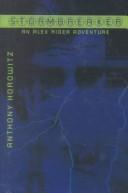
Stormbreaker
by Anthony Horowitz
★ Top 10 book of 2000 · #9 on Best Books of 2000
Fourteen-year-old Alex is told his uncle died in a car accident, but bullet holes in the windshield say otherwise. Learning his uncle was an MI6 spy, he is recruited to track the killers and finish the final mission.
Best for: Teen readers who enjoy spy adventures and deadly games of cat and mouse
Stormbreaker is #9 on BookWard's Best Books of 2000, out of 46 2000 books that cleared our data bar.
What Stormbreaker is about
Alex Rider is fourteen when he learns that the uncle who raised him did not die in an ordinary car accident. Bullet holes in the windshield say otherwise, and the truth is stranger still: his uncle was a spy for MI6, Britain's secret intelligence agency. Alex is pulled into that world and asked to track down the people responsible and finish his uncle's last mission.
His assignment takes him undercover to Port Tallen in Cornwall, home of the Stormbreaker computer factory. Something is wrong with the machines being made there, and the stakes reach well beyond one family's loss. This is the first book in the Alex Rider series, written in a quick, action-heavy style with a wry sense of humour. It suits readers who enjoy spy stories, gadgets and a young hero who has to grow up fast.
Stormbreaker on the Best Books of 2000
Stormbreaker came out in 2000. Of the 46 books first published in 2000 that met BookWard's data bar, it ranks #9 on our Best Books of 2000 list.
Why it made the list: 534 readers have shelved it on Open Library; readers rate it 3.9 out of 5 (37 ratings); 24 are reading it right now. The list ranks each year’s books on how many readers have picked them up, how highly readers rate them, and how many are reading them right now.
Nearby on the 2000 list
- Rich Dad's Guide to Investing Robert T. Kiyosaki, #7
- Angels & Demons Dan Brown, #8
- Kitchen Confidential Anthony Bourdain, #10
- How Do Dinosaurs Say Good Night? Jane Yolen, #11
See all Best Books of 2000 Best books by year
More years: Best Books of 1999 Best Books of 2001.
The numbers behind it
- Readers: 432 want to read it, 24 are reading it now and 78 have read it, according to Open Library.
- Ratings: 3.9 out of 5 from 37 Open Library ratings.
| Signal | This book (0 to 100) | Weight |
|---|---|---|
| Reach | 80 | 55% |
| Reader love | 41 | 25% |
| Being read right now | 76 | 20% |
Questions about Stormbreaker
When was Stormbreaker published?
Stormbreaker by Anthony Horowitz was first published in 2000.
Was Stormbreaker one of the best books of 2000?
Stormbreaker is #9 on BookWard's Best Books of 2000, out of 46 2000 books that cleared our data bar. 534 readers have shelved it on Open Library; readers rate it 3.9 out of 5 (37 ratings); 24 are reading it right now.
Why is Stormbreaker on the Best Books of 2000 list?
534 readers have shelved it on Open Library; readers rate it 3.9 out of 5 (37 ratings); 24 are reading it right now.
More of the best books of 2000
- Harry Potter and the Goblet of Fire J. K. Rowling, #1
- The 48 Laws of Power Robert Greene, #2
- Because of Winn-Dixie Kate DiCamillo, #3
- The Gruffalo Julia Donaldson, #4
- Life of Pi Yann Martel, #5
- Esperanza Rising Pam Muñoz Ryan, #6
See the full Best Books of 2000, the Top 100, or new books on Rising.
How we know
This page uses public data: Open Library reader counts and ratings, and Wikipedia page views for recent years. The description is paraphrased from real source text. Rankings reflect reading interest, not quality or sales, and can be affected by data gaps. Lists update monthly.
Best suited to young teens and confident younger readers who enjoy action and adventure.
Depends on the edition you pick.
A fast, gadget-packed teen spy debut that earns its adventure. 54% taste match
 BookWard’s take
A fast, gadget-packed teen spy debut that earns its adventure
Stormbreaker opens with a fourteen-year-old told his uncle died in a car accident, and a boy who knows better. That is a hook that works at once, and Horowitz keeps the story moving from there. The pace stays brisk and the middle holds, with one mission feeding straight into the next. This is a book driven by plot, and the character work is serviceable rather than deep: Alex is drawn well enough to carry the chase, not to linger over. Familiar tropes are part of the pleasure, since the secret agent recruited against his will is a known shape, though that is also where I'd push back hardest, because the formula can feel worn. Still, it is a tight, clear, resolved adventure that knows exactly what it is, and the first in a series that kept going.
A compact young adult adventure that moves without padding, which suits BookWard's love of tight books.
Mission follows mission with little downtime, matching BookWard's taste for speed and then some.
The fourteen-year-old-agent premise gave it a fresh hook for its audience, though the spy template underneath is familiar.
The prose is plain and functional, built for speed and clarity rather than ornament.
Events lead and character follows, the reverse of BookWard's lean toward character-driven stories.
The tone is ultimately upbeat, with a young hero who is capable and the good side prevailing.
A straightforward, conventional adventure structure that follows the hero from start to finish.
There is wit and some dry humor around the gadgets and Alex's situation, but the book is mostly a thriller.
The plot involves a plan to harm children and deadly danger, but it is handled at young adult level.
Feeling is present around the loss of Alex's uncle but takes second place to the action.
See all 50 dialsEvery position, side by side with this book
Where it lines up
- Sagging middleBookWard 8 · book 8
- LengthBookWard 1 · book 2
- OpeningBookWard 10 · book 9
Where it pulls apart
- Familiar tropesBookWard 10 · book 3
- Internal logicBookWard 10 · book 6
- OriginalityBookWard 9 · book 4
A compact young adult adventure that moves without padding, which suits BookWard's love of tight books.
It opens on a boy doubting the story of his uncle's death, grabbing attention immediately, just as BookWard likes.
The reluctant teen spy and the sinister businessman are well-worn shapes, so it leans on convention more than BookWard prefers.
The spy-thriller premise runs on young-adult plausibility, with enough internal consistency to hold together but some stretches BookWard would question.
Mission follows mission with little downtime, matching BookWard's taste for speed and then some.
The fourteen-year-old-agent premise gave it a fresh hook for its audience, though the spy template underneath is familiar.
Alex is likable and clearly drawn, but he is built to drive the action rather than to be explored in depth.
The central plot is brought to a clear close, which BookWard values, even as the series door stays open.
Feeling is kept light and brisk, with grief handled quickly so the adventure can keep moving.
Danger and peril are there for stakes in a young adult frame, rather than darkness for its own sake.
Not applicable to a work of fiction.
Horowitz writes in a clean, confident house style that is recognizable without being strikingly individual.
This is entirely story-led, with the plot and the chase carrying everything.
The spy world is explained when needed to keep a young reader oriented, more than BookWard's show-in-scene preference.
Momentum is sustained from the first chapters through to the factory finale without a real lull.
The prose is plain and functional, built for speed and clarity rather than ornament.
Events lead and character follows, the reverse of BookWard's lean toward character-driven stories.
The tone is ultimately upbeat, with a young hero who is capable and the good side prevailing.
A straightforward, conventional adventure structure that follows the hero from start to finish.
There is wit and some dry humor around the gadgets and Alex's situation, but the book is mostly a thriller.
Easy and quick to read, written for a young audience with no barriers to entry.
The story follows Alex closely, with the focus staying on one central perspective.
Events unfold in order without flashbacks or shifting time frames.
The gadgets and villainous plot stretch plausibility but stay within a grounded spy-thriller world.
A manageable group of agents, allies and villains, centered on Alex rather than a sprawling ensemble.
The threat to schoolchildren across Britain raises the stakes, though the story stays tied to one boy's mission.
Action dominates, with Alex's inner life kept in the background behind the chase.
Conversation moves briefings and confrontations along but does not dominate the page.
Romance plays no real part in this mission-focused story.
MI6, secret gadgets and a hidden computer factory give a spy world most young readers have not seen.
Set in a recognizably modern Britain of its publication period, with an early 2000s feel.
A durable formula with a loyal readership, though the period details and gadgets mark its era.
A straightforward third-person telling with no reason to doubt what we are shown.
Heroes and villains are clearly drawn, with little moral ambiguity in the central conflict.
Settings are sketched with enough detail to move the plot rather than to linger.
Not applicable to a work of fiction.
Not applicable to a work of fiction.
It is the first novel in the Alex Rider series, built to lead into further missions.
Reveals about the uncle and the plot keep the story turning, as expected from a thriller.
A comfortable, entertaining read that asks little of the reader beyond keeping up.
The plot involves a plan to harm children and deadly danger, but it is handled at young adult level.
Feeling is present around the loss of Alex's uncle but takes second place to the action.
The humor sits in the middle, mixing quick quips with a mostly straight-faced adventure.
There are fights, threats and peril, kept within the limits of a book for teen readers.
There is no sexual content in this young adult adventure.
Geopolitics stays in the background, with a villain's scheme rather than real political argument.
The language is plain and accessible for young readers throughout.
The narration is mostly neutral, letting the action speak for itself.
It looks ahead with a hero starting a new life and a series about to unfold.
Courage and doing the right thing win out, giving a mostly idealistic tone.
Review written by BookWard, dial version 1, November 2026.
Who is Stormbreaker right for?
Best suited to young teens and confident younger readers who enjoy action and adventure. It contains peril, fights and a plot targeting children, though the tone stays adventurous rather than graphic.
Easy and quick to read, written for a young audience with no barriers to entry.
The plot involves a plan to harm children and deadly danger, but it is handled at young adult level.
Feeling is present around the loss of Alex's uncle but takes second place to the action.
There are fights, threats and peril, kept within the limits of a book for teen readers.
Book CompanionStormbreaker: ideas, characters, themes
A fourteen-year-old discovers his uncle was a spy and is pulled into MI6's world to finish his uncle's final mission.
- A death that doesn't add up. Alex is told his uncle died in a car accident, but bullet holes in the windshield tell him otherwise.
- A hidden life revealed. The uncle he thought he knew turns out to have worked for MI6, Britain's secret intelligence agency.
- Recruited as a spy. Alex becomes a secret agent, sent undercover to continue his uncle's last assignment.
- The Stormbreaker factory. The trail leads to Port Tallen in Cornwall and a computer factory that is not what it seems.
- The start of a series. This is the first novel in the Alex Rider series, setting up the character for later missions.
Characters
Alex Rider
Protagonist
A fourteen-year-old who learns his uncle was a spy and becomes an MI6 agent himself.
Alex's uncle
The dead spy
The man Alex thought he knew, whose death sets the story in motion.
Themes
Who the people around you really are, and how much of life is hidden.
A teenager handed adult responsibility and danger far too early.
Finishing a dead relative's work as a way of dealing with grief.
Deciding which adults and institutions are really on your side.
Acting bravely when you are young and out of your depth.
Discussion questions
- Why do you think the story begins with the doubt about how Alex's uncle died?
- Is it believable, and is it fair, that a spy agency would recruit a fourteen-year-old?
- How does the book make you root for Alex even though he did not choose this life?
- What makes a spy story's villain scary, and does the threat here work for you?
- Would you keep reading the series after this first book, and why?
Personalize your Book Companion
This is the general edition. In BookWard, the Companion is written for you: your reading profile, your notes, and spoiler-safe to the page you are on.
Buy, listen or borrow Stormbreaker
Each link opens a search for this book on that store, in a new tab.
Read on a device
Borrow
Reviews and community
If you liked Stormbreaker
A teen spy thriller that hooks fast and rarely lets up
Eagle StrikeAnthony HorowitzA fast teen spy thriller with a pop-star villain
In Too DeepLee ChildReacher wakes shackled and starts dismantling his captors' plan
IcebergClive CusslerA frozen yacht, a vanished cargo, and a Dirk Pitt adventure
Find your own best books
Add what you have read, rate it, and BookWard will recommend what to read next.
Free to start. No credit card needed.