It suits teen and adult readers who like fast science fiction with a young hero.
528 pages, about 8.5 to 12.5 hours.
A fighter-pilot underdog story with a strong engine and familiar bones. 54% taste match
The story
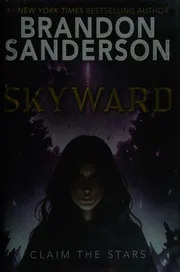
Skyward is a young adult science fiction novel by Brandon Sanderson, first published in 2018 by Delacorte Press. It is the first of four books in a series. The story follows Spensa, a girl living in a world that has been attacked for decades, where pilots have become the champions of the surviving human population. Aliens are the threat that shapes life there, and the book blends survival, warfare and action within a dystopian setting.
Spensa has long dreamed of becoming a pilot and earning a place among the stars. Her path is complicated by her father's history: he was a pilot who left his team and died, and that reputation follows her wherever she goes. Her hopes of entering Flight School are slim, yet she remains set on flying. A chance discovery in a cavern that had long been forgotten may offer her a way forward. At 528 pages in its median edition, the novel has appeared in 17 editions.
Themes
Air pilotsExtraterrestrial beingsSurvivalWarNew York Times bestsellerAmerican literatureWar storiesAction & Adventure
- Want to read 134
- Reading now 5
- Read 63
Most people shelving it are saving it for later.
Of 202 readers who put it on a shelf, 66% want to read it, 2% are reading it now, 31% have finished it and 0% stopped before the end.
By the numbers
- The median edition runs 528 pages. Counting about 275 words a page and an adult reading pace of 250 words a minute, that is about 9.7 hours of reading.
- Open Library tracks 17 editions from 12 publishers, the earliest dated 2018 and the latest 2021, across 3 languages.
- On reader demand it ranks in the top 4% of the recent books in our catalog (6,647 of them).
- Libraries shelve it under Library of Congress class PZ-0007.00000000.S19797Sky 2018.
 BookWard’s take
A fighter-pilot underdog story with a strong engine and familiar bones
Skyward drops you into a besieged human remnant and gives you a protagonist with something to prove. Spensa wants to fly, and her father's reputation stands between her and Flight School. The setup is clean, and it pays off: the book hooks at once and keeps its pace brisk across 528 pages. Sanderson is known for rule-bound systems, and that's where the book works best, with a world whose constraints feel set and fair. Where it gives ground is in its familiar tropes. The outcast who must earn her place is a well-worn shape, and the book is only moderately original for that reason. The characters are solid, built around Spensa's stubborn drive. Think of it as a confident, energetic first volume of a four-book series, strongest when it lets story lead and ideas follow.
At 528 pages it runs long for young adult fiction, though it reads faster than its size suggests; BookWard prefers tighter.
Action and training keep the story moving at a quick clip, close to where BookWard likes to sit.
The aerial-war frame is distinctive, but the underdog arc is familiar, so it lands mid-scale against BookWard's higher bar.
The prose is plain and clear, built for speed and readability, a touch plainer than BookWard's slight lean toward style.
Plot and character run together, with Spensa's personal stakes driving the action, a bit more balanced than BookWard's lean.
Despite a bleak war backdrop, the book is driven by determination and a dream of flight, hopeful in the way BookWard likes.
It follows a conventional, forward-moving structure with no formal experiments, a little straighter than BookWard's taste.
Humor surfaces regularly through banter and attitude, giving it a lighter tone than many war stories; BookWard likes that.
War and loss supply real weight without turning grim, close to BookWard's middle.
Spensa's stakes and family history carry feeling at a strong but not overwhelming level, near BookWard's middle.
See all 50 dialsEvery position, side by side with this book
Where it lines up
- PaceBookWard 8 · book 8
- Story or ideasBookWard 3 · book 3
- Character depthBookWard 8 · book 7
Where it pulls apart
- Familiar tropesBookWard 10 · book 4
- LengthBookWard 1 · book 6
- OriginalityBookWard 9 · book 5
At 528 pages it runs long for young adult fiction, though it reads faster than its size suggests; BookWard prefers tighter.
The premise of a besieged world and a pilot's daughter with a stained name grabs from the start, matching BookWard's taste.
The outcast who must prove herself at flight school is a well-worn route; BookWard wants fewer familiar tropes.
Sanderson is known for firm rules, and the flight and survival mechanics hold together, which BookWard values highly.
Action and training keep the story moving at a quick clip, close to where BookWard likes to sit.
The aerial-war frame is distinctive, but the underdog arc is familiar, so it lands mid-scale against BookWard's higher bar.
Spensa's drive and her father's shadow give her real shape, though not quite the depth BookWard favors.
As a series opener it resolves its main arc while leaving threads for later books, a bit short of BookWard's full resolution.
Emotional beats are open and earnest, leaning warm rather than restrained, which is softer than BookWard prefers.
Its darkness comes from the war and survival stakes, which gives it weight rather than cheap shocks, fitting BookWard.
This is fiction, so rigor does not apply.
The narration is lively and accessible without a strongly singular sound; BookWard prefers more distinctive voices.
This is firmly story-led, built on action and training rather than argument, which suits BookWard's preference.
Worldbuilding is woven into scenes with some explaining along the way, a little more than BookWard likes.
Training sequences keep momentum steady, though a long book carries some risk of slack, slightly under BookWard's standard.
The prose is plain and clear, built for speed and readability, a touch plainer than BookWard's slight lean toward style.
Plot and character run together, with Spensa's personal stakes driving the action, a bit more balanced than BookWard's lean.
Despite a bleak war backdrop, the book is driven by determination and a dream of flight, hopeful in the way BookWard likes.
It follows a conventional, forward-moving structure with no formal experiments, a little straighter than BookWard's taste.
Humor surfaces regularly through banter and attitude, giving it a lighter tone than many war stories; BookWard likes that.
It is easy to read, with clear prose and a direct plot, a little easier than BookWard's middle ground.
The story follows Spensa alone, a single viewpoint where BookWard enjoys more voices.
Events move forward in order, which keeps things easy to follow and a bit more linear than BookWard prefers.
Aliens, spacecraft and a dystopian setting place it well into the fantastical, above BookWard's middle.
A pilot cohort and surrounding figures give it a moderate cast, in line with BookWard's middle position.
A besieged remnant of humanity gives it real stakes, but it stays close to one pilot, slightly more epic than BookWard's middle.
Flight, combat and training put the weight on outward action, more than BookWard's slight lean inward.
Banter and training exchanges carry plenty of the book, in line with BookWard's lean toward dialogue.
Romance is a minor thread next to the war and flight plot, a bit lighter than BookWard's middle.
A besieged human remnant under alien attack is far from everyday life, matching BookWard's taste for unfamiliar settings.
It is set in a far-future conflict, not the present day, which sits below BookWard's lean toward the present.
The underdog-pilot story has lasting appeal, though its genre trappings tie it somewhat to its moment, near BookWard's lean.
Spensa narrates her own account in a mostly straightforward way, far more reliable than BookWard's preference.
The war has clear stakes and a clear heroine, so the moral picture is fairly plain, short of BookWard's ambiguity.
Flight and setting are described clearly without heavy ornament, a little lighter than BookWard's middle.
It opens a four-book series, so it is strongly serial where BookWard sits mid-scale.
A hidden discovery and wartime reversals bring moderate surprise, a notch below BookWard's lean.
It reads as an energetic, accessible adventure rather than a demanding one, more comforting than BookWard's lean.
War and loss supply real weight without turning grim, close to BookWard's middle.
Spensa's stakes and family history carry feeling at a strong but not overwhelming level, near BookWard's middle.
The humor leans open and playful rather than bone-dry, a touch broader than BookWard's middle.
Combat and war run through the plot with real stakes, a bit above BookWard's middle.
As a young adult adventure it keeps sexual content nearly absent, well below BookWard's middle.
War and survival shape the world, but politics is not its focus, below BookWard's middle.
The language is plain and accessible, well below BookWard's middle on difficulty.
The narration stays tied to Spensa's view and stays fairly neutral, a little below BookWard's lean.
It looks toward an uncertain future through its conflict and hopes, near BookWard's lean forward.
Spensa's belief in her dream and in earning her place gives it an idealistic streak, close to BookWard's lean.
Review written by BookWard, dial version 1, November 2026.
Who is Skyward right for?
It suits teen and adult readers who like fast science fiction with a young hero. It includes wartime peril and loss, with little sexual content.
It is easy to read, with clear prose and a direct plot, a little easier than BookWard's middle ground.
War and loss supply real weight without turning grim, close to BookWard's middle.
Spensa's stakes and family history carry feeling at a strong but not overwhelming level, near BookWard's middle.
Combat and war run through the plot with real stakes, a bit above BookWard's middle.
Book CompanionSkyward: ideas, characters, themes
A pilot's daughter carrying her father's disgraced name fights to earn a place in the war defending what is left of humanity.
- A world under siege. Humanity has been attacked for decades, and pilots have become the heroes of the surviving population.
- A name to overcome. Spensa's father left his team and died, so she is judged as a coward's daughter before she has done anything.
- A dream of flight. Spensa has wanted to be a pilot since childhood, and Flight School is her route to proving herself.
- A long shot. Her chances of entering Flight School are slim, which makes her determination the engine of the story.
- A hidden cavern. An accidental discovery in a long-forgotten cavern may offer Spensa a way to reach the stars.
Characters
Spensa
Protagonist
A young woman who has dreamed of piloting since childhood and is determined to fly despite her father's reputation.
Spensa's father
Past pilot
A pilot who left his team and was killed years ago, leaving a stain on his daughter's name.
Themes
How a parent's past can define a child before she acts, and what it takes to push back.
The gap between being called a coward and acting bravely when it counts.
What a community will give up and risk to keep going under long attack.
Holding to a dream when the system seems built to keep you out.
Discussion questions
- How much of Spensa's drive comes from wanting to fly, and how much from needing to clear her father's name?
- Why might pilots be treated as heroes in a world under long attack?
- Does the underdog setup feel earned here, or familiar? What helps or hurts it?
- What does the long-forgotten cavern suggest about the secrets a besieged world might hold?
- How does being the first book in a four-book series shape what the story chooses to resolve?
Personalize your Book Companion
This is the general edition. In BookWard, the Companion is written for you: your reading profile, your notes, and spoiler-safe to the page you are on.
Buy, listen or borrow Skyward
Each link opens a search for this book on that store, in a new tab.
Read on a device
Borrow
Reviews and community
If you liked Skyward
A dragon built for killing learns what loyalty can mean
Wild MagicTamora PierceA girl who talks to animals finds her place and her power
The Book Of ThreeLloyd AlexanderA brisk, warm Celtic-flavored quest about wanting to be a hero
SojournR. A. SalvatoreDrizzt leaves the Underdark and finds a ranger's calling on the surface
Sources: Open Library.
Track Skyward and find your next favorite
Add it to your shelf, rate what you have read, and BookWard will recommend what fits you.
Free to start. No credit card needed.