Suits adult and mature teen readers who enjoy reflective science fiction.
335 pages, about 5.5 to 8 hours.
A man dies at 43 and wakes up 18 again. 61% taste match
The story
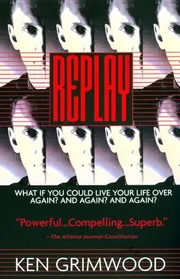
Replay is a science fiction novel by Ken Grimwood, with elements of fantasy, romance, and adventure. It centers on Jeff Winston, a man of forty-three whose life ends abruptly during a phone call with his wife. He does not stay dead. He wakes in his college dorm room, eighteen again, with the memories of everything he has already lived.
From there the book follows Jeff through repeated lives, each one beginning from the start of adulthood and running across the same span of years. With his foreknowledge, he tries different paths: going back for loves he lost, correcting old mistakes, and testing what money and planning can do when the future is already known. The story draws on time travel and reincarnation, and it is as much about how a person chooses to spend a life as it is about the strange rules that govern his.
The novel was first issued in 1986, with a later printing from Arbor House dated 1987. It won the World Fantasy Award for Best Novel in 1988. It runs a little over three hundred pages in its typical edition and has appeared in sixteen editions.
Jeff Winston was on the phone with his wife when he died.
Themes
Conduct of lifeReincarnationTime travel
- Want to read 142
- Reading now 5
- Read 32
Most people shelving it are saving it for later.
Of 179 readers who put it on a shelf, 79% want to read it, 3% are reading it now, 18% have finished it and 0% stopped before the end.
By the numbers
- The median edition runs 335 pages. Counting about 275 words a page and an adult reading pace of 250 words a minute, that is about 6.1 hours of reading.
- Open Library tracks 16 editions from 14 publishers, the earliest dated 1986 and the latest 2009, across 3 languages.
- On reader demand it ranks in the top 5% of the modern books in our catalog (15,152 of them).
- Libraries shelve it under Dewey 813.54 and Library of Congress class PS-3557.00000000.R497 R4 1998.
 BookWard’s take
A man dies at 43 and wakes up 18 again
Replay opens with its hook already set: Jeff Winston is on the phone with his wife when he dies, and he does not stay dead. That fast start suits the book, and so does the premise, which is a strong one that rewards a second look. It feels fresh for a story about living life over, because it treats the rule-bound mechanics of a second chance as a real question rather than a gimmick. The internal logic holds up, since each replay follows the same cycle and the choices carry weight. At 335 pages it is a moderate length and the pace is brisk, with little sagging. It is more driven by its central idea than by character and plot, and its sentiment runs warmer than I usually like, but the core question of how to spend a life gives it real force.
At 335 pages it is a moderate read that holds its premise without sprawling, which fits BookWard's taste for the compact.
A premise built on repeated lives gives the book steady forward motion. That sits a little under BookWard's preferred speed.
The mechanic of dying and restarting at eighteen with full memory feels fresh in its handling. BookWard would place it just under its own bar.
The writing is straightforward and serves the story rather than showing off. That sits a little plainer than BookWard.
The premise gives it a plot engine, but Jeff's inner life carries the weight. A slight tilt toward character, near BookWard.
A second chance invites optimism, tempered by the cost of each life. It reads as mildly hopeful, close to BookWard.
Repeating lives give it a looping shape, though each section reads cleanly. More structurally inventive than BookWard's middle position.
The tone is serious and reflective, with the premise treated earnestly. BookWard tends to prefer a touch more humor.
Death opens the book and loss runs through it, but the tone avoids relentless grimness. Close to BookWard.
Regret, love, and loss give it real feeling. Slightly more intense than BookWard's middle.
See all 50 dialsEvery position, side by side with this book
Where it lines up
- OpeningBookWard 10 · book 10
- EndingBookWard 8 · book 8
- PaceBookWard 8 · book 7
Where it pulls apart
- Familiar tropesBookWard 10 · book 6
- LengthBookWard 1 · book 4
- Internal logicBookWard 10 · book 8
At 335 pages it is a moderate read that holds its premise without sprawling, which fits BookWard's taste for the compact.
A man dying mid-phone-call with his wife, then waking at eighteen, sets the central premise in the first pages. BookWard rates that very highly.
Second-chance stories carry familiar beats, though the repeating cycle keeps it from resting on them. A little more tropey than BookWard likes.
The replays follow a consistent twenty-five-year cycle, so cause and effect stay clear. That rule-bound structure suits BookWard well.
A premise built on repeated lives gives the book steady forward motion. That sits a little under BookWard's preferred speed.
The mechanic of dying and restarting at eighteen with full memory feels fresh in its handling. BookWard would place it just under its own bar.
Jeff is drawn through repeated choices and regrets, giving him real dimension. It lands close to BookWard's preference for deeply drawn people.
A book built around one central question tends toward resolution rather than ambiguity. That leans toward the closure BookWard prefers.
Love and regret sit near the heart of the story, so it warms more than BookWard's restraint would choose.
The deaths and resets carry weight tied to the premise rather than existing for effect. BookWard approves of darkness that is earned.
This is a novel, so the nonfiction rigor dial does not apply.
The prose serves the premise more than it announces a personality, so the voice is solid rather than strongly distinctive.
The premise drives the book, though Jeff's personal story keeps pace with it. More idea-led than BookWard typically chooses.
A high-concept premise needs its rules laid out, so some explaining is part of the deal. Somewhat more explained than BookWard's preference.
The restarting cycle gives each life fresh stakes, which keeps the middle from going slack. A good match with BookWard.
The writing is straightforward and serves the story rather than showing off. That sits a little plainer than BookWard.
The premise gives it a plot engine, but Jeff's inner life carries the weight. A slight tilt toward character, near BookWard.
A second chance invites optimism, tempered by the cost of each life. It reads as mildly hopeful, close to BookWard.
Repeating lives give it a looping shape, though each section reads cleanly. More structurally inventive than BookWard's middle position.
The tone is serious and reflective, with the premise treated earnestly. BookWard tends to prefer a touch more humor.
The premise is easy to grasp and the story is accessible. It reads easily, a little lighter than BookWard's taste.
The premise centers on one man's repeated lives, so the book is built around a single point of view. BookWard likes more viewpoints.
Resets and repeated spans of years make the timeline a defining feature. Far more shifting than BookWard's preference.
The unexplained resets are the one fantastical element in an otherwise ordinary world. More fantastical than BookWard's middle.
The focus stays on Jeff and the few people in his lives. A small cast, matching BookWard's lean.
The ideas about time are large, but the story stays with one man's choices. Medium in scale, near BookWard.
Jeff's reflection and his actions share the stage evenly. Right near BookWard's balance.
A story about relationships and second chances gives conversation a natural place, without making it the main engine. A moderate amount, below BookWard's taste.
Reclaiming lost loves is part of the premise, so romance is a strong thread. Higher than BookWard's usual middle.
The settings are familiar earlier decades of ordinary American life. Less unfamiliar than BookWard likes.
The story spans past decades rather than a present-day world. Further back than BookWard's lean toward the contemporary.
The question of what you would do with a second chance does not date. Close to BookWard's preference.
The narration stays with Jeff in a plain, reliable way. Well below BookWard's taste for unreliable narrators.
Jeff's choices are weighed with some nuance rather than labeled right or wrong. Slightly clearer than BookWard prefers.
Scenes are sketched economically rather than lavishly. Near BookWard's middle.
Replay stands alone as a single novel. A clean match with BookWard.
The premise generates turns as Jeff tries new paths, though many follow naturally. Slightly below BookWard's appetite.
It asks real questions about how to spend a life while remaining readable. Somewhat gentler than BookWard's pick.
Death opens the book and loss runs through it, but the tone avoids relentless grimness. Close to BookWard.
Regret, love, and loss give it real feeling. Slightly more intense than BookWard's middle.
Death is central, but the book does not linger on violence. Gentler than BookWard's middle.
Romance and relationships feature, though sexual content is not the focus. A little below BookWard's middle.
The story concerns personal choices more than political themes. Well below BookWard.
The language is plain and easy to follow. Well below BookWard.
The narration stays close to Jeff without pushing a lecture. Less opinionated than BookWard.
It looks back more than forward, as a man revisits his past. Below BookWard's middle.
The book wants people to make the most of their chances, which gives it a hopeful bent. Close to BookWard.
Review written by BookWard, dial version 1, November 2026.
Who is Replay right for?
Suits adult and mature teen readers who enjoy reflective science fiction. It deals with death and loss, and includes adult relationships.
The premise is easy to grasp and the story is accessible. It reads easily, a little lighter than BookWard's taste.
Death opens the book and loss runs through it, but the tone avoids relentless grimness. Close to BookWard.
Regret, love, and loss give it real feeling. Slightly more intense than BookWard's middle.
Death is central, but the book does not linger on violence. Gentler than BookWard's middle.
Book CompanionReplay: ideas, characters, themes
Replay asks what a person would do with the chance to live their life again with everything they already know.
- A death that starts everything. Jeff Winston dies during a phone call with his wife, and the book begins when he wakes up again.
- Eighteen again. He returns to his college dorm room at eighteen, with the memories of the life he has just lived.
- The same span of years. Each replay covers the same twenty-five-year cycle, giving the story a clear and repeating shape.
- Different paths tested. Jeff tries lost loves, corrected mistakes, and what foreknowledge can do with money and planning.
- More than a time puzzle. The strange rules matter less than the question of how a person chooses to spend a life.
Characters
Jeff Winston
Protagonist
A forty-three-year-old man who dies and wakes as an eighteen-year-old with his memories intact.
Themes
What a person does when offered the chance to change their life.
How old mistakes and lost loves shape later choices.
The odd rules of repeating a span of years with full memory.
What makes a life worth living when you can try it again.
Discussion questions
- If you could restart at eighteen with your memories, what is the first thing you would change?
- Does having foreknowledge make Jeff's choices easier or harder?
- What do the repeated lives suggest about the value of any single life?
- Which of Jeff's goals feel most understandable, and which feel misguided?
- Does the book treat time travel as a gift, a burden, or both?
Personalize your Book Companion
This is the general edition. In BookWard, the Companion is written for you: your reading profile, your notes, and spoiler-safe to the page you are on.
Buy, listen or borrow Replay
Each link opens a search for this book on that store, in a new tab.
Read on a device
Borrow
Reviews and community
If you liked Replay
A time-travel love story that trades logic for feeling
The Dead ZoneStephen KingA coma, a touch, and a choice only Johnny can make
BuckeyePatrick RyanA small Ohio town, two families, and one buried secret
AtmosphereTaylor Jenkins ReidA shuttle disaster frames a long, tender story about love and ambition
Sources: Open Library.
Track Replay and find your next favorite
Add it to your shelf, rate what you have read, and BookWard will recommend what fits you.
Free to start. No credit card needed.