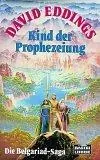
Pawn of Prophecy
by David Eddings · 1982
It suits younger teens and adults who enjoy gentle, classic fantasy, and it was shelved as juvenile fiction.
272 pages, about 4.5 to 6.5 hours.
A farm boy, an Orb, and a quest built from old fantasy bones. 44% taste match
The story
Pawn of Prophecy is a high fantasy novel by David Eddings, first published in 1982 and the opening volume of the Belgariad. It is also a coming-of-age story, following the boy Garion, who grows up on Faldor's farm in Sendaria under the care of his Aunt Pol. The book runs to about 272 pages and has appeared in 27 editions.
The story draws on an old tale of the god Torak, who sought dominion and set men and gods at war, and of Belgarath the Sorcerer, who recovered the Orb that guarded the men of the West. A prophecy ties the safety of those men to the Orb remaining at Riva. Garion has no belief in magic or doom, yet a dark man without a shadow has followed him for years. As the Apostate works to rouse Torak, Garion is drawn into a dangerous quest alongside people he loves but does not fully know. The setting spans lands such as Sendaria and Cherek, and themes of magic, heroes, and the struggle between good and evil run through the book. It was also shelved as juvenile fiction.
THE FIRST THING the boy Garion remembered was the kitchen at Faldor's farm.
Characters
David Eddings
Setting
SendariaCherek
Themes
LiteratureHigh fantasyBuildungsromanMagicHeroesGood and evil
- Want to read 216
- Reading now 8
- Read 77
Most people shelving it are saving it for later.
Of 301 readers who put it on a shelf, 72% want to read it, 3% are reading it now, 26% have finished it and 0% stopped before the end.
By the numbers
- The median edition runs 272 pages. Counting about 275 words a page and an adult reading pace of 250 words a minute, that is about 5.0 hours of reading.
- Open Library tracks 27 editions from 19 publishers, the earliest dated 1982 and the latest 2015, across 3 languages.
- On reader demand it ranks in the top 2% of the modern books in our catalog (15,152 of them).
- Libraries shelve it under Dewey 813.54 and Library of Congress class PS-3555.00000000.D38 P39 2004.
Read it
A digital copy can be borrowed for free.
1 ebook provider carry it and a scanned copy is on the Internet Archive.
 BookWard’s take
A farm boy, an Orb, and a quest built from old fantasy bones
Pawn of Prophecy opens in Faldor's kitchen and stays small for a while, which is both its charm and its limit. At 272 pages it is short for epic fantasy, and that economy counts in its favor. The pace is brisk once the journey starts, though the hook is gentle rather than immediate. Where it cools is in its reliance on familiar tropes: a farm boy, a guardian aunt, a prophecy and a dark god are all well-worn pieces, so the book feels less original than its reputation suggests. The exposition is also heavy, with the old war between the gods explained outright. Still, the tone is warm and the outlook hopeful, and Garion is drawn with enough depth to carry a first volume that ends mid-journey.
At 272 pages it is compact for epic fantasy, which suits BookWard's preference for tight books.
Once the quest starts it moves along steadily, a little slower than BookWard likes at the start.
The ingredients are familiar, so it reads as a clean version of a known pattern rather than a fresh one.
The writing is plain and readable, favoring clarity over ornament.
Plot and character share the load, with the quest leading and Garion's discoveries following close behind.
Good-hearted and optimistic, with a clear sense that courage and loyalty will matter.
A straightforward quest told in order with no structural games.
Light banter and affectionate teasing among the travelers keep the mood buoyant.
There is a threatening dark god and a shadowless stalker, but the tone stays mostly gentle.
Affection and fear register without becoming overwhelming.
See all 50 dialsEvery position, side by side with this book
Where it lines up
- LengthBookWard 1 · book 2
- PaceBookWard 8 · book 7
- Shock for effectBookWard 9 · book 8
Where it pulls apart
- Familiar tropesBookWard 10 · book 2
- OpeningBookWard 10 · book 5
- OriginalityBookWard 9 · book 3
At 272 pages it is compact for epic fantasy, which suits BookWard's preference for tight books.
It begins in a quiet farm kitchen and builds gradually, so the opening is pleasant rather than gripping.
A farm boy, a hidden heritage, a prophecy and a dark god lean heavily on genre staples.
The magic, politics and prophecy fit together consistently, though they are lightly tested in this first volume.
Once the quest starts it moves along steadily, a little slower than BookWard likes at the start.
The ingredients are familiar, so it reads as a clean version of a known pattern rather than a fresh one.
Garion and the people around him are given real personality, though several lean toward types.
As book one of five it stops partway through the journey, leaving the larger conflict unresolved.
Warm and affectionate toward its characters, with some comforting beats rather than strict restraint.
It raises its dangers without reaching for gratuitous darkness, so nothing feels shock-driven.
This is a novel, so the dial does not apply.
The tone is friendly and recognizable, with banter that gives it some identity within the genre.
It is story-led: the quest and Garion's growing up drive everything, not an argument.
The old war of gods and kings is told to the reader outright, which BookWard would rather see dramatized.
The travelling middle holds together reasonably well, with new places and company keeping it moving.
The writing is plain and readable, favoring clarity over ornament.
Plot and character share the load, with the quest leading and Garion's discoveries following close behind.
Good-hearted and optimistic, with a clear sense that courage and loyalty will matter.
A straightforward quest told in order with no structural games.
Light banter and affectionate teasing among the travelers keep the mood buoyant.
Easy to read, written to be accessible, including to younger readers.
The story stays close to Garion rather than moving between many minds.
Events unfold in order, with the past arriving only as told legend.
Gods, sorcerers and a magic Orb place it firmly in high fantasy.
A growing company of travelers and many named lands give it a moderately large cast.
A personal coming-of-age story set against a war between gods and kingdoms, so the stakes are epic.
More travel, encounters and incident than introspection, though Garion's doubts get space.
Banter among the party drives many scenes, so conversation is a major part of the book.
Romance is a minor thread in this opening volume.
Sendaria, Cherek and the wider kingdoms are invented lands that the book works to build out.
It is set in an invented, medieval-style past, far from the present day.
Four decades on its simple pleasures still find readers, though its pattern has since been widely imitated.
The narration is straightforward and trustworthy, telling events as they happen.
Good and evil are drawn clearly, with a dark god on one side and loyal heroes on the other.
Landscapes and settings are sketched efficiently without lingering.
It is the first of the Belgariad and ends open to the next book.
The big surprises concern Garion's background, with a few turns along the way.
A comforting, accessible read that rarely pushes the reader.
There is a threatening dark god and a shadowless stalker, but the tone stays mostly gentle.
Affection and fear register without becoming overwhelming.
The humor is bantering and good-natured, tilting toward playful rather than dry.
Danger and some fighting appear, kept mild and not graphic.
There is essentially no sexual content.
Kingdoms, rival powers and royal lines matter to the plot, though it is not a political book.
The language is plain and easy to follow.
The narration mostly stays neutral, letting events and characters carry the tone.
It is rooted in ancient history and prophecy, though the story moves toward what Garion must do.
Loyalty, duty and the triumph of good over evil are treated sincerely.
Review written by BookWard, dial version 1, November 2026.
Who is Pawn of Prophecy right for?
It suits younger teens and adults who enjoy gentle, classic fantasy, and it was shelved as juvenile fiction. Content is mild, with danger and conflict but little that is graphic.
Easy to read, written to be accessible, including to younger readers.
There is a threatening dark god and a shadowless stalker, but the tone stays mostly gentle.
Affection and fear register without becoming overwhelming.
Danger and some fighting appear, kept mild and not graphic.
Book CompanionPawn of Prophecy: ideas, characters, themes
A farm boy raised by his aunt is pulled into a quest tied to an ancient prophecy and a sleeping evil god.
- A quiet start. The book begins in Faldor's farm kitchen, giving Garion a settled life before the story pulls him away.
- The old legend. The tale of Torak, Belgarath and the Orb at Riva sets up the prophecy that frames the whole series.
- The shadowless man. A dark figure without a shadow has haunted Garion for years, hinting that his life is not what it seems.
- A hidden heritage. Garion does not know his own strange background, and learning it is central to his journey.
- First of a series. This is book one of the Belgariad, so it sets up characters and stakes rather than concluding them.
Characters
Garion
Young protagonist
A boy raised on a Sendarian farm who does not believe in magic and is drawn into a quest.
Aunt Pol
Guardian
Garion's aunt, who raised him and travels with him on the quest.
Belgarath
Sorcerer of legend
The sorcerer who in the old tale led men to recover the Orb.
Torak
Evil god
The god whose bid for dominion set men and gods at war and who the Apostate seeks to wake.
Themes
Garion grows from a sheltered boy into someone facing a larger world.
A prophecy shapes events and leaves characters to choose how to meet it.
A dark god and loyal heroes stand on opposite sides of the conflict.
Who Garion really is lies behind the life he knows.
Garion travels with people he loves but does not fully understand.
Discussion questions
- Does Garion's disbelief in magic make him a better or a weaker hero?
- How much does the prophecy remove choice from the characters?
- Why might the book begin in a farm kitchen rather than with the war of the gods?
- What does the shadowless man add to the early chapters?
- Which familiar fantasy elements work here and which feel worn?
Personalize your Book Companion
This is the general edition. In BookWard, the Companion is written for you: your reading profile, your notes, and spoiler-safe to the page you are on.
Buy, listen or borrow Pawn of Prophecy
Each link opens a search for this book on that store, in a new tab.
Read on a device
Borrow
Reviews and community
If you liked Pawn of Prophecy
A brisk, warm Celtic-flavored quest about wanting to be a hero
Escaping PerilTui T. SutherlandA dragon built for killing learns what loyalty can mean
SkywardBrandon SandersonA fighter-pilot underdog story with a strong engine and familiar bones
SojournR. A. SalvatoreDrizzt leaves the Underdark and finds a ranger's calling on the surface
Sources: Open Library.
Track Pawn of Prophecy and find your next favorite
Add it to your shelf, rate what you have read, and BookWard will recommend what fits you.
Free to start. No credit card needed.