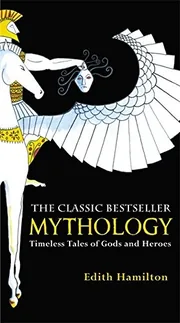
It suits students and general readers who want a clear survey of classical myth, and Hamilton wrote it to be approachable.
392 pages, about 6 to 9 hours.
Hamilton's lucid, orderly map of Greek, Roman and Norse myth. 42% taste match
The story
Mythology is a reference work on the stories of the ancient world, first published in 1940 by Edith Hamilton. It gathers the myths of Greece, Rome and the Norse peoples into one organized volume, running to roughly 392 pages in its median edition, and more than fifty editions have appeared.
The book opens with the creation of the universe and moves through the gods of Olympus, among them Zeus, Hera, Poseidon, Hades, Pallas Athena, Phoebus Apollo, Artemis, Aphrodite, Hermes, Ares and Hephaestus. It follows the tales of heroes and of the Golden Fleece, and it covers the Trojan War. The settings range across Greece, Rome, Italy, Troy, Athens, Thebes and Olympus, with the Norse material placed alongside the classical. Hamilton, a student of classical literature who also wrote The Greek Way and The Roman Way, draws on the early storytellers and arranges their sometimes differing versions into a single account. It suits students of classical mythology and folklore as well as general readers who want a clear survey of the subject.
The Greeks did not believe that the gods created the universe.
Characters
ZeusHeraPoseidonHadesPallas AthenaPhoebus Apollo
Setting
EuropeGreeceRomeTroyItaly
Themes
ManuelMythologieMythologie classiquecreation mythsGolden FleeceTrojan WarreferenceMythology
- Want to read 599
- Reading now 37
- Read 38
Most people shelving it are saving it for later.
Of 674 readers who put it on a shelf, 89% want to read it, 5% are reading it now, 6% have finished it and 0% stopped before the end.
By the numbers
- The median edition runs 392 pages. Counting about 275 words a page and an adult reading pace of 250 words a minute, that is about 7.2 hours of reading.
- Open Library tracks 59 editions from 36 publishers, the earliest dated 1940 and the latest 2024, across 4 languages.
- On reader demand it ranks in the top 2% of the classic books in our catalog (8,749 of them).
- Libraries shelve it under Dewey 292 and Library of Congress class BL-0310.00000000.H3 1969b.
 BookWard’s take
Hamilton's lucid, orderly map of Greek, Roman and Norse myth
Mythology is a survey of the ancient world's stories, gathered by Edith Hamilton into one organized volume. It opens with the creation of the universe, moves through the gods of Olympus, then follows the heroes, the Golden Fleece and the Trojan War, with the Norse material set alongside. Hamilton is a careful organizer: she blends the conflicting versions left by the early storytellers into one clear account, and the result holds together well. She explains outright where a reader might prefer to see things shown in scene, and the book favors an orderly presentation of its subject over a single driving narrative. Its staying power is real, since more than fifty editions have appeared since 1940. Familiar tropes are the whole inheritance here, so this is a book to read for foundations, not for surprise. It is a reference first and a page-turner second.
At 392 pages, it covers three mythologies in one volume, which is compact for the ground but not short.
It moves briskly from one tale to the next, though the survey format keeps momentum even rather than urgent.
The stories are ancient and well worn; the originality lies in Hamilton's arrangement, not the material.
The prose is clear and readable, with some classical polish, but it favors lucidity over ornament.
The tales are driven by what gods and heroes do, so events lead and inner life follows behind.
Many myths end in loss, war or fate, though heroism and wonder keep the tone from pure bleakness.
It follows a conventional order: creation, the gods, the heroes, then the great wars and sagas.
The tone is mostly serious and reverent, with only occasional lightness in the tales themselves.
War, betrayal and divine cruelty run through the myths, giving the book a darker edge in places.
Tragedy and heroism are present, but Hamilton's telling keeps the feeling steady rather than overwhelming.
See all 50 dialsEvery position, side by side with this book
Where it lines up
- Internal logicBookWard 10 · book 8
- PaceBookWard 8 · book 6
- SentimentBookWard 8 · book 6
Where it pulls apart
- Familiar tropesBookWard 10 · book 3
- LengthBookWard 1 · book 5
- OpeningBookWard 10 · book 6
At 392 pages, it covers three mythologies in one volume, which is compact for the ground but not short.
It opens with the creation of the universe, a grand start, though it reads as a survey rather than a gripping scene.
These are the source tales that later fiction borrows from, so it is the origin of the tropes more than a user of them.
Hamilton blends sometimes conflicting versions into a single organized account, which gives the whole a clear internal order.
It moves briskly from one tale to the next, though the survey format keeps momentum even rather than urgent.
The stories are ancient and well worn; the originality lies in Hamilton's arrangement, not the material.
Gods and heroes act as archetypes defined by their deeds, so they are vivid but not deeply interior.
Each tale reaches its own close, but the volume is a survey and has no single resolving ending.
Hamilton retells with clarity and some warmth, though she keeps a measured, adult tone over heavy emotion.
The darkness in these myths belongs to the stories themselves and is presented as part of the tradition, not as a gimmick.
Hamilton draws on the early storytellers and years of classical study, giving the book a sound scholarly footing.
Her lucid, orderly retelling has a recognizable calm authority, though it stays in service of the stories.
It is organized by subject and story together, a survey of tales with the reference purpose slightly ahead.
As a reference work, it explains and frames the myths directly rather than dramatizing them in scene.
Short, self-contained tales keep each section fresh, so the survey holds up from creation through Troy and beyond.
The prose is clear and readable, with some classical polish, but it favors lucidity over ornament.
The tales are driven by what gods and heroes do, so events lead and inner life follows behind.
Many myths end in loss, war or fate, though heroism and wonder keep the tone from pure bleakness.
It follows a conventional order: creation, the gods, the heroes, then the great wars and sagas.
The tone is mostly serious and reverent, with only occasional lightness in the tales themselves.
Hamilton wrote for the casual reader as well as the student, so the book is approachable despite its scope.
Because it spans many tales and traditions, the book moves through a wide range of figures and perspectives.
The book is arranged in roughly sequential order from creation onward, and individual tales mostly run straight.
Gods, monsters and divine intervention fill these stories, so the book sits at the fantastical end.
Zeus, Hera, Poseidon, Hades, Athena, Apollo, Artemis, Aphrodite, Hermes, Ares and many more crowd the pages.
From the creation of the universe to the Trojan War, the scope is as epic as storytelling gets.
The myths concern deeds, journeys and battles, so outward action outweighs interior reflection.
As a retelling, it summarizes events far more than it stages conversations.
Love appears in many tales, Aphrodite among them, but it is one thread among many, not the center.
Olympus, Troy, Thebes and the Norse realms are far from daily life for most readers today.
These are ancient stories, first gathered for modern readers in 1940, and they belong to the distant past.
More than fifty editions since 1940 show how well these tales and Hamilton's account endure.
Hamilton speaks as a plain, authoritative guide and does not play tricks on the reader.
The myths mix wisdom, cruelty and caprice, leaving many questions of right and wrong open to the reader.
The book paints gods, heroes and places with real color, though as a survey it moves quickly.
It tells the stories as stories, leaning more toward narrative retelling than dry analysis.
Hamilton keeps herself mostly out of the frame, though her admiration for the material shows.
It stands as a single volume, a companion in spirit to her Greek Way and Roman Way but not a sequel.
Readers who know the tales will find few surprises, though the sheer variety of stories keeps things lively.
It is a rich, wide-ranging survey, but approachable and rarely confrontational.
War, betrayal and divine cruelty run through the myths, giving the book a darker edge in places.
Tragedy and heroism are present, but Hamilton's telling keeps the feeling steady rather than overwhelming.
Any humor is gentle and incidental to the tales rather than broad.
The Trojan War and many heroic tales involve battle and killing, told plainly.
Myths of gods and mortals touch on desire, but the retelling handles it in a measured adult way.
It focuses on gods and heroes, with little direct political argument.
The language is plain and clear, though the many Greek, Roman and Norse names take some learning.
Hamilton shapes and organizes the material with a clear point of view but stays largely neutral on the tales.
It looks back to the oldest stories of the ancient world and the foundations of literature.
The myths hold both grandeur and fatalism, so it leans neither cynical nor purely idealistic.
Review written by BookWard, dial version 1, November 2026.
Who is Mythology right for?
It suits students and general readers who want a clear survey of classical myth, and Hamilton wrote it to be approachable. Some tales involve war, killing and divine cruelty, so younger readers may want guidance.
Hamilton wrote for the casual reader as well as the student, so the book is approachable despite its scope.
War, betrayal and divine cruelty run through the myths, giving the book a darker edge in places.
Tragedy and heroism are present, but Hamilton's telling keeps the feeling steady rather than overwhelming.
The Trojan War and many heroic tales involve battle and killing, told plainly.
Book CompanionMythology: ideas, characters, themes
Mythology gathers the stories of Greece, Rome and the Norse world into one orderly account, blending the early storytellers' sometimes conflicting versions.
- Creation first. The book begins with the creation of the universe, setting the stage for everything that follows.
- The Olympian gods. It introduces the major gods, including Zeus, Hera, Poseidon, Hades, Athena, Apollo, Artemis, Aphrodite, Hermes and Ares.
- Heroes and quests. Tales of heroes and the Golden Fleece show mortals testing themselves against fate and the gods.
- The Trojan War. The great war at Troy is covered as one of the central stories of the classical world.
- Three traditions in one. Greek, Roman and Norse myth sit side by side, letting readers compare how different peoples told their stories.
Characters
Zeus
Ruler of the gods
Central figure of Olympus among the book's major gods.
Hera
Goddess
One of the principal Olympians named among the book's subjects.
Poseidon
God
One of the major gods covered in the classical sections.
Hades
God
A major god among the Olympian figures the book describes.
Pallas Athena
Goddess
One of the principal gods whose stories Hamilton retells.
Themes
Mortals live under powers that shape, reward and punish them.
Heroes seek glory and meaning through trials and quests.
Conflict like the Trojan War shapes lives and legends.
The stories explain where the world and its gods came from.
These tales form the foundation stones of world literature.
Discussion questions
- Why do you think Hamilton blended conflicting versions of the myths into one account?
- Which god or hero feels most human to you, and why?
- How do the Greek, Roman and Norse traditions differ in tone?
- What do these stories suggest about how ancient peoples understood fate?
- Which myths do you recognize from later books, films or art?
Personalize your Book Companion
This is the general edition. In BookWard, the Companion is written for you: your reading profile, your notes, and spoiler-safe to the page you are on.
Buy, listen or borrow Mythology
Each link opens a search for this book on that store, in a new tab.
Read on a device
Borrow
Reviews and community
If you liked Mythology
Greek myths retold with a comedian's wit and a scholar's care
Blood of the Old KingsSung-Il KimAn empire that mines its dead sorcerers, seen through several fighters
StardustNeil GaimanA modern fairy tale with an old, wry heart
The Book of ElsewhereKeanu ReevesAn immortal fighter wants to die, and a black-ops deal is his way out
Sources: Open Library.
Track Mythology and find your next favorite
Add it to your shelf, rate what you have read, and BookWard will recommend what fits you.
Free to start. No credit card needed.