Best suited to mature teens and adults ready for abstract philosophy.
169 pages, about 2.5 to 4 hours.
Camus asks if life is worth living, then answers. 57% taste match
The story
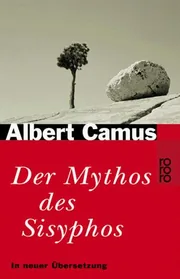
Le mythe de Sisyphe is a philosophical essay by Albert Camus, first published in 1941 and written in French. It belongs to French philosophy and sits within the tradition of existentialist thought, though its central subject is the absurd. The work runs to roughly 169 pages in its median edition, and it has appeared in 82 editions.
Camus opens with the question of suicide and uses it to examine what he calls the absurd, which arises when the human need for meaning meets a world that offers no answer. He argues that recognizing the absurd does not justify ending one's life and calls instead for revolt. The essay then sets out several ways of living with the absurd, drawing on thinkers such as Kierkegaard, Schopenhauer, and Nietzsche.
The closing chapter turns to Greek mythology and the figure of Sisyphus, condemned to push a boulder up a mountain only to watch it roll back down. Camus reads this endless task as an image of human existence. The book is a short, direct statement of his early philosophy, relevant to readers of modern philosophy, French literature, and essays on how to live.
No hay sino un problema filosófico realmente serio: el suicidio.
Themes
French essaysLifeSuicideAbsurd (Philosophy)ExistentialismPhilosophyHistory and criticismFrench literature
- Want to read 585
- Reading now 40
- Read 52
Most people shelving it are saving it for later.
Of 677 readers who put it on a shelf, 86% want to read it, 6% are reading it now, 8% have finished it and 0% stopped before the end.
By the numbers
- The median edition runs 169 pages. Counting about 275 words a page and an adult reading pace of 250 words a minute, that is about 3.1 hours of reading.
- Open Library tracks 82 editions from 40 publishers, the earliest dated 1941 and the latest 2022, across 9 languages.
- On reader demand it ranks in the top 2% of the classic books in our catalog (8,749 of them).
- Libraries shelve it under Dewey 194 and Library of Congress class PQ-2605.00000000.A3734 M9 1961.
 BookWard’s take
Camus asks if life is worth living, then answers
Camus opens with one of the most famous first sentences in philosophy and never lets the pressure drop. It hooks at once, and that earns it credit. It is also short and tight, and it sustains its rhythm throughout: each chapter tests another way of living with the absurd, so the middle does not sag. Where I part ways with it is in how thoroughly it is driven by ideas rather than story, and in how Camus explains outright rather than dramatizing. The rigor is real, but argued rather than evidenced, and the authorial voice is unmistakable. The close on Sisyphus offers a resolved answer, not a shrug, and that hopeful turn is earned. A compact essay that still reads as a challenge.
At roughly 169 pages it is brief and compact, which sits right alongside BookWard's love of tight books.
Dense paragraphs move briskly from one position to the next, quicker than most philosophy but not breathless.
The absurd as a framework, ending in a happy Sisyphus, was a fresh turn on familiar existential ground.
The prose is clean and aphoristic with flashes of imagery, a little more ornate than plain but not decorative.
It starts in the shadow of suicide but ends insisting Sisyphus can be imagined happy, tilting toward hope.
A conventional essay arc of problem, positions, and mythic conclusion, with no formal experiment.
The tone is grave and serious throughout, with only the faintest irony.
Suicide frames the opening, but the tone stays thoughtful rather than lurid.
The feeling is controlled and austere, with intensity under the surface.
See all 50 dialsEvery position, side by side with this book
Where it lines up
- LengthBookWard 1 · book 1
- EndingBookWard 8 · book 8
- Shock for effectBookWard 9 · book 9
Where it pulls apart
- Story or ideasBookWard 3 · book 10
- ExpositionBookWard 2 · book 9
- Internal logicBookWard 10 · book 7
At roughly 169 pages it is brief and compact, which sits right alongside BookWard's love of tight books.
The suicide question lands in the first sentence and demands a response, exactly the immediate opening BookWard prizes.
It declines easy consolation and refuses both despair and religious comfort, which BookWard admires.
The argument builds step by step, though some leaps between thinkers are more assertion than proof, so it is a notch looser than BookWard prefers.
Dense paragraphs move briskly from one position to the next, quicker than most philosophy but not breathless.
The absurd as a framework, ending in a happy Sisyphus, was a fresh turn on familiar existential ground.
The closing image of Sisyphus gives a clear, resolved conclusion, which BookWard values.
Camus is unsentimental about death and meaning, which matches BookWard's taste for restraint.
The subject is dark but the darkness serves the argument, never shock for its own sake.
It reasons seriously with philosophers and examples, but it is an essayist's argument rather than a scholarly apparatus, so slightly short of BookWard's bar.
Camus's tone is unmistakable: spare, urgent, and personal, exactly the distinctive voice BookWard wants.
This is an essay of pure argument with almost no narrative, far more idea-led than BookWard's story-first leaning.
Ideas are stated and explained directly rather than dramatized, the opposite of BookWard's show-it-in-scene preference.
Each chapter takes a fresh angle on the same problem, so the argument stays alive start to finish.
The prose is clean and aphoristic with flashes of imagery, a little more ornate than plain but not decorative.
It starts in the shadow of suicide but ends insisting Sisyphus can be imagined happy, tilting toward hope.
A conventional essay arc of problem, positions, and mythic conclusion, with no formal experiment.
The tone is grave and serious throughout, with only the faintest irony.
The ideas are heavy and the references are many, so it rewards slow, attentive reading.
A single authorial voice argues throughout.
The argument moves forward in order, with no shifting chronology.
It is a philosophical essay, so grounded, with myth used only as metaphor in the end.
There is no cast, only the author, the reader, and a few thinkers under discussion.
The scope is huge in meaning but intimate in manner, a private reckoning with one question.
Everything happens in thought, argument, and reflection rather than outward action.
There is no dialogue; it is all continuous argument.
Romance is not a subject of the book.
The world is ordinary life, which makes the unfamiliar feel familiar and the familiar feel strange.
Written in the early 1940s, but its question reads as current as any.
Its central question and image of Sisyphus have outlasted its moment by generations.
The author argues in plain view and does not conceal his stance.
Camus rejects both suicide and false comfort, yet his answer is fairly firm, though contested.
Descriptive passages are sparse, with ideas taking priority over scenery.
It is analytical argument, not a narrated tale, apart from the Sisyphus retelling.
Camus writes with a committed, first-hand stake, so it feels personal rather than detached.
It stands alone as a complete statement.
Surprise comes from turns in the argument, not plot twists.
It confronts the reader with the worst question and refuses easy answers.
Suicide frames the opening, but the tone stays thoughtful rather than lurid.
The feeling is controlled and austere, with intensity under the surface.
There is no physical violence on the page.
Sexual content is essentially absent.
The argument is philosophical rather than political, with only faint social implications.
The language is clear, though the philosophical terms and references add density.
Camus argues openly and takes a strong side from the first page.
It mostly examines enduring conditions, with a modest turn toward living on in revolt.
It is clear-eyed about the absurd yet ends in a defiant, almost joyful affirmation.
Review written by BookWard, dial version 1, November 2026.
Who is Le mythe de Sisyphe right for?
Best suited to mature teens and adults ready for abstract philosophy. It discusses suicide directly as an intellectual question, so readers in a fragile place may want company or care.
The ideas are heavy and the references are many, so it rewards slow, attentive reading.
Suicide frames the opening, but the tone stays thoughtful rather than lurid.
The feeling is controlled and austere, with intensity under the surface.
There is no physical violence on the page.
Book CompanionLe mythe de Sisyphe: ideas, characters, themes
Life offers no built-in meaning and the world stays silent, but recognizing this should lead to revolt and lived passion, not to suicide.
- The only serious question. Camus begins by claiming that whether life is worth living is the basic philosophical problem, before any other.
- The absurd defined. The absurd is born from the clash between human longing for meaning and the world's unreasonable silence.
- Revolt, not escape. He argues that recognizing the absurd does not justify suicide and instead calls for revolt.
- Ways of living with it. The essay surveys several approaches to an absurd life, engaging thinkers such as Kierkegaard, Schopenhauer, and Nietzsche.
- Sisyphus happy. The closing myth casts Sisyphus's endless task as an image of human life, ending with 'One must imagine Sisyphus happy.'
Characters
Sisyphus
Mythic figure in the closing chapter
Condemned in Greek myth to push a boulder up a mountain forever, he becomes Camus's emblem of the absurd human condition.
Themes
The gap between our need for meaning and a world that gives none.
The starting question and the response Camus argues against.
Living fully and defiantly in the face of the absurd rather than escaping it.
Whether it exists, and what to do without it.
Life lived with open eyes, free of false consolation.
Discussion questions
- Does the opening claim about suicide hold up as the one serious philosophical problem?
- Is revolt a convincing alternative to despair, or just another way of coping?
- How does Camus treat thinkers who answer the absurd with faith?
- What does it mean to imagine Sisyphus happy, and do you accept it?
- Does the book's argument feel as pressing today as when it was written?
Personalize your Book Companion
This is the general edition. In BookWard, the Companion is written for you: your reading profile, your notes, and spoiler-safe to the page you are on.
Buy, listen or borrow Le mythe de Sisyphe
Each link opens a search for this book on that store, in a new tab.
Read on a device
Borrow
Reviews and community
If you liked Le mythe de Sisyphe
A short, sharp case against turning everything into a show
A Grief ObservedC. S. LewisA short, unguarded record of faith tested by loss
Zur Genealogie der MoralFriedrich NietzscheNietzsche's compact, combative history of where our morals came from
Der AntichristFriedrich NietzscheNietzsche's short, furious case against Christianity, delivered face to face
Sources: Open Library.
Track Le mythe de Sisyphe and find your next favorite
Add it to your shelf, rate what you have read, and BookWard will recommend what fits you.
Free to start. No credit card needed.