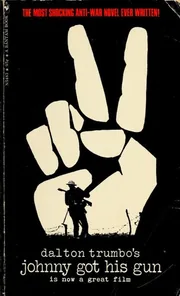
Johnny Got His Gun
by Dalton Trumbo · 1939
Best suited to mature teens and adults ready for a serious, antiwar subject.
256 pages, about 4 to 6 hours.
A short, unflinching antiwar novel that refuses every comfort. 54% taste match
The story
Johnny Got His Gun is a war novel by the American writer Dalton Trumbo, first published in 1939 by J. B. Lippincott. Trumbo wrote it in 1938. It belongs to the tradition of historical fiction and takes the First World War as its subject, following the experience of a soldier who comes home from the fighting as a gravely disabled and disfigured veteran. The book looks closely at the psychological side of that conflict and at the lives of those it left behind, among them veterans, war victims, and people living with disabilities.
The novel received one of the early National Book Awards, named the Most Original Book of 1939. Trumbo later wrote and directed a film adaptation, released in 1971. The story is rooted in the United States and in the years of the First World War, and it has remained in print in many forms, with around 42 editions and a median length of 256 pages.
Setting
United States
Themes
World War, 1914-1918Disfigured personsDisabled veteransVeteransSoldiersPeople with disabilitiesWar victimsPsychological aspects
- Want to read 165
- Reading now 11
- Read 30
Most people shelving it are saving it for later.
Of 206 readers who put it on a shelf, 80% want to read it, 5% are reading it now, 15% have finished it and 0% stopped before the end.
By the numbers
- The median edition runs 256 pages. Counting about 275 words a page and an adult reading pace of 250 words a minute, that is about 4.7 hours of reading.
- Open Library tracks 42 editions from 28 publishers, the earliest dated 1939 and the latest 2015, across 5 languages.
- On reader demand it ranks in the top 6% of the classic books in our catalog (8,749 of them).
- Libraries shelve it under Dewey 791.4372 and Library of Congress class PZ-0003.00000000.T7714 Jo6.
 BookWard’s take
A short, unflinching antiwar novel that refuses every comfort
Trumbo's 1939 novel follows a soldier who returns from the First World War gravely disabled and disfigured, and it never looks away. At 256 pages it is tight, with no padding, and the premise is original enough to have earned the National Book Award for Most Original Book of 1939. The opening hooks through its situation alone. The reading is moderate in length but heavy in subject: this is dark, intense writing, and its argument against war is firm rather than ambiguous. It is driven by ideas and turns inward rather than outward, so readers who want a story pushed along by plot may meet some resistance. What the book earns is its darkness. The shock is the point, not decoration.
At 256 pages it is short and compact, which matches BookWard's preference for tight books.
Its short length keeps it moving, but the interior, contemplative stretches run slower than BookWard's fast-pace preference.
It won the early National Book Awards honour as Most Original Book of 1939, which fits BookWard's love of the new.
The language is direct and unadorned, serving the subject rather than decorating it, near BookWard's plainer-leaning middle.
What happens matters less than what one mind goes through, so it is character-driven, as BookWard likes.
It is a bleak work about irreversible loss, far from BookWard's mildly hopeful outlook.
It moves between present confinement and memory in a loose, unconventional way, more experimental than BookWard's average.
It is relentlessly serious, with no comic relief to speak of, quite far from BookWard's lighter tone.
The subject is among the darkest in war fiction, well above BookWard's middling tolerance.
The feeling runs raw and intense throughout, a notch higher than BookWard's moderate emotional register.
See all 50 dialsEvery position, side by side with this book
Where it lines up
- OriginalityBookWard 9 · book 9
- Shock for effectBookWard 9 · book 9
- LengthBookWard 1 · book 2
Where it pulls apart
- Story or ideasBookWard 3 · book 8
- ExpositionBookWard 2 · book 6
- OpeningBookWard 10 · book 8
At 256 pages it is short and compact, which matches BookWard's preference for tight books.
The central situation of a damaged returning soldier grips from the start, in line with BookWard's taste for immediate hooks.
It avoids the usual war-story heroics and recruitment-poster tropes, which BookWard values highly.
The premise is pursued consistently from its single, fixed situation, and BookWard likes that tight internal consistency.
Its short length keeps it moving, but the interior, contemplative stretches run slower than BookWard's fast-pace preference.
It won the early National Book Awards honour as Most Original Book of 1939, which fits BookWard's love of the new.
It stays inside one man's mind and experience, giving real depth to a single figure, which BookWard rewards.
It builds toward a definite conclusion to its argument rather than drifting off, which suits BookWard's taste for resolution.
It aims for raw feeling, but its emotional pull sits close to the sentimental, a little warmer than BookWard prefers.
The brutality exists to make a point about war's cost, so the darkness is earned, which BookWard prizes.
This is a novel, so the nonfiction rigor dial does not apply.
Trumbo's insistent, driving voice is unmistakably his own, which BookWard prizes.
It is built to argue a case about war, so ideas lead story, more than BookWard's story-led lean.
The book states its antiwar arguments directly rather than leaving them to scenes, which is more than BookWard likes.
Its short length and single obsessive focus keep tension fairly steady, though the reflective passages dip slightly.
The language is direct and unadorned, serving the subject rather than decorating it, near BookWard's plainer-leaning middle.
What happens matters less than what one mind goes through, so it is character-driven, as BookWard likes.
It is a bleak work about irreversible loss, far from BookWard's mildly hopeful outlook.
It moves between present confinement and memory in a loose, unconventional way, more experimental than BookWard's average.
It is relentlessly serious, with no comic relief to speak of, quite far from BookWard's lighter tone.
The prose is accessible, but the subject asks a lot emotionally, making it somewhat more demanding than BookWard's easy-leaning middle.
It stays with a single consciousness throughout, well below BookWard's taste for many viewpoints.
Past and present interleave constantly, so time shifts more than BookWard's mostly linear preference.
It is grounded in the real First World War and its aftermath, with nothing fantastical.
The focus is a very small circle centred on one man, narrower than BookWard's middle.
Though the subject is war, the lens is intensely personal and intimate, below BookWard's middle.
Almost all the action is internal, in thought and memory, far toward inner focus compared with BookWard's balance.
Conversation is sparse beside the interior narration, lighter than the dialogue BookWard enjoys.
Romance is a minor thread in a book about war, and BookWard sits near the middle.
The wartime setting is distant to most readers and the situation is unfamiliar, similar to BookWard's lean.
It looks back at the First World War, set well in the past rather than the present day.
Its argument about war's human cost has endured in print, matching BookWard's staying-power preference.
We trust the account of his experience, but the mind's grip on memory and reality is shaky, slightly less reliable than average.
The book takes a firm, clear stand against war, clearer than BookWard's ambiguity-tolerant lean.
Sensation and physical detail are vivid on the page, a little richer than BookWard's middle.
This is fiction, so the nonfiction style dial does not apply.
This is fiction, so the nonfiction perspective dial does not apply.
It is a standalone novel, not part of a series.
It is more a sustained situation than a plot of reversals, with fewer surprises than BookWard likes.
It confronts the reader with difficult material and offers little comfort, which suits BookWard's challenging lean.
The subject is among the darkest in war fiction, well above BookWard's middling tolerance.
The feeling runs raw and intense throughout, a notch higher than BookWard's moderate emotional register.
There is almost no humor, so the broad-versus-dry dial reads low.
The damage of war is central, but it is shown through aftermath and consequence more than battlefield action.
Sexual content is minimal, below BookWard's middle.
The antiwar argument is front and center, more political than BookWard's middle.
The language is direct and plain to read, easier than BookWard's middle on difficulty.
The narration pushes a strong stance rather than staying neutral, more opinionated than BookWard's lean.
It looks back at war and its consequences, more backward-facing than BookWard's forward lean.
It is a bitter indictment of the idealism used to justify war, more cynical than BookWard's idealistic lean.
Review written by BookWard, dial version 1, November 2026.
Who is Johnny Got His Gun right for?
Best suited to mature teens and adults ready for a serious, antiwar subject. It deals with severe injury, disfigurement and psychological distress, and offers little comfort.
The prose is accessible, but the subject asks a lot emotionally, making it somewhat more demanding than BookWard's easy-leaning middle.
The subject is among the darkest in war fiction, well above BookWard's middling tolerance.
The feeling runs raw and intense throughout, a notch higher than BookWard's moderate emotional register.
The damage of war is central, but it is shown through aftermath and consequence more than battlefield action.
Book CompanionJohnny Got His Gun: ideas, characters, themes
A gravely disabled and disfigured First World War veteran faces what war has taken from him, and the novel uses his situation to argue against the war itself.
- A single trapped consciousness. The book stays within one soldier's experience of coming home damaged by the First World War.
- Antiwar argument at its core. The novel was written to question the slogans that justified the war, including making the world safe for democracy.
- Psychological focus. It examines the psychological side of the First World War and its aftermath for veterans and war victims.
- Recognised as original. It won one of the early National Book Awards, named the Most Original Book of 1939.
- A lasting afterlife. Trumbo wrote and directed a 1971 film adaptation, and the book has stayed in print in many editions.
Themes
What war permanently takes from the people who fight it, long after the fighting ends.
Life as a gravely disabled and disfigured veteran, cut off from the world.
The gap between idealistic justifications for war and its human consequences.
How a mind makes sense of the past when the present offers little.
Discussion questions
- How does the book's single point of view shape your sympathy for its protagonist?
- What does the novel suggest about the slogans used to justify war?
- Why might the author keep the story so personal and small in scale?
- How does the book's darkness serve its argument rather than simply shock?
- Why do you think the novel has stayed in print for so long?
Personalize your Book Companion
This is the general edition. In BookWard, the Companion is written for you: your reading profile, your notes, and spoiler-safe to the page you are on.
Buy, listen or borrow Johnny Got His Gun
Each link opens a search for this book on that store, in a new tab.
Read on a device
Borrow
Reviews and community
If you liked Johnny Got His Gun
Jack London's candid, argumentative memoir of drink and his long struggle
SchachnovelleStefan ZweigEighty-eight pages of chess, captivity and a mind turned on itself
The Bluest EyeToni MorrisonA short, devastating debut about beauty, shame, and who gets seen
The Yellow WallpaperCharlotte Perkins GilmanA thirty-four page descent that still unsettles, over a century on
Sources: Open Library.
Track Johnny Got His Gun and find your next favorite
Add it to your shelf, rate what you have read, and BookWard will recommend what fits you.
Free to start. No credit card needed.