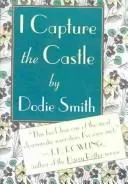
I Capture the Castle
by Dodie Smith · 1948
It suits teens and adults who enjoy warm, funny coming-of-age stories.
363 pages, about 5.5 to 8.5 hours.
A diary-form charmer that opens in a kitchen sink. 55% taste match
The story
I Capture the Castle is a coming-of-age novel by Dodie Smith, first published in 1948 and told in the form of a diary. Its narrator is Cassandra, a seventeen-year-old who records daily life in a decaying castle in the English countryside during the 1930s. The book blends family drama, humour and historical romance, and it is often placed on young adult shelves while also finding adult readers.
Cassandra lives with her older sister Rose, her stepmother Topaz, who sometimes works as an artist's model, and her father, a once-popular novelist who has stopped writing. Money is scarce, and the household gets by as best it can. Things shift when wealthy young American neighbours move nearby, and Rose sees a chance for the family to leave poverty behind. Along the way, Cassandra meets first love and first heartbreak.
Smith wrote the novel during the Second World War, after she and her husband, Alec Beesley, moved from England to Pennsylvania. It was her first novel. She was already an established playwright and later wrote the children's classic The Hundred and One Dalmatians.
I WRITE THIS sitting in the kitchen sink.
Setting
England
Themes
CastlesPovertyTeenage girlsDiariesFamilies
- Want to read 151
- Reading now 7
- Read 17
Most people shelving it are saving it for later.
Of 175 readers who put it on a shelf, 86% want to read it, 4% are reading it now, 10% have finished it and 0% stopped before the end.
By the numbers
- The median edition runs 363 pages. Counting about 275 words a page and an adult reading pace of 250 words a minute, that is about 6.7 hours of reading.
- Open Library tracks 78 editions from 48 publishers, the earliest dated 1948 and the latest 2023, across 5 languages.
- On reader demand it ranks in the top 10% of the classic books in our catalog (8,749 of them).
- Libraries shelve it under Dewey 823.912 and Library of Congress class PR-6037.00000000.M38 I29 2001.
 BookWard’s take
A diary-form charmer that opens in a kitchen sink
Dodie Smith's 1948 novel opens with the line 'I WRITE THIS sitting in the kitchen sink,' and the hook lands at once. Cassandra, seventeen, records life in a crumbling castle with her sister Rose, her stepmother Topaz and a father stuck on his writing. The voice is the draw: funny, distinctive, quick to charm. It's also character-led and hopeful, which suits a book like this well. Where it falters is familiarity: poverty, wealthy neighbours and first love are well-worn ground, and the story leans on them more than it needs to. It is also sentimental in places, and at 363 pages it runs longer than a book this light really requires. Still, the pull of the narration keeps the middle moving.
At 363 pages it runs longer than BookWard's taste for short books, though the diary form keeps it light on its feet.
Daily diary entries keep things moving at a steady, comfortable pace rather than a rush.
The castle setting and the diary voice feel fresh, even if the story beats are well known.
The writing is polished and graceful but stays readable, never showy.
Cassandra's inner life and relationships drive the book more than its events do.
Despite poverty and heartbreak, the tone stays warm and hopeful, matching BookWard's outlook.
The diary form is a mild departure from plain narration without being experimental.
Humor runs through the narration, a clear fit with BookWard's lean toward funny.
The tone is gentle overall, with poverty and heartbreak handled lightly.
Feelings run warm and moving without becoming overwhelming.
See all 50 dialsEvery position, side by side with this book
Where it lines up
- Character depthBookWard 8 · book 8
- Shock for effectBookWard 9 · book 9
- OpeningBookWard 10 · book 9
Where it pulls apart
- Familiar tropesBookWard 10 · book 4
- LengthBookWard 1 · book 5
- Internal logicBookWard 10 · book 7
At 363 pages it runs longer than BookWard's taste for short books, though the diary form keeps it light on its feet.
Opening with a narrator writing in a kitchen sink grabs attention immediately, which matches BookWard's love of fast hooks.
Poverty, wealthy newcomers and first love are familiar ground, so it leans on tropes more than BookWard prefers.
The household and its money troubles hang together sensibly, though a teenage diary allows some looseness.
Daily diary entries keep things moving at a steady, comfortable pace rather than a rush.
The castle setting and the diary voice feel fresh, even if the story beats are well known.
Cassandra, Rose and Topaz are drawn with real individuality, which BookWard rewards.
The story resolves its main threads, though with some bittersweet openness.
Romance and family warmth lean sentimental, which is a bit softer than BookWard's restrained taste.
The tone is gentle and nothing is darkened for effect, so it never leans on shock.
This is fiction, so rigor does not apply.
Cassandra's narration is the book's signature: distinctive, funny and instantly recognizable, a strong match for BookWard.
This is firmly story-led, driven by a family and its prospects, in line with BookWard's preference.
A diarist explains her world fairly directly, so it tells somewhat more than BookWard's show-in-scene taste.
Cassandra's voice carries the reader through the whole book, so the middle holds up well.
The writing is polished and graceful but stays readable, never showy.
Cassandra's inner life and relationships drive the book more than its events do.
Despite poverty and heartbreak, the tone stays warm and hopeful, matching BookWard's outlook.
The diary form is a mild departure from plain narration without being experimental.
Humor runs through the narration, a clear fit with BookWard's lean toward funny.
Readable and inviting for adults and teens alike, easier than BookWard's middle ground.
Everything is seen through Cassandra alone, so it is a single viewpoint, narrower than BookWard's usual taste.
Diary entries move forward day by day, a linear timeline.
The story is grounded in a realistic English countryside.
A small family circle and a few neighbours make for a compact cast.
The story stays intimate, centered on one family and one castle.
Cassandra's thoughts and observations lead, since she is recording her own life.
Conversations between family members carry a good share of the story.
First love and first heartbreak are central threads, with a romantic plot alongside the family one.
A 1930s crumbling castle is a distinctive setting, though still recognizably English and domestic.
Set in the 1930s and published in 1948, it looks back well before the present day.
Its enduring classic status shows the voice and themes still travel well.
Cassandra is candid in her diary, so she reads as a reliable narrator, if naive at times.
Choices around love and money are mostly clear, with some gray areas in the family's schemes.
The castle and countryside are described with rich, charming detail.
A first-person diary makes this an intensely personal perspective.
It stands alone as a single novel.
Romantic entanglements bring some surprises, but nothing heavy on turns.
A comforting, charming read more than a challenging one.
The tone is gentle overall, with poverty and heartbreak handled lightly.
Feelings run warm and moving without becoming overwhelming.
The humor is wry and observational rather than broad.
Little to no violence appears on the page.
Class and money matter, but politics stays in the background.
The language is plain and accessible throughout.
Cassandra's strong opinions and personality color every page of the narration.
The book is rooted in its period and looks back more than forward.
Romantic and hopeful in spirit, it leans toward idealism despite its money worries.
Review written by BookWard, dial version 1, November 2026.
Who is I Capture the Castle right for?
It suits teens and adults who enjoy warm, funny coming-of-age stories. Themes include poverty, first love and heartbreak, handled gently.
Readable and inviting for adults and teens alike, easier than BookWard's middle ground.
The tone is gentle overall, with poverty and heartbreak handled lightly.
Feelings run warm and moving without becoming overwhelming.
Little to no violence appears on the page.
Book CompanionI Capture the Castle: ideas, characters, themes
A seventeen-year-old keeps a diary of life in a decaying castle while her family's poverty and her own first love collide.
- Diary form. The story is told as Cassandra's own journal, which gives it intimacy and a strong, personal voice.
- A family in poverty. Money is scarce, and the household copes as best it can, with a father who has stopped writing.
- The arrival of neighbours. Wealthy young American neighbours move nearby, and Rose sees a chance for the family to escape poverty.
- First love. Cassandra meets first love and first heartbreak, giving the book its emotional core.
- Setting as character. The crumbling English castle in the 1930s shapes the family's eccentric life.
Characters
Cassandra
Narrator and diarist
A seventeen-year-old who records her family's life in the castle.
Rose
Cassandra's older sister
Discontented with poverty, she sees the new neighbours as a way out.
Topaz
Stepmother
Glamorous and bohemian, she sometimes works as an artist's model.
Father
Former bestselling novelist
He now suffers from writer's block.
Themes
Cassandra grows up through first love and first heartbreak.
The family's lack of money shapes their choices and hopes.
A quirky household holds together through hard times.
Cassandra tries to capture her world in words, as the title suggests.
Discussion questions
- How does the diary form shape what we learn about Cassandra and what she leaves out?
- Why does Rose see the American neighbours as an escape, and is she right?
- What does the castle mean to the family beyond being a home?
- How does Cassandra's view of love change over the course of the book?
- Why might this book appeal to both teen and adult readers?
Personalize your Book Companion
This is the general edition. In BookWard, the Companion is written for you: your reading profile, your notes, and spoiler-safe to the page you are on.
Buy, listen or borrow I Capture the Castle
Each link opens a search for this book on that store, in a new tab.
Read on a device
Borrow
Reviews and community
If you liked I Capture the Castle
A runaway farm girl keeps a diary and finds her voice
Pride and PrejudiceJane AustenA sharp, funny novel of manners that earns its romance
VenetiaGeorgette HeyerA Regency romance with real wit and a heroine worth trusting
Paper TownsJohn GreenA midnight caper that turns into a search for a person
Sources: Open Library.
Track I Capture the Castle and find your next favorite
Add it to your shelf, rate what you have read, and BookWard will recommend what fits you.
Free to start. No credit card needed.