Suits adult readers and mature teens comfortable with genre thrillers.
428 pages, about 7 to 10 hours.
A girl who can start fires, and the people hunting her. 59% taste match
The story
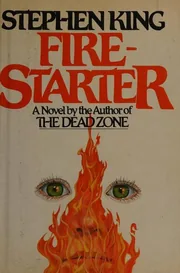
Firestarter is a science fiction horror thriller by Stephen King, first published in 1980. It follows Charlie McGee, a young girl with the power of pyrokinesis, the ability to start fires with her mind. A ruthless government agency wants to harness her destructive force for its own ends, and the story builds as she and her father are pursued. Hit men, psychic ability and genetic engineering all feed into the suspense, and the narrative also touches on telekinesis, migraines and bleeding.
The story moves through places including Ohio, Vermont, New York City, Albany, Hastings Glen, Longmont, Washington D.C. and a farm belonging to the Manders family. It opens with a tired little girl in red pants and a green blouse speaking to her father.
The novel is dedicated to Shirley Jackson. Two excerpts appeared in Omni in the summer of 1980, and the book has since been issued in many editions, running to roughly 428 pages. It was adapted as a film in 1984, followed by a miniseries, Firestarter: Rekindled, in 2002 and a remake in 2022.
"Daddy, I'm tired," the little girl in the red pants and the green blouse said fretfully.
Setting
New York CityOhioAlbanyNew YorkHastings Glen
Themes
Genetic EngineeringsuspensePsychokinesisFireHorrorPsychic abilityhorror thrillertelekinesis
- Want to read 492
- Reading now 27
- Read 87
Most people shelving it are saving it for later.
Of 606 readers who put it on a shelf, 81% want to read it, 4% are reading it now, 14% have finished it and 0% stopped before the end.
By the numbers
- The median edition runs 428 pages. Counting about 275 words a page and an adult reading pace of 250 words a minute, that is about 7.8 hours of reading.
- Open Library tracks 79 editions from 56 publishers, the earliest dated 1980 and the latest 2022, across 9 languages.
- On reader demand it ranks in the top 1% of the modern books in our catalog (15,152 of them).
- Libraries shelve it under Dewey 813.54 and Library of Congress class PS-3561.00000000.I483 F57 1981.
 BookWard’s take
A girl who can start fires, and the people hunting her
Firestarter opens on a tired little girl and her father already on the run, so it grabs you at once. King keeps things moving across 428 pages, and the chase structure keeps the middle from slackening, which counts in its favour from start to finish. The setup is more of a mixed bag: a hunted child with a gift and a shadowy agency is well-worn ground, though King gives it weight through his characters, especially in how father and daughter treat the power as a burden. It is driven by story more than by ideas, and the exposition arrives through scene rather than lecture. Expect an ending that ties everything off, and a dark streak that comes from consequence, not shock for its own sake.
At 428 pages it is a substantial thriller, longer than BookWard's taste for the tight and short.
The pursuit keeps things moving through changing locations, close to BookWard's quick pace.
The premise is a recognisable genre blend, so it sits in the middle rather than at BookWard's original end.
King writes in a direct, conversational style, plain rather than ornate, close to BookWard's middle-low position.
Plot and character share the load here, with the chase driving events and the relationships giving them weight.
The tone leans toward threat and loss, so it sits on the bleaker side of BookWard's mildly hopeful outlook.
The telling is conventional, following pursuit and consequence in a clear line, near BookWard's slightly conventional lean.
This is a serious, tense book with little humor, well below BookWard's mild lean toward funny.
The violence, the hunt and the threat to a child make this a dark read, a touch above BookWard's middle.
The pursuit and the father-daughter bond make for intense, charged scenes, above BookWard's middle.
See all 50 dialsEvery position, side by side with this book
Where it lines up
- PaceBookWard 8 · book 8
- EndingBookWard 8 · book 8
- Story or ideasBookWard 3 · book 3
Where it pulls apart
- Familiar tropesBookWard 10 · book 4
- LengthBookWard 1 · book 6
- Internal logicBookWard 10 · book 7
At 428 pages it is a substantial thriller, longer than BookWard's taste for the tight and short.
It opens on a tired child speaking to her father, and the sense of pursuit begins straight away, matching BookWard's love of an immediate start.
A gifted child hunted by a government agency is a familiar shape, which sits below BookWard's preference for avoiding tropes.
The pyrokinesis and the agency's interest follow a coherent cause and effect, close to the airtight logic BookWard values.
The pursuit keeps things moving through changing locations, close to BookWard's quick pace.
The premise is a recognisable genre blend, so it sits in the middle rather than at BookWard's original end.
Charlie and her father are drawn with real inner conflict about the power, which BookWard rewards.
The story drives toward a clear resolution rather than leaving its threads open, in line with BookWard's taste.
The bond between father and daughter carries warmth, though King keeps it from tipping fully into sweetness.
The darkness grows out of the premise and its consequences, which suits BookWard's preference for earned grimness.
King's plainspoken, confident storytelling is unmistakable and carries the book, which BookWard prizes.
This is a story-led thriller where the chase drives everything, well toward BookWard's story preference.
The backstory arrives mostly through scenes and pursuit, close to BookWard's liking for showing over explaining.
The chase structure keeps tension building across the length, which BookWard values.
King writes in a direct, conversational style, plain rather than ornate, close to BookWard's middle-low position.
Plot and character share the load here, with the chase driving events and the relationships giving them weight.
The tone leans toward threat and loss, so it sits on the bleaker side of BookWard's mildly hopeful outlook.
The telling is conventional, following pursuit and consequence in a clear line, near BookWard's slightly conventional lean.
This is a serious, tense book with little humor, well below BookWard's mild lean toward funny.
It reads quickly and easily, a little easier than BookWard's moderate reading effort.
The story moves between the hunted and those hunting them, giving it several viewpoints, matching BookWard's taste.
The story mostly moves forward, with some backstory, close to BookWard's mildly shifting timeline.
Pyrokinesis and genetic engineering put this firmly in fantastical territory, above BookWard's middle.
A pursuing agency, hit men and the people along the route give it a moderately large cast.
The stakes stay human, though a government agency raises them beyond a purely intimate story.
Action and pursuit dominate, though the characters' feelings about the power matter too.
Scenes of conflict and pursuit lean on spoken exchanges, close to BookWard's liking for dialogue.
Romance is not the focus; the central bond is between father and daughter.
Ohio, Vermont and New York City are everyday American settings, more familiar than BookWard's taste for the unfamiliar.
Written in 1980 and set in its own time, it reads as a recent past rather than the present day.
The hunted child with a dangerous gift still resonates, giving it decent staying power.
The narration is straightforward and trustworthy, well away from BookWard's taste for unreliable narrators.
The agency is plainly the threat, so moral lines are fairly clear, less ambiguous than BookWard prefers.
King describes enough to ground each place and moment without lingering, near BookWard's middle.
It is a standalone novel, though later screen follow-ups exist, close to BookWard's standalone lean.
The chase brings turns and reversals, though the shape is familiar, near BookWard's taste for surprises.
It entertains more than it challenges, a bit below BookWard's lean toward challenging reads.
The violence, the hunt and the threat to a child make this a dark read, a touch above BookWard's middle.
The pursuit and the father-daughter bond make for intense, charged scenes, above BookWard's middle.
What humor exists is dry and sparse, close to the lighter end of BookWard's range.
Hit men and fire make for plenty of violence on the page, above BookWard's middle.
Sexual content is minimal, well below BookWard's middle.
A government agency drives the plot, but this is a thriller, not a political argument.
The language is plain and easy to follow, well below BookWard's middle.
The narration mostly stays out of the way and lets events speak, a little below BookWard's opinionated lean.
The story looks at the present danger and its origins, a little less forward than BookWard.
The book is wary of institutions and power, so it leans cynical rather than idealistic.
Review written by BookWard, dial version 1, November 2026.
Who is Firestarter right for?
Suits adult readers and mature teens comfortable with genre thrillers. It contains violence, danger to a child and some bleeding.
It reads quickly and easily, a little easier than BookWard's moderate reading effort.
The violence, the hunt and the threat to a child make this a dark read, a touch above BookWard's middle.
The pursuit and the father-daughter bond make for intense, charged scenes, above BookWard's middle.
Hit men and fire make for plenty of violence on the page, above BookWard's middle.
Book CompanionFirestarter: ideas, characters, themes
A father and his young daughter, who can start fires with her mind, are pursued by a government agency that wants to use her power.
- The opening. The story begins with a tired little girl speaking to her father, and the sense of flight is there from the start.
- The pursuit. A ruthless agency hunts them, and hit men and psychic ability feed the suspense.
- Charlie's power. Pyrokinesis is a gift and a burden, and the story keeps the cost of using it in view.
- Genetic engineering. The power connects to genetic engineering, which gives the agency its stake in the child.
- The settings. The story moves through Ohio, Vermont, New York City, Albany, Hastings Glen, Longmont and Washington D.C.
Characters
Charlie McGee
A young girl with pyrokinesis
She can start fires with her mind, which makes her the target of a ruthless government agency.
Themes
A dangerous gift brings fear and consequence along with strength.
A father's protectiveness drives the pursuit and the choices made.
A government agency treats a child as a resource to be harnessed.
Charlie must learn to manage a force that can do harm.
Discussion questions
- How does the book make Charlie's power feel like both a gift and a burden?
- What makes the agency a convincing threat rather than a stock villain?
- How does the father-daughter bond shape the choices both of them make?
- Does the familiar chase structure help or hinder the story?
- How does the ending resolve the questions the book raises about power?
Personalize your Book Companion
This is the general edition. In BookWard, the Companion is written for you: your reading profile, your notes, and spoiler-safe to the page you are on.
Buy, listen or borrow Firestarter
Each link opens a search for this book on that store, in a new tab.
Read on a device
Borrow
Reviews and community
If you liked Firestarter
Four Stephen King novellas, each a different door into the uncanny
The Dark HalfStephen KingKing's novelist-versus-pseudonym horror, sturdy and fast but familiar
Rose MadderStephen KingA domestic-violence thriller with a Greek-myth painting at its heart
The Eyes of DarknessDean KoontzA grieving mother, a chalkboard message, and a race north
Sources: Open Library.
Track Firestarter and find your next favorite
Add it to your shelf, rate what you have read, and BookWard will recommend what fits you.
Free to start. No credit card needed.