It suits young readers beginning chapter books, roughly early primary school age, and works well read aloud.
159 pages, about 2.5 to 3.5 hours.
Beezus meets her match in a four-year-old sister. 57% taste match
About the book
Beezus and Ramona is a children's chapter book by Beverly Cleary, first published in 1955. It is realistic fiction with a humorous tone, centered on family life and the everyday friction between siblings. The story is told from the point of view of nine-year-old Beatrice Quimby, who goes by Beezus, and her four-year-old sister, Ramona Quimby. Beezus finds her younger sister to be her biggest problem, and the book follows the mischief that comes with Ramona's creativity and imagination.
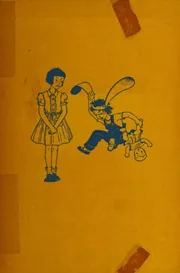
The cast includes Mother and Aunt Beatrice, along with Henry Huggins and his dog Ribsy, and the Easter Bunny and a character named Ralph also appear. This was the first of Cleary's books to focus on Ramona and Beezus, and it went on to become the opening volume of the Ramona series. The original edition was illustrated by Louis Darling. At a median length of about 159 pages, it suits young readers working through chapter books, and it has appeared in 49 editions over the years. It has also been collected in Best of Ramona and Trouble with Ramona and Beezus.
BEATRICE QUIMBY'S biggest problem was her little sister Ramona.
Characters
Ramona QuimbyBeatrice QuimbyHenry HugginsRibsyAunt BeatriceEaster Bunny
Themes
readerschapter booksHumorous StoriesAnimalsClassicsAction & Adventuretransportationmischief
- Want to read 155
- Reading now 10
- Read 48
Most people shelving it are saving it for later.
Of 213 readers who put it on a shelf, 73% want to read it, 5% are reading it now, 23% have finished it and 0% stopped before the end.
By the numbers
- The median edition runs 159 pages. Counting about 275 words a page and an adult reading pace of 250 words a minute, that is about 2.9 hours of reading.
- Open Library tracks 49 editions from 35 publishers, the earliest dated 1955 and the latest 2020, across 7 languages.
- On reader demand it ranks in the top 5% of the classic books in our catalog (8,749 of them).
- Libraries shelve it under Dewey 813.54 and Library of Congress class PZ-0007.00000000.C5792 Be.
 BookWard’s take
Beezus meets her match in a four-year-old sister
Beverly Cleary's 1955 chapter book is short, funny and grounded in ordinary family life. It is told from the point of view of nine-year-old Beezus, whose biggest problem is her four-year-old sister Ramona, and the mischief that comes with Ramona's imagination. At 159 pages, it is admirably tight and never overstays its welcome. Each episode opens on a clear domestic problem, so you are in at once. The setups lean on familiar territory, though the sibling friction feels observed rather than borrowed. The sentiment is mostly restrained, and the outlook is warm without going syrupy. It is gentle, quick and easy to hand to a young reader just starting chapter books.
At 159 pages, it is a compact chapter book that fits BookWard's love of the tight and short.
Short episodes keep things moving briskly, close to the quick pace BookWard enjoys.
A gentle family comedy about two sisters reads as familiar territory, short of the originality BookWard looks for.
The prose is clear and plain, a little plainer than BookWard's middle position.
Episodes lean on how Beezus feels about Ramona more than on plot, a close match to BookWard.
It ends warmly on family affection, a touch more hopeful than BookWard's usual.
A straightforward run of episodes, more conventional than BookWard's slight lean toward experiment.
Ramona's mischief drives a gently funny tone, in line with BookWard's taste for humor.
Content is gentle throughout, milder than BookWard's middle position on darkness.
Feeling runs warm but contained, a little below BookWard's mid-high position.
See all 50 dialsEvery position, side by side with this book
Where it lines up
- LengthBookWard 1 · book 1
- EndingBookWard 8 · book 8
- Shock for effectBookWard 9 · book 9
Where it pulls apart
- Familiar tropesBookWard 10 · book 5
- OriginalityBookWard 9 · book 5
- OpeningBookWard 10 · book 8
At 159 pages, it is a compact chapter book that fits BookWard's love of the tight and short.
Sibling rivalry is familiar ground, so it sits mid-scale, below BookWard's strong preference for avoiding tropes.
Events follow cleanly from Ramona's schemes and Beezus's reactions, matching BookWard's liking for sound internal logic.
Short episodes keep things moving briskly, close to the quick pace BookWard enjoys.
A gentle family comedy about two sisters reads as familiar territory, short of the originality BookWard looks for.
Beezus and Ramona feel distinct and real, though the book stays light, a little shy of BookWard's deeper drawing.
Each strand settles into a clear, comfortable resolution, which BookWard likes.
Warm toward family but mostly free of syrup, a bit softer than BookWard's restrained taste.
There is no cheap shock here; the trouble is mischief, which BookWard happily accepts.
This is realistic fiction, so rigor does not apply.
Cleary's plain, wry telling is recognizable and distinctive, close to what BookWard values.
It is entirely story-led, built on episodes of family life, well away from BookWard's idea-led lean.
Feelings and conflicts come out in scene and action, just as BookWard prefers.
Short chapters leave little room for a slump, so it holds up through the whole book.
The prose is clear and plain, a little plainer than BookWard's middle position.
Episodes lean on how Beezus feels about Ramona more than on plot, a close match to BookWard.
It ends warmly on family affection, a touch more hopeful than BookWard's usual.
A straightforward run of episodes, more conventional than BookWard's slight lean toward experiment.
Ramona's mischief drives a gently funny tone, in line with BookWard's taste for humor.
It reads easily for young chapter-book readers, a touch gentler than BookWard's middle position.
The story is anchored in Beezus's point of view, so it is closer to single-viewpoint than the many voices BookWard prefers.
Events unfold in order, plainly linear where BookWard tolerates some shifting.
Everything here is realistic everyday life, a bit more grounded than BookWard's slight lean toward the fantastical.
A small family circle with a few neighbors keeps the cast tight, in keeping with BookWard.
The stakes are household-sized, which is more intimate than BookWard's middle position.
It balances Beezus's frustrations with Ramona's visible antics, close to BookWard's own balance.
Family exchanges carry a good share of the comedy, near BookWard's liking for dialogue.
Romance does not figure; this is about sisters and family, which suits BookWard fine.
A familiar mid-century neighborhood and home, more everyday than BookWard's lean toward unfamiliar settings.
A 1950s setting reads as a past period, though the sibling friction feels current.
Sibling rivalry stays recognizable across decades, which matches BookWard's taste for staying power.
Told from Beezus's point of view with no tricks, a children's realistic novel like this reads as reliable, unlike BookWard's lean toward unreliable.
Right and wrong are fairly clear, with Ramona's mischief never malicious, a gentler sort of clarity than BookWard's taste.
Description stays light and functional, a touch sparer than BookWard's middle position.
Told closely from Beezus's own view, it is personal rather than detached.
It opens the Ramona series, so it is a strong series-starter, past BookWard's slight standalone lean.
Surprises are small and comic, fewer than BookWard's usual taste for twists.
It is a comforting read for young readers, more comforting than BookWard's lean toward challenge.
Content is gentle throughout, milder than BookWard's middle position on darkness.
Feeling runs warm but contained, a little below BookWard's mid-high position.
The humor is gentle and situational, leaning a bit broader than dry.
There is no real violence, only childish squabbles, so far below BookWard's middle position.
There is no sexual content, so it sits at the floor of the scale.
Politics is absent, which is below BookWard's middle position.
The language is plain and easy for young readers, simpler than BookWard's middle position.
Beezus's frustrations shape the telling, though the narration stays mostly neutral, a bit below BookWard's lean.
Its focus is on family life in the moment, and it looks slightly back rather than forward.
It trusts that family love holds, which sits close to BookWard's idealistic lean.
Review written by BookWard, dial version 1, November 2026.
Who is Beezus and Ramona right for?
It suits young readers beginning chapter books, roughly early primary school age, and works well read aloud. Nothing here is sensitive; the conflicts are gentle family squabbles.
It reads easily for young chapter-book readers, a touch gentler than BookWard's middle position.
Content is gentle throughout, milder than BookWard's middle position on darkness.
Feeling runs warm but contained, a little below BookWard's mid-high position.
There is no real violence, only childish squabbles, so far below BookWard's middle position.
Book CompanionBeezus and Ramona: ideas, characters, themes
A nine-year-old girl is exasperated by her four-year-old sister's creative mischief, and learns something about loving her anyway.
- Told through Beezus. The story follows nine-year-old Beezus, so Ramona's antics are seen through an older sister's patient and often impatient eyes.
- Ramona's imagination. Ramona's creativity drives the mischief, and the trouble comes from a child's imagination rather than ill will.
- Sibling friction. Everyday annoyance between sisters is the heart of the book, treated as ordinary rather than dramatic.
- A family circle. Mother and Aunt Beatrice are part of the picture, along with Henry Huggins and his dog Ribsy.
- Start of a series. First published in 1955, it opened the Ramona series and was originally illustrated by Louis Darling.
Characters
Beezus (Beatrice Quimby)
Point-of-view character and older sister
Nine years old, she finds her younger sister her biggest problem.
Ramona Quimby
Younger sister
Four years old, imaginative and endlessly mischievous.
Mother
Parent
The steady presence in the household as the sisters clash.
Aunt Beatrice
Relative
Beezus's namesake, part of the wider family.
Henry Huggins
Neighbor
A familiar friend who appears alongside his dog Ribsy.
Themes
The constant small clashes between a patient older sister and a headstrong younger one.
How a young child's creativity can delight and exasperate at once.
The daily rhythms of home, parents and relatives.
Harmless trouble-making as part of growing up.
Learning to live with someone who tests you.
Discussion questions
- Why does Beezus find Ramona so hard to get along with?
- Which of Ramona's schemes comes from her imagination rather than naughtiness?
- How does the story change when told from Beezus's point of view instead of Ramona's?
- Is Beezus ever unfair to her sister?
- What makes this sibling story still recognizable to readers today?
Personalize your Book Companion
This is the general edition. In BookWard, the Companion is written for you: your reading profile, your notes, and spoiler-safe to the page you are on.
Buy, listen or borrow Beezus and Ramona
Each link opens a search for this book on that store, in a new tab.
Read on a device
Borrow
Reviews and community
If you liked Beezus and Ramona
A short, warm Ramona story about money trouble and a father's worry
No, David!David ShannonA tiny vocabulary, one naughty boy, and a hug at the end
The Indian in the CupboardLynne Reid BanksA boy, a cupboard, and a toy brought to life
Knuffle BunnyMo WillemsA toddler's laundromat meltdown, told with perfect comic timing
Sources: Open Library.
Track Beezus and Ramona and find your next favorite
Add it to your shelf, rate what you have read, and BookWard will recommend what fits you.
Free to start. No credit card needed.