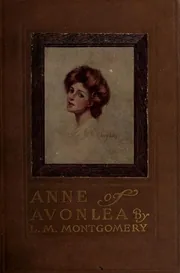
Anne of Avonlea
by Lucy Maud Montgomery · 1909
It suits younger readers and anyone who enjoys gentle, character-led stories, and it works well read aloud.
277 pages, about 4.5 to 6.5 hours.
Anne Shirley grows up, teaching school on Prince Edward Island. 42% taste match
About the book
Anne of Avonlea is a children's novel by the Canadian author Lucy Maud Montgomery, first published in 1909. It is the first sequel to her earlier book Anne of Green Gables and continues the story of Anne Shirley, an orphan who has grown into a teenager on Prince Edward Island. The story follows her from age sixteen to eighteen, a stretch of years in which she works as a teacher.
The setting is the farming community of Avonlea on Prince Edward Island, in Canada, at the turn of the twentieth century. Anne takes charge of a classroom at her former school, and much of the book concerns her life as a young schoolteacher among her pupils and neighbours. The novel belongs to a long-running series about Anne, and it has appeared in 813 editions, with a typical length of around 277 pages. Readers who follow young heroines through everyday village life, school duties and growing up on an island will find a familiar companion in this volume.
Setting
Prince Edward IslandCanadaXian dai
Period
20th century1914-19451867-1914
Themes
HistoryOrphansTeachersIslandsChildren's storiesAnne Shirley (Fictitious character)Teenage girlsFriendship
- Want to read 291
- Reading now 25
- Read 71
Most people shelving it are saving it for later.
Of 387 readers who put it on a shelf, 75% want to read it, 6% are reading it now, 18% have finished it and 0% stopped before the end.
By the numbers
- The median edition runs 277 pages. Counting about 275 words a page and an adult reading pace of 250 words a minute, that is about 5.1 hours of reading.
- Open Library tracks 813 editions from 206 publishers, the earliest dated 1909 and the latest 2023, across 13 languages.
- On reader demand it ranks in the top 3% of the classic books in our catalog (8,749 of them).
- Libraries shelve it under Dewey 895.13 and Library of Congress class PZ-0007.00000000.M768 Al 1994.
 BookWard’s take
Anne Shirley grows up, teaching school on Prince Edward Island
Anne of Avonlea picks up where Green Gables leaves off, with Anne at sixteen taking charge of her old school. It opens quietly, on a girl with a Virgil to construe, so the hook is gentle rather than immediate, and readers wanting a jolt from the first page may find it slow to start. The ingredients are comfortable and familiar: village life, schoolroom mishaps, spirited pupils. Where the book earns its keep is in its characters and its voice, since Anne's chatter and imagination carry the whole thing. It is gentle and hopeful, with little to shock, and it is a sequel in a long series, so it rewards those who already know her. It reads easily, with warm description of the island setting. The pace is leisurely, more a season of days than a plot.
At 277 pages it is moderate, shorter than a sprawling saga though not tight, so it sits below BookWard's love of brevity.
Episodes unfold unhurriedly across two years of teaching, a slower rhythm than BookWard prefers.
The situation of a young teacher among her pupils is familiar, though Anne herself gives it freshness.
Lyrical touches and nature description make the prose warm and flowing, a little more ornate than plain.
What drives it is Anne's growth and relationships, not a plot machine, which matches BookWard's taste.
It is cheerful and optimistic throughout, more hopeful than BookWard's already hopeful lean.
It follows a simple chronological arc of her teaching years, conventional rather than experimental.
Anne's mishaps and speeches bring frequent humor, leaning toward BookWard's funny side.
See all 50 dialsEvery position, side by side with this book
Where it lines up
- Character depthBookWard 8 · book 8
- Authorial voiceBookWard 9 · book 9
- EndingBookWard 8 · book 7
Where it pulls apart
- Familiar tropesBookWard 10 · book 3
- OpeningBookWard 10 · book 4
- Shock for effectBookWard 9 · book 1
At 277 pages it is moderate, shorter than a sprawling saga though not tight, so it sits below BookWard's love of brevity.
It opens on a girl on a doorstep with her Latin, a calm start rather than a grab, unlike BookWard's taste for instant hooks.
Spirited schoolteacher, boisterous pupils and village neighbours are familiar territory, so it leans on comfortable conventions BookWard tends to avoid.
Its small-town world runs on plain, consistent cause and effect, which holds together well even without airtight plotting.
Episodes unfold unhurriedly across two years of teaching, a slower rhythm than BookWard prefers.
The situation of a young teacher among her pupils is familiar, though Anne herself gives it freshness.
Anne is vividly and warmly drawn, her imagination and temper making her feel like a real teenager, which BookWard values.
Her two years as teacher form a natural arc, so the story reaches a fairly settled close.
Warm feeling is part of the appeal, so it leans sentimental where BookWard prefers restraint.
It uses no shock at all; the stakes are gentle schoolroom and neighbourhood matters.
This is a novel, so rigor does not apply.
Anne's exuberant, chatty voice and the narration around her are unmistakable, a strength BookWard prizes.
It is story-led, following Anne's days rather than arguing an idea, which suits BookWard.
Events and feelings are mostly shown through scenes and talk, with only light explanation, close to BookWard's liking.
With an episodic structure of small incidents, energy rises and dips, so it holds less steadily than BookWard likes.
Lyrical touches and nature description make the prose warm and flowing, a little more ornate than plain.
What drives it is Anne's growth and relationships, not a plot machine, which matches BookWard's taste.
It is cheerful and optimistic throughout, more hopeful than BookWard's already hopeful lean.
It follows a simple chronological arc of her teaching years, conventional rather than experimental.
Anne's mishaps and speeches bring frequent humor, leaning toward BookWard's funny side.
It is an easy, welcoming read for children, lighter than BookWard's moderate demand.
The story stays with Anne's perspective, a single viewpoint where BookWard enjoys several.
It moves forward in order over two years, with no shifting timeline.
The setting is a realistic island farming community with no fantasy, firmly grounded.
Pupils, neighbours and friends in Avonlea give a fair-sized community, a little larger than BookWard's small cast.
Anne's thoughts and imagination matter as much as events, tilting toward the inner side.
Anne's talkativeness means much of the book is conversation, which fits BookWard's dialogue-heavy taste.
Romance is a gentle undercurrent in a story focused on teaching and friendship, not a central strand.
Turn-of-century Prince Edward Island is a distinct setting, somewhat unfamiliar to modern readers.
Set in the early twentieth century, it looks back rather than to the present day.
Over a century on, Anne remains a beloved heroine, so its appeal has lasted well.
The narration is straightforward and trustworthy, a reliable guide to events.
Right and wrong are clear and kindly handled, in contrast to BookWard's taste for ambiguity.
Island scenery and farm life are described with warmth and richness, beyond BookWard's middle ground.
Review written by BookWard, dial version 1, November 2026.
Who is Anne of Avonlea right for?
It suits younger readers and anyone who enjoys gentle, character-led stories, and it works well read aloud. Nothing in it is graphic or disturbing, though its early twentieth-century setting reflects the manners of its time.
It is an easy, welcoming read for children, lighter than BookWard's moderate demand.
Book CompanionAnne of Avonlea: ideas, characters, themes
A spirited sixteen-year-old tries to inspire her pupils while learning how to grow up herself on Prince Edward Island.
- A sequel to Green Gables. It continues the story of Anne Shirley from the earlier novel, following her from age sixteen to eighteen.
- Anne becomes a teacher. She takes charge of the Avonlea school where she was once a pupil.
- A village setting. The action stays in the farming community of Avonlea at the turn of the twentieth century.
- Spirited pupils. Some of her students are as boisterous and high-spirited as Anne, which shapes her days in the classroom.
- Part of a long series. It belongs to a long-running series about Anne and has appeared in many editions.
Characters
Anne Shirley
Protagonist
An orphan grown into a teenager, now teaching at her old school and fiercely determined to inspire young hearts.
Themes
Anne moves from girlhood toward adulthood across two years.
Her work in the classroom tests her ambitions and patience.
Bonds with neighbours and pupils shape her daily life.
Anne's creative spirit colors how she sees the world and her students.
Village life in Avonlea gives the story its warmth and rhythm.
Discussion questions
- How does Anne's approach to teaching reflect her own personality?
- What changes in Anne between sixteen and eighteen?
- Why do you think some pupils are as high-spirited as Anne?
- How does the island setting shape the mood of the story?
- Does this sequel work as well if you have not read the first book?
Personalize your Book Companion
This is the general edition. In BookWard, the Companion is written for you: your reading profile, your notes, and spoiler-safe to the page you are on.
Buy, listen or borrow Anne of Avonlea
Each link opens a search for this book on that store, in a new tab.
Read on a device
Borrow
Reviews and community
If you liked Anne of Avonlea
A chatty orphan girl, a mistaken arrival, and a farm that changes
All Creatures Great and Small (All Creatures Great and Small #1-2)James HerriotA country vet's Yorkshire rounds, funny and tender in turns
Lady of QualityGeorgette HeyerHeyer's last Regency: a sharp, funny Bath courtship between equals
When He Was WickedJulia QuinnA Regency romance built on friendship, grief and one long secret
Sources: Open Library.
Track Anne of Avonlea and find your next favorite
Add it to your shelf, rate what you have read, and BookWard will recommend what fits you.
Free to start. No credit card needed.