Best suited to adult and older teen readers who are comfortable with a mature love story.
276 pages, about 4.5 to 6.5 hours.
A 1952 love story that dared to end with hope. 68% taste match
The story
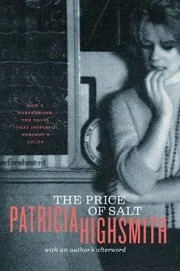
The Price of Salt is a lesbian romance novel by Patricia Highsmith, first published in 1952 under the pseudonym Claire Morgan. It opens in the staff cafeteria at Frankenberg's, a New York setting, and follows a love story between two women in the United States of the 1950s. The book also deals with divorce, child custody, and the strain these place on family relationships and on a mother in particular.
Much of the story is told on the road, as the characters travel by car across the country, with places in the novel including New Jersey and Chicago alongside New York. Highsmith has said the idea grew out of an encounter with a woman she noticed in a shop. The novel departed from the lesbian pulp fiction of its day by giving its characters lives that did not follow familiar stereotypes, and by ending on a note that allows for happiness. It went out of print for a time before being reissued, and it has appeared in dozens of editions of about 276 pages.
The lunch hour in the co-workers' cafeteria at Frankenberg's had reached its peak.
Setting
New YorkNew JerseyChicagoUnited States
Period
1950s20th century
Themes
LesbiansLesbian romance novelLesbian love storyDivorceChild custodyRoad tripSocial conditionsFamily relationships
- Want to read 508
- Reading now 21
- Read 48
Most people shelving it are saving it for later.
Of 577 readers who put it on a shelf, 88% want to read it, 4% are reading it now, 8% have finished it and 0% stopped before the end.
By the numbers
- The median edition runs 276 pages. Counting about 275 words a page and an adult reading pace of 250 words a minute, that is about 5.1 hours of reading.
- Open Library tracks 72 editions from 46 publishers, the earliest dated 1952 and the latest 2022, across 6 languages.
- On reader demand it ranks in the top 2% of the classic books in our catalog (8,749 of them).
- Libraries shelve it under Dewey 813 and Library of Congress class PS-0000.00000000.
 BookWard’s take
A 1952 love story that dared to end with hope
Highsmith's only romance is a short, fast book that grabs you in the Frankenberg's staff cafeteria and then takes to the road. Its restraint is the draw: the longing is felt in small gestures and glances, never announced, and that held-in feeling is what makes it land. The characters are real people who refuse the stereotypes of the pulp lesbian novels around them. The ending is the book's famous act of nerve, resolved with the possibility of happiness at a time when that was almost unheard of. The prose is cool and exact rather than ornate. It reads quickly, yet the stakes of divorce and custody give it weight, and the book still feels fresh.
At 276 pages it is compact, close to BookWard's preference for tight books.
The road-trip structure keeps the story moving at a brisk, readable clip.
For 1952 it was genuinely new, pairing a lesbian love story with an ending that allows for happiness.
The prose is clean and controlled rather than ornate, slightly plainer than BookWard's midpoint.
Though events matter, the book is driven by the inner lives and choices of its women.
It leans hopeful, daring to hold out happiness at a time when fiction rarely did.
It follows a conventional, linear course from meeting to journey to consequences.
The tone is serious and tense throughout, with little room for comedy.
There is real social cruelty and risk, but the book is not bleak for its own sake.
Longing and fear run strongly beneath a controlled surface.
See all 50 dialsEvery position, side by side with this book
Where it lines up
- Character depthBookWard 8 · book 8
- EndingBookWard 8 · book 8
- Story or ideasBookWard 3 · book 3
Where it pulls apart
- OpeningBookWard 10 · book 7
- Familiar tropesBookWard 10 · book 8
- Internal logicBookWard 10 · book 8
At 276 pages it is compact, close to BookWard's preference for tight books.
It opens in a department-store staff cafeteria and draws you in steadily rather than with an instant jolt.
It broke the lesbian pulp formula and avoided stereotypes, which BookWard rewards strongly.
Characters' choices follow clearly from their circumstances, including the pressures of divorce and custody.
The road-trip structure keeps the story moving at a brisk, readable clip.
For 1952 it was genuinely new, pairing a lesbian love story with an ending that allows for happiness.
Its characters are drawn as individuals rather than types, a central strength that BookWard prizes.
It closes on a note that allows for happiness, giving real resolution that BookWard likes.
Feeling is carried through restraint and implication rather than gush, close to BookWard's taste.
Its difficult material, including custody and social disapproval, is earned rather than used for effect.
This is fiction, so the rigor dial does not apply.
Highsmith's cool, precise voice is distinctive and sets the book apart from its pulp contemporaries.
It is firmly story-led, driven by a love affair and its consequences, as BookWard prefers.
Meaning comes through scene and action rather than explanation, which suits BookWard well.
The road journey keeps tension building, so the middle stays engaged rather than drifting.
The prose is clean and controlled rather than ornate, slightly plainer than BookWard's midpoint.
Though events matter, the book is driven by the inner lives and choices of its women.
It leans hopeful, daring to hold out happiness at a time when fiction rarely did.
It follows a conventional, linear course from meeting to journey to consequences.
The tone is serious and tense throughout, with little room for comedy.
The writing is clear and accessible, an easy read despite its serious themes.
The story stays close to a single perspective rather than spreading across many.
Events unfold in straightforward order with no shifting between time periods.
It is entirely grounded in the real America of the 1950s.
A small circle of central characters carries the story, fitting a book about two women.
The scope is intimate, centered on one relationship, though the road widens the canvas.
Much of the weight sits in feeling and perception, balanced by the movement of the journey.
Conversation carries a good share of the relationship's development without dominating.
A love story is the beating heart of the book, far more than BookWard's midpoint.
The 1950s American setting is distant from a present-day reader but not strange.
Set in the 1950s, it sits firmly in the past, well away from BookWard's present-day lean.
Its status as a reissued classic shows how well its emotional core has lasted.
The narration is straightforward and trustworthy rather than deceptive, unlike BookWard's lean toward unreliability.
Right and wrong are fairly clear in sympathy, though the social judgments around the women are fraught.
Places and moments are drawn with moderate detail, serving the story rather than overwhelming it.
It stands alone as a single novel.
Developments are driven by consequence more than by surprise reveals.
It confronts prejudice and loss in its era, though its humane tone keeps it approachable.
There is real social cruelty and risk, but the book is not bleak for its own sake.
Longing and fear run strongly beneath a controlled surface.
Physical violence is largely absent, with the threats being social and legal.
Intimacy is present but handled with restraint rather than explicitness.
Its politics sit in the social position of its characters rather than in argument.
The language is plain and easy to follow.
The narration lets events speak rather than lecturing the reader.
It is rooted in its time, yet its hopeful ending points ahead.
Its belief that these women might find happiness is an idealistic one.
Review written by BookWard, dial version 1, November 2026.
Who is The Price of Salt right for?
Best suited to adult and older teen readers who are comfortable with a mature love story. It touches on prejudice, divorce and custody conflict, treated with restraint.
The writing is clear and accessible, an easy read despite its serious themes.
There is real social cruelty and risk, but the book is not bleak for its own sake.
Longing and fear run strongly beneath a controlled surface.
Physical violence is largely absent, with the threats being social and legal.
Book CompanionThe Price of Salt: ideas, characters, themes
Two women fall in love in 1950s America, and the novel asks what it costs them, and whether happiness is still possible.
- A pioneering ending. Written under the name Claire Morgan, the book broke from the pulp formula by allowing its love story the possibility of happiness.
- Frankenberg's and New York. The story begins in the staff cafeteria of a New York department store, grounding the romance in ordinary working life.
- Family at stake. Divorce and child custody place heavy strain on family relationships and on a mother in particular.
- The road journey. Much of the story unfolds by car across the country, with places including New Jersey and Chicago alongside New York.
- Origins in a chance encounter. Highsmith has said the idea grew from noticing a woman in a shop, which colors the book's sense of fascination.
Themes
The relationship challenges what 1950s society allowed women to feel and choose.
Parental rights become a lever of control and a source of pain.
Hiding or revealing desire carries real social and legal danger.
The novel insists a happy outcome is still possible.
The road offers escape and a space apart from judgment.
Discussion questions
- Why might a hopeful ending have been so significant in 1952?
- How does the department-store setting shape the way the romance begins?
- What does the book suggest about the costs placed on a mother in a custody fight?
- How does the road trip change the way the characters see each other and their situation?
- Does the book's restraint make its emotion stronger or more distant for you?
Personalize your Book Companion
This is the general edition. In BookWard, the Companion is written for you: your reading profile, your notes, and spoiler-safe to the page you are on.
Buy, listen or borrow The Price of Salt
Each link opens a search for this book on that store, in a new tab.
Read on a device
Borrow
Reviews and community
If you liked The Price of Salt
A Regency romance where two friends rethink what is expected of them
Annie on My MindNancy GardenA landmark teenage love story that still feels warm and brave
ForeverJudy BlumeA frank, tender first-love story that still holds its ground
If Beale Street Could TalkJames BaldwinA tender, furious love story told by a pregnant Harlem teenager
Sources: Open Library.
Track The Price of Salt and find your next favorite
Add it to your shelf, rate what you have read, and BookWard will recommend what fits you.
Free to start. No credit card needed.