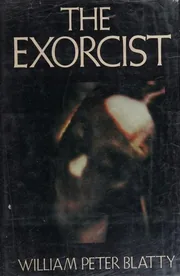
The Exorcist
by William Peter Blatty · 1971
Best suited to adult readers comfortable with intense horror.
400 pages, about 6.5 to 9.5 hours.
A possession story that treats faith and doubt seriously. 59% taste match
The story
The Exorcist is a horror novel by American writer William Peter Blatty, first published in 1971 by Harper & Row. It belongs to the Gothic tradition of supernatural fiction and centers on demonic possession and the rite of exorcism.
The story is set in Georgetown, in Washington, D.C., and follows Chris MacNeil, a famous actress, and her young daughter Regan, who falls under the grip of a demon. Two Roman Catholic priests, among them the Jesuit Damien Karras, are drawn into the effort to drive it out, alongside Lankester Merrin, whose path begins in northern Iraq. The demon bears the name Pazuzu. Faith, doubt and atheism run through the encounters between the characters. Blatty drew on a 1949 case of possession and exorcism that reached him while he studied at Georgetown University. The novel later became a 1973 film for which Blatty wrote the screenplay, and it led to a wider franchise. It runs to roughly 400 pages and has appeared in 77 editions.
The blaze of sun wrung pops of sweat from the old man's brow, yet he cupped his hands around the glass of hot sweet tea as if to warm them.
Characters
Regan MacNeilLankester MerrinPazuzuChris MacNeilDamien Karras
Setting
IraqAfricaGeorgetownUnited States
Themes
Horrordemonic possessionGothic Revivalpriestsdemonsbishopsheart arrhythmiaJesuits
- Want to read 691
- Reading now 48
- Read 60
- Stopped 1
Most people shelving it are saving it for later.
Of 800 readers who put it on a shelf, 86% want to read it, 6% are reading it now, 8% have finished it and 0% stopped before the end.
By the numbers
- The median edition runs 400 pages. Counting about 275 words a page and an adult reading pace of 250 words a minute, that is about 7.3 hours of reading.
- Open Library tracks 77 editions from 50 publishers, the earliest dated 1971 and the latest 2024, across 7 languages.
- On reader demand it ranks in the top 2% of the classic books in our catalog (8,749 of them).
- Libraries shelve it under Dewey 823.91 and Library of Congress class PS-3552.00000000.L392 Ex.
Read it
A digital copy can be borrowed for free.
1 ebook provider carry it and a scanned copy is on the Internet Archive.
 BookWard’s take
A possession story that treats faith and doubt seriously
Blatty builds The Exorcist on a case of possession he heard about as a Georgetown student, and the grounding shows. Set in Washington, D.C., it follows Chris MacNeil and her daughter Regan, then draws in two priests, among them the Jesuit Damien Karras. The book's internal logic is tight: the dread comes from doubt tested against a demon's claims rather than from arbitrary scares, which is exactly what makes it satisfying to read closely. The characters have real depth, and Karras's crisis of belief carries as much weight as the horror. The novel earns its darkness instead of leaning on it for shock. The pace is steady, not breakneck, and the ending resolves more than it leaves open. Strong on ideas, not just frights.
At around 400 pages it runs mid-length, longer than BookWard's tight preference but without padding.
It moves steadily, with real stretches of investigation and talk between the set pieces.
It shaped a whole subgenre, so its originality is historical, even where later imitators dulled the edge.
The prose is clear and workmanlike, with occasional heightened passages.
Plot events matter, but Karras's crisis of faith gives the book its emotional center.
It is a bleak book that leans toward dread, with only a thread of hope.
The structure is conventional, moving from prologue through rising crisis to confrontation.
This is a deadly serious book with almost no comic relief.
See all 50 dialsEvery position, side by side with this book
Where it lines up
- Character depthBookWard 8 · book 8
- SentimentBookWard 8 · book 8
- EndingBookWard 8 · book 7
Where it pulls apart
- LengthBookWard 1 · book 5
- Familiar tropesBookWard 10 · book 6
- OpeningBookWard 10 · book 7
At around 400 pages it runs mid-length, longer than BookWard's tight preference but without padding.
The Iraq prologue and the early unease in Georgetown pull you in, though it builds more than it grabs.
Possession is a well-worn premise now, largely because this novel defined it, so it reads less fresh than it once did.
It moves steadily, with real stretches of investigation and talk between the set pieces.
It shaped a whole subgenre, so its originality is historical, even where later imitators dulled the edge.
Chris, Regan and especially Karras are drawn with real interiority, matching BookWard's taste for deeply drawn people.
The ending resolves its central conflict clearly, in line with BookWard's preference for closure.
Even with a child at risk, the book stays restrained and avoids easy tenderness, which BookWard appreciates.
The disturbing material serves the argument about faith and evil, so the darkness feels earned.
Not applicable to a novel.
Blatty's blend of procedural detail and moral seriousness gives it a recognizable stamp.
The story drives it, but questions of belief and doubt carry unusual weight for a horror novel.
Much is shown in scene, though characters do debate theology and medicine aloud at length.
The medical-investigation middle holds tension, so it rarely sags.
The prose is clear and workmanlike, with occasional heightened passages.
Plot events matter, but Karras's crisis of faith gives the book its emotional center.
It is a bleak book that leans toward dread, with only a thread of hope.
The structure is conventional, moving from prologue through rising crisis to confrontation.
This is a deadly serious book with almost no comic relief.
Accessible reading, though the medical and theological material asks for some attention.
It moves between Chris, Karras and others, giving a handful of angles on the same events.
The timeline runs forward in a straightforward line.
Demonic possession is the premise, though the book dwells on the grounded world around it.
The core cast is small, centered on the MacNeils and two priests.
Most of it unfolds in one household and one neighborhood, so it stays intimate.
It balances Karras's inner turmoil against the physical events in the house.
Conversation carries a lot, especially the arguments over belief and diagnosis.
Romance is essentially absent.
Georgetown and its university are concrete and recognizable, with only the Iraq opening feeling distant.
It is rooted in its early 1970s moment rather than the present day.
Decades on it still defines the possession story, so it has shown real staying power.
The narration is a reliable third-person account.
The conflict between good and evil is fairly clear, with ambiguity mostly in human doubt.
Settings and especially the medical and physical details are rendered vividly.
Review written by BookWard, dial version 1, November 2026.
Who is The Exorcist right for?
Best suited to adult readers comfortable with intense horror. It contains disturbing content involving a child, graphic scenes, strong language and sexual material.
Accessible reading, though the medical and theological material asks for some attention.
Book CompanionThe Exorcist: ideas, characters, themes
A child's possession becomes a test of belief for the adults and priests drawn into the effort to save her.
- Rooted in a real case. Blatty took inspiration from a 1949 possession and exorcism case he heard about at Georgetown.
- Georgetown setting. The story unfolds in Washington, D.C., close to the university campus.
- Two priests. The Jesuit Damien Karras and Lankester Merrin are drawn into the exorcism.
- Faith and atheism. Belief, doubt and unbelief run through the characters' encounters.
- A franchise begins. The novel led to a 1973 film Blatty scripted and to a wider franchise.
Characters
Chris MacNeil
Famous actress and mother
She seeks help as her daughter's condition worsens.
Regan MacNeil
Her young daughter
The child who falls under the grip of a demon.
Damien Karras
Jesuit priest
A priest whose own faith is part of what is tested.
Lankester Merrin
Priest
His path begins in northern Iraq before he joins the effort.
Pazuzu
The demon
The name of the entity at the heart of the possession.
Themes
Belief is tested by events that science cannot easily explain.
The novel stages a direct confrontation between the two.
Medical and spiritual explanations compete to account for what is happening.
A mother's helplessness drives much of the human drama.
Unbelief is treated as a serious position, not a strawman.
Discussion questions
- Does the novel treat faith more seriously than fear?
- How does Karras's doubt change the way you read the exorcism?
- Why does medicine fail before the priests are called?
- What does Chris's profession and fame add to her helplessness?
- Does the book's early 1970s setting shape how the story works?
Personalize your Book Companion
This is the general edition. In BookWard, the Companion is written for you: your reading profile, your notes, and spoiler-safe to the page you are on.
Buy, listen or borrow The Exorcist
Each link opens a search for this book on that store, in a new tab.
Read on a device
Borrow
Reviews and community
If you liked The Exorcist
A haunted hotel and a father coming apart, slowly and surely
The Starving SaintsCaitlin StarlingA besieged castle, a feast of dark origin, three women
JunieErin Crosby EckstineA grieving enslaved girl, a sister's spirit, and a plantation's secrets
Blood on Her TongueJohanna van VeenA twin, a corpse, and a hunger that may not be madness
Sources: Open Library.
Track The Exorcist and find your next favorite
Add it to your shelf, rate what you have read, and BookWard will recommend what fits you.
Free to start. No credit card needed.