Suits younger readers, teens and language learners, and is often issued in simplified editions.
93 pages, about 1.5 to 2 hours.
A short, sharp ghost comedy that turns sentimental at the close. 57% taste match
The story
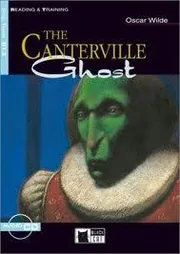
The Canterville Ghost is a short comic ghost story by Oscar Wilde, first published in 1887. It appeared in two parts in The Court and Society Review in February and March of that year, and was later gathered into the collection Lord Arthur Savile's Crime and Other Stories, issued in July 1891. It was the first of Wilde's stories to reach print. The tale sits between horror and comedy, and it has long been issued in editions for younger readers and for language learners, including German-language reader editions.
The setting is England, where Mr. Hiram B. Otis, an American minister, buys Canterville Chase despite warnings that the house is haunted. The Otis family moves into the mansion and meets its resident ghost, the spirit of an English nobleman who killed his wife and was later walled in and starved to death by her brothers. The family does not believe in him, and the story plays the American household against the British aristocracy of its day. Allusive in manner, it closes as a sentimental romance. At roughly ninety pages in a typical edition, it is a brief read, and it remains in print in well over a hundred editions.
When Mr. Hiram B. Otis, the American minister, bought Canterville Chase, every one told him he was doing a very foolish thing, as there was no doubt at all that the place was haunted.
Setting
England
Themes
GhostsFairy talesReadersGerman language
- Want to read 121
- Reading now 10
- Read 15
Most people shelving it are saving it for later.
Of 146 readers who put it on a shelf, 83% want to read it, 7% are reading it now, 10% have finished it and 0% stopped before the end.
By the numbers
- The median edition runs 93 pages. Counting about 275 words a page and an adult reading pace of 250 words a minute, that is about 1.7 hours of reading.
- Open Library tracks 138 editions from 67 publishers, the earliest dated 1887 and the latest 2021, across 11 languages.
- On reader demand it ranks in the top 11% of the classic books in our catalog (8,749 of them).
- Libraries shelve it under Dewey 823.8 and Library of Congress class PR-5810.00000000.
 BookWard’s take
A short, sharp ghost comedy that turns sentimental at the close
Wilde's first published story is a brisk comic haunting: an American family buys an English mansion and refuses to be frightened by its resident spirit. At roughly ninety pages it never overstays, and the central joke, a ghost out-bluffed by cheerful rationalists, still feels fresh. The premise is stated almost at once, and the story moves along quickly from there. Where it loosens its grip is the ending, which turns into a romance, softer than the restraint I tend to prize. The setup is also a little more explained than shown, handled through the narrator's amused asides. Still, the voice is unmistakably Wilde, and the satire of both the British aristocracy and the Americans lands cleanly.
At about ninety pages it is as tight as a story gets, which is exactly where BookWard likes to sit.
A short comic tale moves briskly, and nothing lingers, in line with BookWard's fast-paced taste.
A ghost bested by pragmatic Americans was a fresh comic twist, close to BookWard's liking for the original.
Wilde's polished, ironic sentences lean ornate, a little richer than BookWard's middling taste.
The haunting plot and the comic types drive it about equally, a touch more plot-led than BookWard's lean.
The story resolves warmly and with redemption, matching BookWard's hopeful side.
A straightforward linear tale told in short chapters, conventional like BookWard's taste.
It is a horror comedy and plays largely for laughs, comfortably above BookWard's funny setting.
Murder and starvation sit in the backstory, but the tone stays playful, gentler than BookWard's midpoint.
Feeling is present mainly in the closing romance, milder than BookWard's intensity.
See all 50 dialsEvery position, side by side with this book
Where it lines up
- LengthBookWard 1 · book 1
- PaceBookWard 8 · book 8
- EndingBookWard 8 · book 8
Where it pulls apart
- Internal logicBookWard 10 · book 5
- Familiar tropesBookWard 10 · book 6
- SentimentBookWard 8 · book 3
At about ninety pages it is as tight as a story gets, which is exactly where BookWard likes to sit.
The haunted-house premise and the Otis family's arrival set up the comedy quickly, close to BookWard's appetite for an immediate start.
It plays with haunted-house conventions on purpose, inverting them for comedy rather than relying on them, though the ghost story frame is familiar.
This is a comic fantasy that runs on whimsy rather than strict rules, looser than BookWard's airtight preference.
A short comic tale moves briskly, and nothing lingers, in line with BookWard's fast-paced taste.
A ghost bested by pragmatic Americans was a fresh comic twist, close to BookWard's liking for the original.
The characters are drawn as vivid comic types serving the satire, shallower than BookWard's deeply drawn ideal.
The story closes neatly as a romance, giving the full resolution BookWard enjoys.
It ends as a sentimental romance, which is warmer than the restraint BookWard values.
The darkness is light and played for laughs, never shock for its own sake, which BookWard approves.
This is fiction, so the rigor dial does not apply.
Wilde's wit and amused narrator make this unmistakable, matching BookWard's love of a distinctive voice.
The story leads, with satire of aristocrats and Americans carried by a comic ghost tale, so BookWard's story-first lean fits.
The narrator comments freely and explains the joke at times, more than BookWard's show-in-scene preference.
At this length there is no room to sag, and the comedy stays sustained, as BookWard likes.
Wilde's polished, ironic sentences lean ornate, a little richer than BookWard's middling taste.
The haunting plot and the comic types drive it about equally, a touch more plot-led than BookWard's lean.
The story resolves warmly and with redemption, matching BookWard's hopeful side.
A straightforward linear tale told in short chapters, conventional like BookWard's taste.
It is a horror comedy and plays largely for laughs, comfortably above BookWard's funny setting.
Short, witty and readable, it is easy going, which suits BookWard's moderate effort preference.
The narration stays with one storyteller's amused view, fewer viewpoints than BookWard's mix.
The tale unfolds in a straight line, matching BookWard's mostly linear preference.
A ghost is at the center, so it leans fantastical, but in a light comic way.
A single household and one ghost make for a small cast, close to BookWard's modest sizes.
One English mansion keeps the story intimate, in line with BookWard's smaller scale.
Comic incidents and the ghost's inner misery are balanced, near BookWard's center.
Witty exchanges carry much of the humor, so the dialogue is fairly heavy, near BookWard's taste.
Romance arrives late and closes the tale, a real thread but not the engine.
The English country house is a familiar literary setting, less unfamiliar than BookWard prefers.
Published in 1887 and set in its own day, it is firmly of the past against BookWard's lean toward the present.
Its satire and comic ghost have lasted well beyond 1887, in print in well over a hundred editions.
The narrator is a genial, trustworthy raconteur, more reliable than BookWard's unreliable lean.
The story lands on redemption and a clear emotional resolution, clearer than BookWard's ambiguity.
Wilde dwells on the mansion, costumes and ghostly tricks with relish, richer than BookWard's usual.
This is fiction, so the nonfiction style dial does not apply.
This is fiction, so the nonfiction perspective dial does not apply.
A single standalone story, matching BookWard's standalone taste.
The plot follows a fairly predictable comic arc with a few turns, fewer surprises than BookWard likes.
A light, gently satirical read, it is comforting rather than challenging, below BookWard's setting.
Murder and starvation sit in the backstory, but the tone stays playful, gentler than BookWard's midpoint.
Feeling is present mainly in the closing romance, milder than BookWard's intensity.
The wit is arch and satirical but with some broad slapstick, between dry and broad.
The killing is in the past and kept at a distance, so there is little on the page.
There is essentially no sexual content, well under BookWard's midpoint.
Its national satire is social comedy rather than political argument, lighter than BookWard's setting.
Wilde's elegant prose reads easily, with some period vocabulary, a little plainer than BookWard's midpoint.
The narrator's wry asides are openly opinionated, a notch above BookWard's lean.
It is a nineteenth-century tale that pokes at the past and its institutions, looking back more than ahead.
It ends in redemption and gentle goodness, more idealistic than cynical, in line with BookWard.
Review written by BookWard, dial version 1, November 2026.
Who is The Canterville Ghost right for?
Suits younger readers, teens and language learners, and is often issued in simplified editions. It touches on a murder and a death by starvation in the ghost's backstory, kept distant and handled with humor.
Short, witty and readable, it is easy going, which suits BookWard's moderate effort preference.
Murder and starvation sit in the backstory, but the tone stays playful, gentler than BookWard's midpoint.
Feeling is present mainly in the closing romance, milder than BookWard's intensity.
The killing is in the past and kept at a distance, so there is little on the page.
Book CompanionThe Canterville Ghost: ideas, characters, themes
A practical American family refuses to be frightened by an English ghost, and the clash comedically exposes both nations' pretensions.
- Wilde's first published story. It appeared in two parts in The Court and Society Review in early 1887 before joining a collection in 1891.
- Horror played as comedy. The story borrows haunted-house conventions and turns them into jokes at the ghost's expense.
- A satire with two targets. It teases the British nobility of the day and the Americans who buy their way into it.
- The ghost's grim backstory. He killed his wife and was later walled in and starved to death by her brothers.
- A romantic close. The tale ends as a sentimental romance, shifting its tone from comic to tender.
Characters
Mr. Hiram B. Otis
American minister and head of the family
He buys Canterville Chase despite warnings that it is haunted.
The Otis family
The new residents of the mansion
They refuse to believe in the ghost and meet him with practical good humor.
The Canterville Ghost
The mansion's resident spirit
The spirit of an English nobleman who killed his wife and was later starved to death by her brothers.
Themes
The story pokes fun at both British aristocracy and American pragmatism.
The family's refusal to be frightened undercuts the ghost's authority.
The story points toward forgiveness and release for a long-suffering spirit.
English tradition meets American practicality in the haunted house.
Gothic conventions are borrowed and then turned to laughter.
Discussion questions
- How does Wilde use the ghost to satirize the British nobility?
- What does the Otis family's refusal to believe say about the Americans?
- Is the sentimental ending a fitting close or a change of tone?
- Which is funnier here, the ghost's failures or the family's replies?
- Why has this short story remained popular in editions for younger readers and language learners?
Personalize your Book Companion
This is the general edition. In BookWard, the Companion is written for you: your reading profile, your notes, and spoiler-safe to the page you are on.
Buy, listen or borrow The Canterville Ghost
Each link opens a search for this book on that store, in a new tab.
Read on a device
Borrow
Reviews and community
If you liked The Canterville Ghost
A gentle dragon, a kind boy, and one very polite compromise
Lucky JimKingsley AmisA sharp, funny academic satire that still bites
Ella EnchantedGail Carson LevineA Cinderella retelling where obedience is the curse, and Ella fights back
Tortilla FlatJohn SteinbeckA mock-Arthurian comedy of poverty on a Monterey hillside
Sources: Open Library.
Track The Canterville Ghost and find your next favorite
Add it to your shelf, rate what you have read, and BookWard will recommend what fits you.
Free to start. No credit card needed.