Best suited to adult readers of historical romance.
358 pages, about 5.5 to 8.5 hours.
A warm, fast Highland marriage-of-convenience romance built on familiar bones. 50% taste match
The story
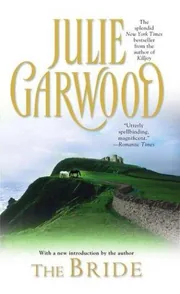
The Bride is a historical romance by Julie Garwood, first published in 1989 and the opening book in the Lairds' Fiancées series. It belongs to the medieval Scottish romance tradition, with a setting in Scotland during the era of kings and clan lairds, and it centers on a marriage between nobility.
The story follows Jamie Jamison, the youngest daughter of an English baron, and Alec Kincaid, a Scottish laird. By order of the king, Alec must take an English wife, and he chooses Jamie. She has no wish to yield to a man she sees as a Highland barbarian, and the relationship between the two develops as a contest of wills between husband and bride. Rumors about the laird's first wife hang over the match from the start.
The Wedding follows as the second book in the series. This first volume runs about 358 pages and has appeared in 11 editions.
They said he killed his first wife.
Characters
Jamie JamisonLaird Alec Kincaid
Setting
Scotland
Period
1057-1603
- Want to read 150
- Reading now 3
- Read 44
Most people shelving it are saving it for later.
Of 197 readers who put it on a shelf, 76% want to read it, 2% are reading it now, 22% have finished it and 0% stopped before the end.
By the numbers
- The median edition runs 358 pages. Counting about 275 words a page and an adult reading pace of 250 words a minute, that is about 6.6 hours of reading.
- Open Library tracks 11 editions from 7 publishers, the earliest dated 1989 and the latest 2022.
- On reader demand it ranks in the top 5% of the modern books in our catalog (15,152 of them).
- Libraries shelve it under Dewey 813.54 and Library of Congress class PS-3557.00000000.A8427 B74 2010.
 BookWard’s take
A warm, fast Highland marriage-of-convenience romance built on familiar bones
The Bride opens with a rumor that the laird killed his first wife, which gives it a real hook and a quick pace that keeps the first act moving. Garwood leans heavily on beloved medieval romance conventions, so the familiar beats are everywhere, and the originality is modest. Where it earns its place is voice and tone: the banter between Jamie and Alec is funny and dialogue-heavy, and the mood stays hopeful rather than grim. The ending is fully resolved, which is satisfying. It is a comfort read about a forced marriage turning into something else, driven more by character and chemistry than by plot machinery.
At 358 pages it is mid-sized and reads quickly, closer to BookWard's preference for tight than to sprawl.
The conflict between the pair keeps scenes moving briskly, near BookWard's quick preference.
The premise is a well-worn medieval romance setup executed competently rather than freshly.
The prose is plain and accessible, built for readability over ornament.
The pull comes from the pair's evolving relationship more than from external plot.
The tone is optimistic and affectionate, closer to BookWard's hopeful side than a bleak one.
It follows a conventional, chronological romance arc.
Sparring and humor are central to the pair's dynamic, matching BookWard's lean toward funny.
The first-wife rumor adds shadow, but the book stays largely light.
Attraction and conflict run warm and heated, with solid but not crushing intensity.
See all 50 dialsEvery position, side by side with this book
Where it lines up
- OpeningBookWard 10 · book 9
- PaceBookWard 8 · book 7
- EndingBookWard 8 · book 9
Where it pulls apart
- Familiar tropesBookWard 10 · book 2
- Internal logicBookWard 10 · book 5
- OriginalityBookWard 9 · book 3
At 358 pages it is mid-sized and reads quickly, closer to BookWard's preference for tight than to sprawl.
The first line, about the laird killing his first wife, grabs at once, which is exactly what BookWard wants.
The forced marriage, the barbarian laird and the feisty heroine are genre staples, far from BookWard's trope-averse taste.
Events follow the romance's own rules fairly well, though convenience steers some turns, short of airtight.
The conflict between the pair keeps scenes moving briskly, near BookWard's quick preference.
The premise is a well-worn medieval romance setup executed competently rather than freshly.
Jamie and Alec are vivid romance leads, but drawn more by type and chemistry than by deep interior change.
Romance of this kind resolves its central relationship cleanly, which suits BookWard's liking for closure.
It leans warm and swoony, more sentimental than BookWard's restrained taste.
The rumor about the first wife supplies menace, though the book is driven by romance rather than darkness for effect.
This is a novel, so rigor does not apply.
Garwood's playful, banter-forward style is recognizable, though in a genre-typical register.
This is entirely story-led, built around a relationship rather than ideas.
Backstory and feelings are often stated directly, more than BookWard's show-in-scene preference.
The contest of wills sustains momentum, with a little slack in the middle common to the genre.
The prose is plain and accessible, built for readability over ornament.
The pull comes from the pair's evolving relationship more than from external plot.
The tone is optimistic and affectionate, closer to BookWard's hopeful side than a bleak one.
It follows a conventional, chronological romance arc.
Sparring and humor are central to the pair's dynamic, matching BookWard's lean toward funny.
It is an easy, absorbing read with no demanding prose or structure.
Romance of this kind often moves between hero and heroine, giving it a moderate spread of viewpoints.
The story moves forward in a straightforward sequence.
It is set in a grounded historical Scotland with no fantasy.
A laird's household and family give it a moderately sized cast beyond the two leads.
The story is about a marriage and its households, an intimate scale despite the royal edict.
It balances the leads' feelings with the events and clashes around them.
Banter and verbal sparring carry much of the book, so dialogue is heavy.
The romance is the entire engine of the story.
Medieval Scotland of kings and clan lairds is distant from everyday life for most readers.
It is set in the medieval past, far from the present day.
It is a lasting favorite within its genre, though tied to its era's romance conventions.
The narration is straightforward and can be trusted.
Heroes and obstacles are clearly drawn, leaving little moral ambiguity.
Setting and attraction are described with moderate richness, serving the romance more than scenery.
This is fiction, so the nonfiction style dial does not apply.
This is fiction, so the nonfiction perspective dial does not apply.
It opens the Lairds' Fiancées series, though it reads as a self-contained courtship.
It is a comfort read, not a challenging one.
The first-wife rumor adds shadow, but the book stays largely light.
Attraction and conflict run warm and heated, with solid but not crushing intensity.
The humor is broad and teasing, leaning on the leads' verbal battles.
Sensual tension and love scenes are part of the genre's appeal, with moderate to heavy presence.
A royal edict sets things going, but court politics stay in the background.
Language is readable and plain, with light period flavor.
The narration mostly stays out of the way, with a playful tilt.
It looks back to a romanticized medieval past.
It believes in love winning out over resentment and forced beginnings.
Review written by BookWard, dial version 1, November 2026.
Who is The Bride right for?
Best suited to adult readers of historical romance. It includes sensual scenes and some clan-era violence.
It is an easy, absorbing read with no demanding prose or structure.
The first-wife rumor adds shadow, but the book stays largely light.
Attraction and conflict run warm and heated, with solid but not crushing intensity.
Book CompanionThe Bride: ideas, characters, themes
A king's edict forces a proud Scottish laird to marry an English baron's daughter, and their clash of wills slowly becomes something else.
- The royal order. Alec Kincaid must take an English bride by the king's decree, and he chooses Jamie Jamison.
- A reluctant bride. Jamie sees him as a Highland barbarian and vows not to surrender to him.
- A contest of wills. Their relationship develops as a push and pull between husband and wife.
- The shadow of the first wife. Rumors that Alec killed his first wife hang over the marriage from the start.
- Start of a series. It opens the Lairds' Fiancées books, followed by The Wedding.
Characters
Jamie Jamison
Heroine
The youngest daughter of an English baron, feisty and unwilling to yield.
Alec Kincaid
Hero
A mighty Scottish laird ordered by the king to take an English wife.
Themes
Two people bound together by command rather than choice.
Both leads dig in before softening.
Whispers about the past test how far a wife can trust her husband.
English and Scottish worlds meet inside one household.
Discussion questions
- Why does the rumor about Alec's first wife matter so much to the story's tension?
- How does Jamie resist, and does her resistance feel earned?
- What makes a forced-marriage setup work for readers?
- How does the banter shape your sense of the two leads?
- Would you read the next book in the series, and why?
Personalize your Book Companion
This is the general edition. In BookWard, the Companion is written for you: your reading profile, your notes, and spoiler-safe to the page you are on.
Buy, listen or borrow The Bride
Each link opens a search for this book on that store, in a new tab.
Read on a device
Borrow
Reviews and community
If you liked The Bride
A Highland marriage of convenience, with revenge pulling at both of them
A Kingdom of DreamsJudith McNaughtA kidnapped Highland heiress, an English duke, and a slow-burning war of wills
The Viscount Who Loved MeJulia QuinnA witty Regency courtship that trades on tropes and charm
When He Was WickedJulia QuinnA Regency romance built on friendship, grief and one long secret
Sources: Open Library.
Track The Bride and find your next favorite
Add it to your shelf, rate what you have read, and BookWard will recommend what fits you.
Free to start. No credit card needed.