It suits curious older teens and adults comfortable with a sustained scientific argument.
336 pages, about 5.5 to 8 hours.
The book that made America look hard at its pesticides. 53% taste match
What it covers
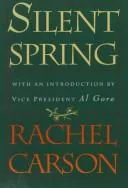
Silent Spring is a work of environmental science by Rachel Carson, first published on September 27, 1962. It belongs to the Science & Nature category and examines the use of pesticides and their consequences for the natural world. The book centers on DDT, a chemical that soldiers relied on during World War II, and records the harm that its wide and indiscriminate application caused to the environment.
Carson's subject extends to wildlife, insect pests, and the ways pesticides affect creatures beyond the ones they target. The book also takes up pollution, toxicology, and alternatives such as biological control and the role of beneficial insects. Alongside the science, it makes a case against the chemical industry, which Carson accused of spreading disinformation, and against public officials who accepted industry marketing claims without question. The opening scene describes a town in the heart of America where living things once existed in harmony with their surroundings. The edition runs to about 336 pages, and the book has appeared in 57 editions since its first publication.
THERE WAS ONCE a town in the heart of America where all life seemed to live in harmony with its surroundings.
Themes
PesticidesBiological controlToxicologyPesticides and wildlifeInsect pestsEnvironmental aspects of PesticidesEnvironmental aspectsWildlife conservation
- Want to read 347
- Reading now 22
- Read 28
Most people shelving it are saving it for later.
Of 397 readers who put it on a shelf, 87% want to read it, 6% are reading it now, 7% have finished it and 0% stopped before the end.
By the numbers
- The median edition runs 336 pages. Counting about 275 words a page and an adult reading pace of 250 words a minute, that is about 6.2 hours of reading.
- Open Library tracks 57 editions from 38 publishers, the earliest dated 1962 and the latest 2021, across 6 languages.
- On reader demand it ranks in the top 4% of the classic books in our catalog (8,749 of them).
- Libraries shelve it under Dewey 363.7384 and Library of Congress class TD-0174.00000000.
 BookWard’s take
The book that made America look hard at its pesticides
Silent Spring opens on a quiet American town where living things once shared their surroundings in harmony, then turns to the damage done by DDT and other pesticides. Carson writes as a scientist making a case, and the book is driven by its argument rather than by story, with an authorial voice distinctive enough to carry a long, demanding case. The reasoning is rigorous, and the book reads as analysis far more than narrative. The prose is composed rather than plain, which suits the subject. It is not a hopeful book in the main, since so much of it documents harm, though it does point toward alternatives such as biological control. Its accusations against industry and public officials give it a pronounced political edge as well.
At 336 pages it is substantial but not sprawling, a bit longer than BookWard's tight preference.
The chapters move through one topic after another at a steady, measured clip, slower than BookWard's brisk taste.
It launched a new way of seeing pesticides and the environment, which is the kind of originality BookWard rates highly.
Carson's writing is composed and at times lyrical, richer than plain but not ornate, a little above BookWard's middle.
With no characters or plot to speak of, it sits at the plot-driven end, away from BookWard's character-led taste.
Much of the book records harm, though it offers alternatives like biological control, so it leans bleaker than BookWard's outlook.
It follows a conventional line of argument from problem to evidence to alternatives, close to BookWard's middle.
This is a serious book about environmental damage, far from the humor BookWard enjoys.
Its subject is harm to wildlife and the environment, serious without being gratuitous.
The stakes are moving, but Carson keeps the tone controlled, a moderate emotional pitch.
See all 50 dialsEvery position, side by side with this book
Where it lines up
- OriginalityBookWard 9 · book 9
- SentimentBookWard 8 · book 8
- Rigor (nonfiction)BookWard 9 · book 9
Where it pulls apart
- LengthBookWard 1 · book 5
- Character depthBookWard 8 · book 2
- Story or ideasBookWard 3 · book 9
At 336 pages it is substantial but not sprawling, a bit longer than BookWard's tight preference.
It opens on a vivid town scene before moving to the argument, which draws readers in reasonably fast.
It broke new ground in its subject and argument rather than leaning on familiar patterns, which BookWard rewards.
Carson builds her case step by step on the science of pesticides and their effects, close to the airtight reasoning BookWard values.
The chapters move through one topic after another at a steady, measured clip, slower than BookWard's brisk taste.
It launched a new way of seeing pesticides and the environment, which is the kind of originality BookWard rates highly.
This is an argument about nature and chemistry, so there are no drawn characters; BookWard's character taste is not engaged.
It closes the case it set out to make and points toward alternatives, giving a fairly resolved finish.
Carson argues from evidence and restraint rather than sentiment, matching BookWard's preference for the unsentimental.
The harm it documents is alarming, but it comes from facts, so the darkness is earned rather than used for effect.
The book is grounded in toxicology and the study of insect control, and it sits at the rigorous end BookWard prizes.
Carson's voice is distinct and persuasive, giving the science a personality that BookWard values.
It is driven by an argument about pesticides, far more idea-led than the story-led pole BookWard prefers.
Carson explains the science and her case directly, which is the opposite of BookWard's lean toward showing in scene.
The argument holds interest across its length, with its case building chapter to chapter rather than sagging.
Carson's writing is composed and at times lyrical, richer than plain but not ornate, a little above BookWard's middle.
With no characters or plot to speak of, it sits at the plot-driven end, away from BookWard's character-led taste.
Much of the book records harm, though it offers alternatives like biological control, so it leans bleaker than BookWard's outlook.
It follows a conventional line of argument from problem to evidence to alternatives, close to BookWard's middle.
This is a serious book about environmental damage, far from the humor BookWard enjoys.
The science and the sustained argument ask for attention, a little more effort than BookWard's easy-leaning middle.
Carson speaks as a single authorial voice, with the science and the harm to wildlife as her material.
The argument unfolds in a plain forward order, which suits BookWard's linear-leaning middle.
It deals with real chemicals, wildlife and ecosystems, entirely grounded.
No cast of characters drives it; the subject is nature itself, so the cast is small.
Its subject spans the natural world and the whole country, an epic scope for a nonfiction work.
It focuses on events in the world, from pesticides to wildlife, rather than on inner thoughts.
As an exposition of science and argument, it has essentially no dialogue.
Romance plays no part in this account of pesticides and the environment.
The settings are the countryside, fields and wildlife of America, familiar ground that the book makes strange.
Published in 1962, it belongs to the past, though its subject still resonates today.
It launched the environmental movement and its questions about chemicals and nature still matter, a durable work.
Carson is a transparent, reliable guide through the evidence, not an unreliable voice.
The book takes a clear stand against indiscriminate pesticide use, with little ambiguity about where it lands.
Carson paints the natural world and the harm done to it in vivid detail, richer than sparse.
It leans analytical, building a scientific case, though it opens with a narrative scene.
Carson writes with conviction and engagement rather than detachment, leaning personal for a science book.
It is a standalone work.
As an argument built on evidence, it offers few plot surprises, only revelations of the facts.
It confronts readers with uncomfortable facts about pesticides and industry, a challenging rather than comforting read.
Its subject is harm to wildlife and the environment, serious without being gratuitous.
The stakes are moving, but Carson keeps the tone controlled, a moderate emotional pitch.
There is little humor here; what lightness there is runs dry rather than broad.
There is little violence in the usual sense, though the death of wildlife from poison is documented.
There is no sexual content.
It accuses the chemical industry and public officials of spreading and accepting disinformation, putting politics well forward.
The language is clear and accessible, with some scientific terms but no dialect.
Carson argues forcefully for her position, an opinionated narration in service of the evidence.
It looks forward to the consequences and alternatives to come, as much as back at what has been done.
It appeals to a better relationship between people and nature, tempered by a sober view of industry.
Review written by BookWard, dial version 1, November 2026.
Who is Silent Spring right for?
It suits curious older teens and adults comfortable with a sustained scientific argument. It documents the death of wildlife and accuses industry of deception, which may unsettle some readers.
The science and the sustained argument ask for attention, a little more effort than BookWard's easy-leaning middle.
Its subject is harm to wildlife and the environment, serious without being gratuitous.
The stakes are moving, but Carson keeps the tone controlled, a moderate emotional pitch.
There is little violence in the usual sense, though the death of wildlife from poison is documented.
Book CompanionSilent Spring: ideas, characters, themes
Carson argues that the indiscriminate use of pesticides like DDT damages the natural world far beyond their targets, and that industry and officials downplayed the harm.
- A town gone quiet. The book opens on a town in the heart of America where living things once existed in harmony with their surroundings.
- DDT at the center. Carson focuses on DDT, a chemical soldiers used in World War II, and records the harm of its wide application.
- Beyond the target. Pesticides affect wildlife and creatures beyond the pests they are meant to kill.
- Industry and disinformation. Carson accuses the chemical industry of spreading disinformation and officials of accepting its marketing claims.
- Alternatives. The book takes up biological control and the role of beneficial insects as other ways to manage pests.
Themes
How human use of chemicals damages ecosystems and wildlife.
The way industry claims can mislead the public and the officials meant to protect it.
The duty to weigh evidence of harm before spreading a technology widely.
The idea that people live within, not apart from, the natural world.
Biological control as a different path for dealing with insect pests.
Discussion questions
- Why does Carson open with a quiet town before turning to the science?
- How does the book make the case that harm reaches beyond targeted pests?
- What does Carson's accusation against industry and officials say about trust in expertise?
- Do the alternatives she raises, such as biological control, feel convincing?
- Why might this book be credited with launching the environmental movement?
Personalize your Book Companion
This is the general edition. In BookWard, the Companion is written for you: your reading profile, your notes, and spoiler-safe to the page you are on.
Buy, listen or borrow Silent Spring
Each link opens a search for this book on that store, in a new tab.
Read on a device
Borrow
Reviews and community
If you liked Silent Spring
Why some societies conquered others, argued from geography, not genes
The Death and Life of Great American CitiesJane JacobsA sharp, readable attack on how cities got planned
Damnés de la terreFrantz FanonFanon's urgent case for decolonization, violence, and what comes after
CollapseJared DiamondDiamond's sweeping case for why societies fail, and how some survive
Sources: Open Library.
Track Silent Spring and find your next favorite
Add it to your shelf, rate what you have read, and BookWard will recommend what fits you.
Free to start. No credit card needed.