It suits older teens and adults who enjoy gentle, emotional romance.
256 pages, about 4 to 6 hours.
A plainspoken, true-to-life love story that stays incomplete. 42% taste match
The story
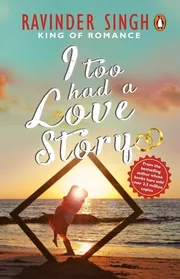
I Too Had a Love Story is a romance by Ravinder Singh, first published in 2009. It is an autobiographical novel and the author's debut, written in English. The book belongs to the young adult end of the romance shelf and follows a love that begins through online dating, at a time when mobile phones and the internet were changing how people met. The narrator, Ravin, looks back on a relationship with someone he committed to marry before the two had ever met in person.
The story is told in the first person and opens on a specific day, 4th March 2006, when Ravin travels to Kolkata to reunite with a group of three friends after a gap of three years. From there it moves through first love, heartbreak, loss and grief, and it touches on forgiveness, redemption and moving on. It is a story of a love that stays incomplete, and it asks whether such stories can outlast the people who lived them.
The paperback runs to roughly 256 pages, and the book has appeared in six editions.
Themes
Romancetragedyyoung adultfirst lovelossgriefheartbreakredemption
- Want to read 599
- Reading now 82
- Read 42
Most people shelving it are saving it for later.
Of 723 readers who put it on a shelf, 83% want to read it, 11% are reading it now, 6% have finished it and 0% stopped before the end.
By the numbers
- The median edition runs 256 pages. Counting about 275 words a page and an adult reading pace of 250 words a minute, that is about 4.7 hours of reading.
- Open Library tracks 6 editions from 5 publishers, the earliest dated 2009 and the latest 2017, across 2 languages.
- On reader demand it ranks in the top 1% of the modern books in our catalog (15,152 of them).
- Libraries shelve it under Library of Congress class PR-9499.40000000.S555.
 BookWard’s take
A plainspoken, true-to-life love story that stays incomplete
Ravinder Singh's debut is an autobiographical romance narrated in the first person by Ravin, who looks back on a relationship that began online, with a promise to marry made before the two had ever met. It opens on a precise day, 4th March 2006, which gives it a quick, personal hook. At 256 pages it is short, and the brevity serves it well. The prose is plain, and the story rests on character and feeling rather than plot machinery, so what carries it is how real the people seem and how steadily it moves, not how inventive it is. Where it is less satisfying is in its familiar ground: first love, heartbreak and grief are well-worn territory, and the book leans openly into emotion. Its ending is deliberately incomplete, which will frustrate anyone who wants a fully resolved finish.
At 256 pages it is a compact read, which matches BookWard's preference for tight books.
Short and personal, it moves along steadily without feeling rushed, a little gentler than BookWard likes.
The online-meeting premise suited its moment, but the romance itself is familiar, short of BookWard's appetite for novelty.
The writing is plain and conversational, in line with BookWard's lean toward unadorned prose.
Feelings and the relationship drive it far more than events, which suits BookWard.
Grief and an incomplete love weigh on it, though the tone stays tender rather than despairing.
A straightforward retelling by one narrator, conventional like BookWard's preference.
Loss and grief give it real weight, balanced by a tender tone.
Feeling is the engine of the book, intense from early on, above BookWard's middle ground.
See all 50 dialsEvery position, side by side with this book
Where it lines up
- LengthBookWard 1 · book 2
- Story or ideasBookWard 3 · book 2
- OpeningBookWard 10 · book 8
Where it pulls apart
- Familiar tropesBookWard 10 · book 3
- Internal logicBookWard 10 · book 6
- OriginalityBookWard 9 · book 3
At 256 pages it is a compact read, which matches BookWard's preference for tight books.
It opens on a dated, specific moment on the road to a reunion, which pulls the reader in quickly.
First love, loss and heartbreak are familiar romance territory, so it leans on well-known beats, unlike BookWard's taste.
As a first-person memoir-style account, events follow a plain, believable cause and effect.
Short and personal, it moves along steadily without feeling rushed, a little gentler than BookWard likes.
The online-meeting premise suited its moment, but the romance itself is familiar, short of BookWard's appetite for novelty.
Ravin's feelings carry the book, though the portrait rests on one narrator's view, so it is solid rather than deep.
The love story is explicitly left incomplete, which sits apart from BookWard's liking for full resolution.
The book openly embraces tender, emotional storytelling, well away from BookWard's restrained preference.
Its loss lands as a real event in the story rather than shock used for effect.
A direct, confiding first-person voice gives it a recognisable personal tone, if not a highly stylised one.
It is firmly about a story and a relationship, not an argument or concept, close to BookWard's story-led taste.
The narrator tells his story and feelings outright rather than staging everything in scene, which BookWard would prefer shown.
A single thread of feeling keeps it moving through a short span, with little room to sag.
The writing is plain and conversational, in line with BookWard's lean toward unadorned prose.
Feelings and the relationship drive it far more than events, which suits BookWard.
Grief and an incomplete love weigh on it, though the tone stays tender rather than despairing.
A straightforward retelling by one narrator, conventional like BookWard's preference.
Simple language and a clear narrative make it an easy, fast read, easier than BookWard usually goes.
Everything is seen through Ravin alone, well short of BookWard's taste for many viewpoints.
Grounded and true to life, like BookWard's mostly realistic leaning.
A small circle of friends and one central relationship keeps the cast tight, matching BookWard.
Intimate and personal, in line with BookWard's preference for close-up stories.
Thoughts and feelings dominate over action, like BookWard's inward lean.
The love story is the entire book, far more central than BookWard's usual balance.
A familiar contemporary Indian setting that most readers will find easy to enter.
Set in the mid-2000s, recent enough to feel close to the present day.
Its details are tied to the early internet era, though the feelings are lasting.
The narrator tells his own true story directly, so he reads as reliable, unlike BookWard's taste for the unreliable.
It is told with emotional clarity and little moral ambiguity, plainer than BookWard prefers.
Plain description keeps attention on feeling and events, sparser than BookWard's usual level.
A deeply personal, first-person account, at the intimate end of the dial.
Its path is emotional rather than plot-driven, with few turns.
It is a comforting, accessible read for most of its length even as it deals with loss.
Loss and grief give it real weight, balanced by a tender tone.
Feeling is the engine of the book, intense from early on, above BookWard's middle ground.
Light, affectionate humour sits in the background.
The focus is emotional rather than sexual, keeping content mild.
Plain, accessible English means language is never a barrier.
The narrator speaks openly about how he feels and thinks, so the narration is more personal than neutral.
The whole book looks back on a love already lived.
It believes in the lasting power of love, an idealistic outlook.
Review written by BookWard, dial version 1, November 2026.
Who is I Too Had a Love Story right for?
It suits older teens and adults who enjoy gentle, emotional romance. It deals with loss and grief, which some younger readers may find sad.
Simple language and a clear narrative make it an easy, fast read, easier than BookWard usually goes.
Loss and grief give it real weight, balanced by a tender tone.
Feeling is the engine of the book, intense from early on, above BookWard's middle ground.
Book CompanionI Too Had a Love Story: ideas, characters, themes
A man looks back on a love that began online and ended incomplete, and asks whether such love stories can outlast the people who lived them.
- A dated opening. The story begins on 4th March 2006, as Ravin travels to Kolkata to see his group of friends after three years.
- Love before meeting. Ravin commits to marry someone he has not yet met in person, a premise shaped by the rise of mobile phones and the internet.
- An autobiographical frame. The book is written as a personal account, told in the first person by Ravin.
- A story that stays incomplete. Not every love story gets a perfect ending, and this one holds that idea at its centre.
- A debut that found readers. It was the author's first novel and stayed on India's bestseller lists for years after publication.
Characters
Ravin
narrator
The author's stand-in, who tells the story of his own love and loss in the first person.
Happy
friend
One of Ravin's close circle, whose home he is about to reach at the start of the book.
Themes
The excitement and innocence of a first deep attachment.
How a person carries the absence of someone precious.
How phones and the internet change the way people meet and bond.
Making peace with what happened and with oneself.
Finding a way forward without erasing a love that mattered.
Discussion questions
- Can you call a relationship a love marriage if the two people never met first?
- Why might the author open on one exact date?
- Does a love story that stays incomplete feel less or more powerful than one that resolves?
- How has online dating changed since the book's early-2000s setting?
- What does the book suggest love stories owe to the generations that read them?
Personalize your Book Companion
This is the general edition. In BookWard, the Companion is written for you: your reading profile, your notes, and spoiler-safe to the page you are on.
Buy, listen or borrow I Too Had a Love Story
Each link opens a search for this book on that store, in a new tab.
Read on a device
Borrow
Reviews and community
If you liked I Too Had a Love Story
A YA romance that opens on a promise of regret
A Walk to RememberNicholas SparksA gentle 1958 love story that trades surprise for sincerity
Heart BonesColleen HooverA summer fling with a rip current underneath
One True LovesTaylor Jenkins ReidA love triangle that turns on a husband returning from the dead
Sources: Open Library.
Track I Too Had a Love Story and find your next favorite
Add it to your shelf, rate what you have read, and BookWard will recommend what fits you.
Free to start. No credit card needed.